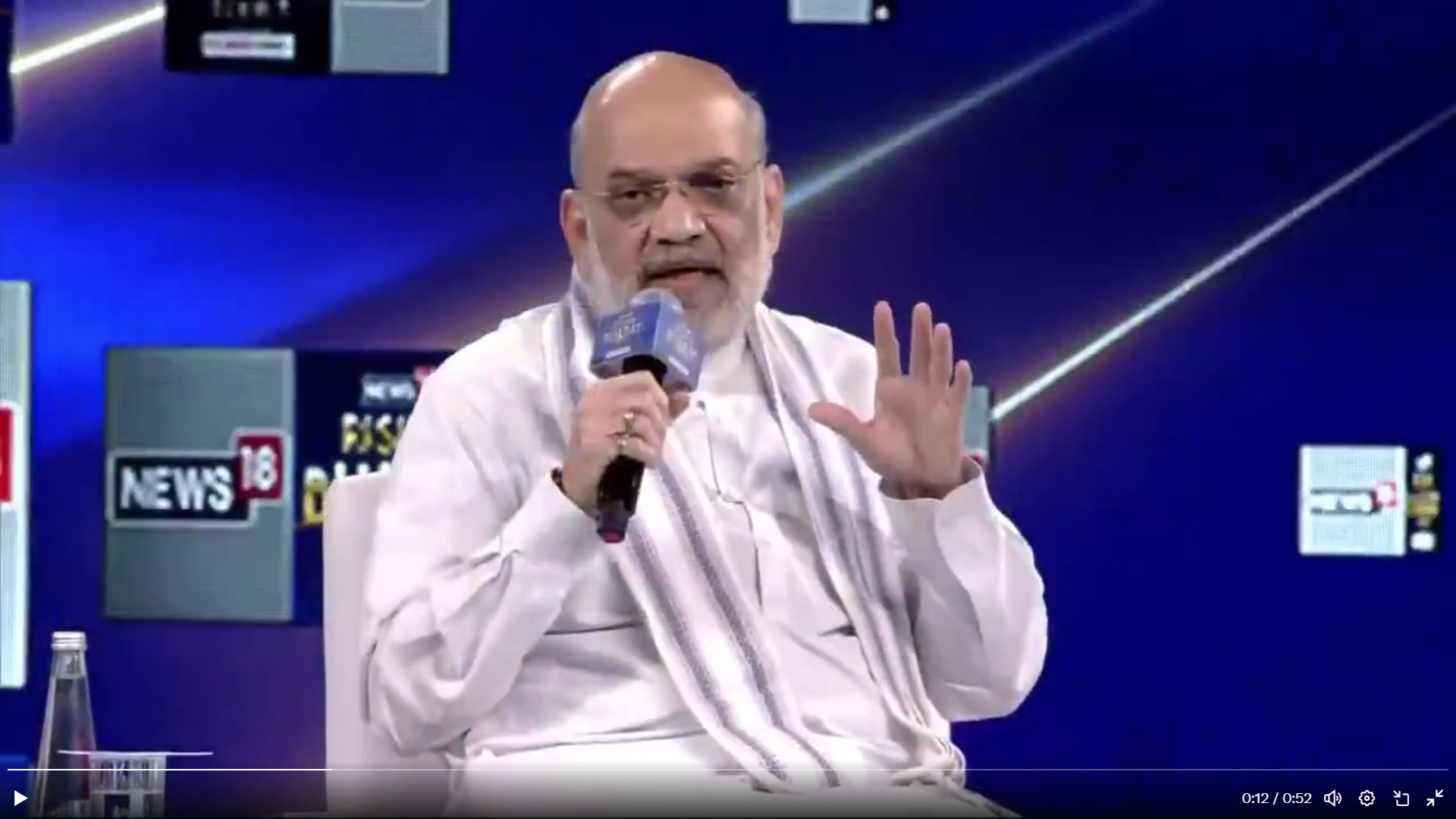
New Delhi: Union Home Minister Amit Shah on Tuesday announced that he has switched to Zoho Mail, the Chennai-based homegrown email service — turning a routine digital update into a full-blown declaration of faith in “Swadeshi tech.”
“Hello everyone, I have switched to Zoho Mail. Kindly note the change in my email address. My new email address is amitshah.bjp@zohomail.in,” Shah posted on X. The 23-word announcement, brisk and direct, was vintage Donald Trump in tone — personal, theatrical and impossible to ignore.
Shah’s message, posted without the usual bureaucratic wrapping or ministry notification, immediately triggered conversation across tech and political circles. Within minutes, the post began trending, hailed by BJP supporters as a “nationalist nudge” toward Indian technology and critiqued by others as political theatre engineered for optics.
Hello everyone,
I have switched to Zoho Mail. Kindly note the change in my email address.
My new email address is amitshah.bjp @ https://t.co/32C314L8Ct. For future correspondence via mail, kindly use this address.
Thank you for your kind attention to this matter.
— Amit Shah (@AmitShah) October 8, 2025
A Trump-Style pitch, Indian edition
Observers drew instant parallels between Shah’s self-styled rollout and Donald Trump’s communication playbook — a style defined by its personal voice, patriotic framing, and mastery of the spectacle.
Trump, during his presidency, famously bypassed press briefings with direct, tweet-sized proclamations — “I am officially running for President…,” “Build the Wall,” “Fake News!” — each crafted for instant amplification.
Shah’s announcement carried that same cadence: declarative, minimal, yet laden with symbolism. In what many called a “Trump-style mic drop”, he turned a private email change into a public affirmation of national tech self-reliance.
Political analyst Vivek Kumar said the Home Minister’s post had “all the hallmarks of Trumpian showmanship — a personal act presented as a patriotic crusade.”
Swadeshi signal in Silicon
Beyond its dramatic delivery, the decision fits seamlessly into the government’s wider ‘Digital Swadeshi’ push, aimed at reducing dependence on foreign technology and promoting indigenous platforms.
Zoho Corporation, founded in 1996 by Sridhar Vembu, has emerged as one of India’s most successful SaaS firms with a strong emphasis on privacy, data localization, and ad-free communication tools. Its office suite, including mail, docs and spreadsheets, is now being adopted by several ministries. The Education Ministry has already mandated use of the Zoho Office Suite for official documents — a clear policy signal that more such transitions may follow.
Responding to Shah’s move, Zoho CEO Vembu posted, “This is a proud moment for every engineer who stayed in India and built world-class technology. Dedication and perseverance have brought us here.”
Digital symbolism or real policy shift
While Shah’s high-voltage endorsement has boosted Zoho’s profile, critics caution that such symbolic gestures must be followed by tangible institutional change.
“Switching an individual inbox is easy,” said a senior government tech consultant. “Scaling it across ministries, with data security, interoperability and migration from global platforms — that’s the real test.”
Still, the optics were powerful. For a government that has made “Atmanirbhar Bharat” (self-reliant India) its mantra, Shah’s move was a subtle masterstroke — a blend of policy nudge and nationalist messaging that resonates beyond the inbox.
Much like Trump’s media choreography — holding up executive orders, tweeting firings, or touting “America First” products — Shah’s switch to a domestic platform underscored a blend of symbolism and political timing. It framed the act of choosing an Indian tech firm as an assertion of sovereignty — both digital and ideological.
In a single post, Shah managed to send three signals: a personal choice, a policy cue, and a patriotic gesture.