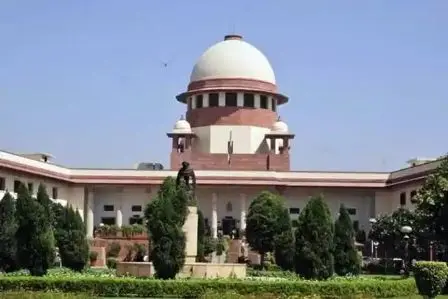
New Delhi: The Supreme Court, on Monday, sought responses from the Centre and the Ladakh administration on a petition filed by Gitanjali Angmo, wife of activist Sonam Wangchuk, challenging his detention under the stringent National Security Act (NSA) on September 26.
While issuing the notices, the bench of Justice Aravind Kumar and Justice N V Anjaria listed the case for hearing on October 14. It refrained from passing any directions at the moment.
The Centre and the Ladakh administration told the court that the plea by Angmo is an effort to create hype around Wangchuk’s detention.
Senior advocate Kapil Sibal, appearing for Angmo, however, sought an immediate supply of the grounds of detention to his client. He told the court that despite repeated requests, Angmo had not been provided with the grounds of detention, which prevented her from filing a representation against the order.
“According to the judgment of this court, family members are also to be given the grounds of detention. We have not been supplied with the grounds, and the wife is not being allowed to meet him,” Sibal submitted.
Solicitor General Tushar Mehta maintained that all legal procedures had been followed and that there was “no violation” of Wangchuk’s rights.
“We have supplied everything under the law. Nobody is being stopped if the law allows. Let us not create a hype,” he said, adding that the authorities would “examine the feasibility” of giving the wife a copy of the detention grounds. He emphasised that the NSA required the grounds to be served on the detenue, not on family members.
The Court questioned both sides on the issue, noting that Section 8 of the NSA only mandated that the grounds be communicated to the person detained.
“They say it has already been done,” the bench noted.
When the Court wanted to know why Angmo had not approached the High Court first, Sibal said that the petition had been moved directly under Article 32 since the detention order was issued by the Centre.
“We will hear you all next week and decide,” the Court then said, declining to pass any interim order.
The bench, however, recorded the solicitor general’s submission that the authorities would ensure Wangchuk’s medical needs were met as per prison rules.
“It is observed that the detenue receives medical care as required and the same shall be facilitated as per the extant prison rules,” the Court said.
Wangchuk was detained under the NSA following protests in Leh that turned violent, leaving four civilians dead and several others injured. Authorities alleged that his speeches were inflammatory and invited the violence.
Angmo’s petition, however, calls the detention “illegal” and accuses officials of unleashing a “systematic and false campaign” to malign her husband’s peaceful, Gandhian movement for protecting Ladakh’s fragile ecology.
A person can be detained without charge for up to 12 months under NSA. A detention order can be issued by the central or state government, or by authorised officials like a district magistrate or police commissioner if it is considered necessary to prevent a person from acting in a manner prejudicial to the security of the state, public order, or essential supplies and services.