The Sports industry: transformations, trends, and 1xBet NBA’s role in the global game
The global sports industry is experiencing a tumultuous summer. Fierce transfers, high-profile injuries and the economic impact of high-profile deals are shaping new trends. These changes are felt most strongly in basketball, where 1xBet NBA helps predict unexpected twists and turns. The NBA has already undergone important changes that affect not only the table, but also the betting market.
NBA: record trades and the domino effect
The summer of 2025 was marked by a historic trade involving seven clubs simultaneously. While the details of each deal remained confidential, one thing was clear: the goal was to strengthen teams for a championship run. Kevin Durant once again served as the catalyst for this major shakeup. His move from Phoenix to Houston triggered a complex series of trades across seven teams, demonstrating how one player can reshape the strategies of countless professionals. Amid this “domino effect,” new opportunities have emerged for betting and analysis – from overall season wins to detailed quarter-by-quarter stats.
Injuries and the economy: players out, clubs at a crossroads
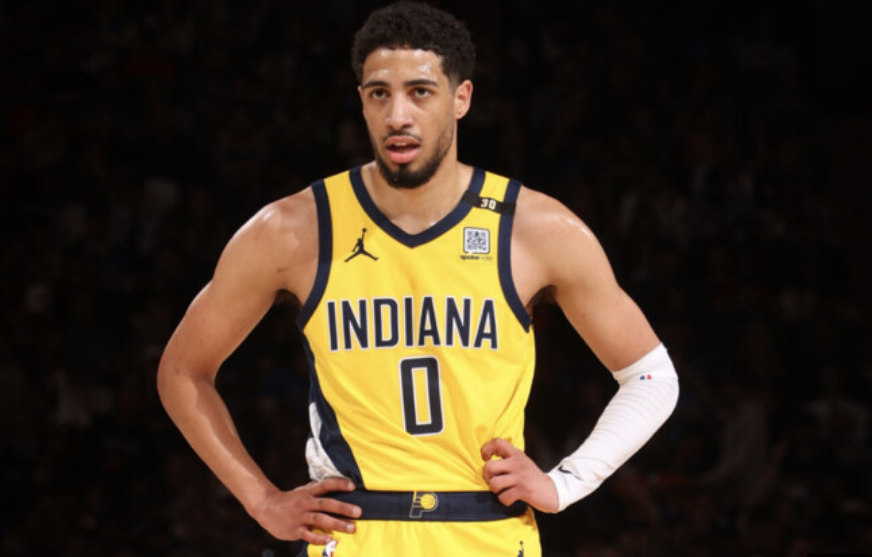
Bad news for Indiana: their key player, Haliburton, will miss the entire upcoming season. This is a major blow not only on the court but also in the team’s financial planning. Bets and predictions will need to be reassessed in light of this development.
Meanwhile, Fenerbahce has bought out the contract of Serbian guard Micic from Milwaukee, allowing him to continue his career in Europe. Moves like this are part of a complex economic game, where every salary cap decision counts. As a result, bookmakers are adjusting the odds, giving users of 1xBet’s NBA betting platform fresh angles to analyze.
European football: scandals, setbacks, and surprising decisions
This summer also brought some major headlines in the world of football. One of the most notable setbacks was the collapse of Nico Williams’ transfer to Barcelona. The deal appeared to be nearly finalized, but ultimately fell through at the last moment. The economic impact is significant – loss of a potential transfer fee, frustration among fans, and a shift in the club’s strategic plans.


Meanwhile, Real Madrid star Jude Bellingham is building two mansions in an upscale yet crime-ridden neighborhood. The decision has sparked a wave of irony and criticism – why take the risk when safer options are available? Still, such choices remain personal, even if they attract public attention.
A List of unexpected decisions in football:
- refusing to sign a contract at the last minute;
- renovating stadiums without UEFA approval;
- extending contracts with ageing players;
- investing in unsafe neighborhoods.
This is by no means the entire list of force majeure situations that can directly or indirectly affect forecasts.
Football and betting: the impact of finals and upsets
Mauricio Pochettino has lost yet another final – his fifth as a head coach. This time, it was the CONCACAF Gold Cup final, where he led the Mexican national team. The defeat further reinforces his reputation as a manager who struggles to take the final step.
From a betting standpoint, such outcomes shake bettors’ confidence and force analysts to revise their projections. It’s a clear example of how the result of a single match can reshape expectations for an entire season. In today’s sports landscape, the economics of sports are deeply intertwined with performance on the pitch and the emotions of the fans.
Table – key events and their impact on odds
| Event | Impact on the betting market |
| Exchange involving 7 clubs | Offsetting factors |
| Indiana star’s injury | Falling club odds |
| Departure of Serbian defender | Increased betting on alternatives |
| Collapse of Nico Williams’ transfer | Decline of Barcelona’s odds |
| Pochettino’s fifth loss in the final | Reducing the betting for his club |
These events emphasize the dynamics of the sports world. More and more often NBA betting insights become a forecasting tool and basketball transfers influence the financial strategies of clubs.
NBA: Stars under pressure,economy in the spotlight
The flow of NBA news shows no sign of slowing down. Recently, the NBA Cup draw for the 2025/26 season took place amid intense transfer activity. The new team allocation formula adds depth to analytics – and with it, strategic betting. Betting platforms like 1xBet were immediately impacted. The draw opened a fresh window for calculating odds on opening games, head-to-head matchups, and playoff prospects. Events like this activate predictive analytics systems, allowing NBA betting insights to rely on data rather than emotion. The impact of the draw on betting is hard to overstate – not only do winning probabilities shift, but the entire range of possible game scenarios evolves as well.
Money, injuries, and reputation: what clubs stand to lose
Amid tournaments and transfer deals, teams continue to undergo economic reevaluation. The most talked-about news was that one of Indiana’s most valuable players, Haliburton, will miss the season due to injury. This triggered a cascading drop in the team’s preseason odds. For analysts and bettors, the NBA prediction service at 1xBet is a clear signal to reassess their strategies.
At the same time, the Milwaukee roster is being restructured. Officially, the reason given is “to give the younger players more playing time.” In reality, however, it’s an economic decision driven by the salary cap and budget allocation rules. The financial side of sports is becoming increasingly transparent. The economics of the game no longer just accompany the action – they set the rules. This is clear in every trade, every signing, and every departure.
Superstars and records: business on reputation
NBA contracts are breaking records. One of the league’s most decorated players recently signed what is already being called the biggest deal in NBA history. We’re talking about Jamial James of the Boston Celtics, an MVP and NBA champion, who inked a $315 million, five-year contract. The deal has sparked widespread discussion in the American press and among bettors. Experts note that it has directly impacted the odds for Boston’s 2025/2026 season – both for the regular season and the playoffs.
Analysts on sports platforms have factored the contract into their predictions for the next 10 games. Team odds shifted, and basketball transfers are increasingly seen not just as formalities but as economic triggers that influence betting lines for dozens of upcoming games.
Big money is not just a sign of status, but a serious pressure factor on the player and the club. Which is important when analyzing sports economics:
- Key player contract size and performance;
- Ratio of market value to contract value;
- Injury rates over the past two seasons;
- Performance statistics before and after transfers.
Each of these factors can affect pre-match analytics and even change betting lines hours before the match.
Player behavior and implications for analytics
We shouldn’t overlook the psychological factor. Pressure from fans, management’s expectations, and star status all influence players’ behavior on the court – and not always for the better. When players are overloaded, technical mistakes increase, clutch performance declines, and shooting accuracy drops.
Betting on 1xBet NBA under these conditions calls for a much more nuanced approach. You can’t rely solely on stats and historical data; a behavioral model that considers both individual and team dynamics is essential. This is where the value of tools like NBA betting insights comes into play. It is an in-depth analysis that goes beyond the usual statistics.
How does 1xBet NBA respond to the rise of super teams?
The creation of super teams has long been a trend in the NBA. Bringing together several stars on one team not only boosts the spectacle but also fundamentally changes the betting market. When three or four superstars share a roster, traditional analytical models often fail. Bookmakers and bettors must consider not only on-court chemistry but also ambitions, egos, and how playing time is distributed.
Interestingly, even with such high-caliber players, these teams don’t always come out on top. That’s the main paradox – high expectations don’t guarantee success. That’s why 1xBet NBA offers flexible tools that help evaluate less obvious but crucial factors like bench depth, secondary assists, productivity from different positions, and the coaching staff’s influence.
An article about the risks and benefits of assembling star-studded teams has sparked active discussion among analysts. It argues that while super teams offer obvious advantages, they also distort betting lines. Odds drop, and many bettors heavily back the expected outcome – often their biggest mistake. Overestimating a team’s strength frequently leads to losses.
In these situations, hedging strategies and game volatility become especially important – key factors that help mitigate risk. These parameters are often overlooked in basic analyses but are integral to advanced betting models.
Comparing the performance of “Star” teams versus balanced teams
| Parameter | Super teams (3+ stars) | Balanced squads |
| Average winning percentage | 61 % | 58 % |
| Fluctuations in coefficients | Highs | Averages |
| Number of bets from players | Very high | Average |
| Implementation in the playoffs | Low (less than 45%) | Stable (60%) |
| Dependency on 1-2 players | Critical | Low |
This table proves: favorites on paper do not always win in practice. The higher the bet on the result, the more important are the details: motivation, depth of the lineup, phase of the season, playing form. All this statistical adaptation is one of the key factors used by the 1xBet betting platform for the NBA.
Unobvious conclusions: fewer stars– higher stability
While super teams continue to dominate the headlines, their impact on actual performance is increasingly being questioned. Internal conflicts, injuries to key players, and limited bench minutes all contribute to instability. In a long season, it’s stability that ultimately determines success. For bettors, this sends a clear message – don’t always bet on the big names.
Rational analysis and the fluctuations of live odds provide a stronger basis for accurate decisions. The 1xBet NBA platform factors in these subtle elements, offering tools to evaluate matches in real time. That’s why game volatility, hedging strategies, and statistical adaptation have become the cornerstones of modern betting – where outcomes are driven by data, not emotion.
Betting, fans, and the digital footprint: how the NBA is changing the way we experience sports
Modern sports isn’t just about points, wins and titles. Today’s NBA is an ecosystem where betting, viewership, media coverage and algorithms intersect. And it is in this space that bookmakers are becoming providers of dynamic analytical content.
One of the most important metrics in recent years has been the digital footprint of the fan. This includes how viewers behave within apps, switch between matches, and focus on specific players. Betting companies factor this data into their odds models. As a result, if a player suddenly gains popularity – say, after a spectacular dunk – their performance may be overrated, even if their consistency on the court doesn’t back it up. This is called behavioral betting bias.
The new reality requires analysts to take into account the emotional peaks of the audience. This explains why a sharp increase in the quotes for mid-table players can be related not to the quality of play, but to the hype on TikTok or X (formerly Twitter). This means that a professional bettor works not only with numbers, but also with social trigger activity.
When stakes determine content
In recent seasons, the NBA has clearly demonstrated a trend: viewers want more interaction, less replays and more story. That’s why broadcasts are increasingly embedding real-time betting statistics. The viewer can see how the lines are changing as the match progresses – who is pulling ahead, who is being bet on the most. The 1xBet platform is one of the leaders in implementing this approach.
A new way of experiencing sports is emerging: users no longer just watch the game – they actively engage with it. They react to statistics, seek advantages, and notice the finer details. This dynamic marks a new level of interaction between fans and sport.
The rising popularity of live betting confirms this shift. In this space, reactive coefficients – lines that change instantly with the flow of the game – are key. Behind it all is a sophisticated system powered by AI and thousands of scenarios. When analyzed effectively, this data gives bettors the edge to beat the market.
The Psychology of finals:playing on nerves
At the playoff stage, betting begins to obey different laws. Teams become more cautious and players more vulnerable to stress. Finals are not only a battle for the trophy, but also a test of personal resilience. Sports cognitive overload plays a key role here – the effect when environmental pressure impairs decision-making.
In matches like these, it’s not just tactics that matter – it’s nerves. Bettors using online platforms are increasingly analyzing the psychological profiles of team leaders: how they respond to mistakes, behave during a draw, and react to refereeing decisions. All of this becomes valuable data.
That’s why, despite appearing straightforward, season finales are high-risk territory. Odds fluctuate more frequently, and AI models trained on historical stats can sometimes fall short. In these moments, experience, intuition, and access to real-time information make all the difference. And that’s where digital platforms like 1xBet gain a significant edge.
When betting becomes part of the industry
Most importantly, betting is no longer “on the side” of sport. They are an organic part of it. Players know about the lines, teams monitor the dynamics of odds, leagues adapt the rules of broadcasting to bookmakers. All this is part of a new environment in which real time sports marketing is becoming a key resource.
In this system, success belongs to those who can adapt quickly. Teams win through tactical flexibility. Fans gain an edge through smart analytics. Platforms succeed by processing data at high speed. All of this comes together in ecosystems where the past, present, and projected future converge seamlessly.
The sports and betting industries are no longer separate – they’ve become a single, interconnected organism where every element influences the other. In a world that demands precision, speed, and adaptability, the platform serves as a vital bridge between gameplay and data analysis. The future of sports lies in data, in the fans, and in those who can see beyond the scoreboard.