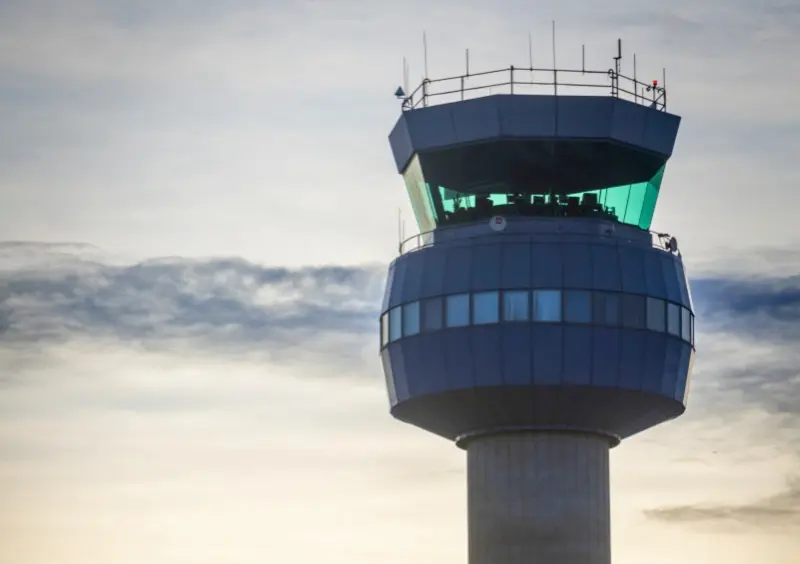
New Delhi: India’s Aircraft Accident Investigation Bureau (AAIB) has called for mandatory video and audio recording inside Air Traffic Control (ATC) towers at international airports after an Ariana Afghan Airlines flight landed on the wrong runway at Delhi’s Indira Gandhi International (IGI) Airport in November 2025.
The recommendation, made in a preliminary investigation report, flagged gaps in available evidence while probing the serious runway safety breach, as per a report by NDTV.
The Ariana Afghan Airlines aircraft – flight AFG311 – from Kabul, landed on a runway meant exclusively for departures instead of the assigned landing runway on On November 23, 2025.
A preliminary probe by the AAIB revealed that the Airbus A310-304 was cleared by Delhi ATC to land on Runway 29L, which was designated for arrivals under the airport’s segregated dependent mode of operations. At the same time, Runway 29R, located just 360 metres away and configured only for departures, was being used by an Air India flight AI 2243, for take-off.
The investigation report states that the Ariana flight was correctly radar-vectored for an Instrument Landing System (ILS) approach to Runway 29L and maintained proper communication with Approach and Tower controllers.
“Tower Controller instructed AFG311 to continue approach RWY 29L which was read back correctly,” the report noted.
However, despite receiving landing clearance for Runway 29L at around two nautical miles from touchdown, the aircraft instead landed on Runway 29R at 12.06 pm.
The pilot-in-command later informed the Directorate General of Civil Aviation (DGCA) that the aircraft lost the ILS signal about
four nautical miles from touchdown.
“The aircraft turned right, after which the captain landed with visual approach on runway 29R,” the report said.
Runway 29R was not equipped for landings at the time. Its approach lights, ILS and Precision Approach Path Indicator (PAPI) were switched off, as it was operating in “Departure ONLY mode”.
After landing, the aircraft vacated the runway via taxiway R and informed ATC that poor visibility prevented the crew from clearly distinguishing between the two parallel runways, it has been reported.
According to the AAIB, the recommendation for video and background audio recording in ATC towers is aimed at strengthening post-incident analysis.
“To analyse controller’s actions, post incident/ accident, it is recommended that ATC units be equipped with devices to record video and background communications of controllers performing ATC duties in Tower,” the recommendation stated.
Such recordings would be used exclusively for investigation purposes by the DGCA and AAIB, it said.
The report also pointed out a critical gap in available evidence: the cockpit voice recorder (CVR) data from the Ariana aircraft had been overwritten because the aircraft operated its next flight without downloading or replacing the CVR at Delhi.
While the digital flight data recorder (DFDR) was recovered and its analysis is ongoing, the loss of CVR data underscored the need for additional independent sources of information.
Delhi airport has four runways across two systems – two in the north and two in the south. The parallel southern runways, 29L/11R and 29R/11L, do not meet the criteria for independent parallel operations and are therefore used in a segregated dependent mode, with one runway dedicated for arrivals and the other for departures.
The AAIB’s findings highlight how close-proximity parallel runways, combined with poor visibility and loss of navigation aids, can significantly increase operational risk, making enhanced monitoring and recording of ATC actions a key safety recommendation going forward.