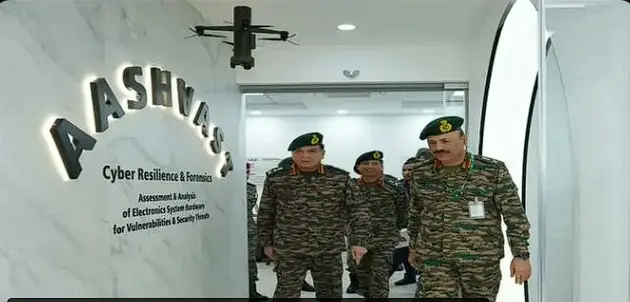
New Delhi: The Indian Army is creating a network of six specialised cyber laboratories to examine military drones for hidden software and hardware-related risks amid growing concerns about the use of Chinese-origin components in defence systems.
The programme, named AASHVAST, will inspect the firmware and embedded systems installed in drones. Its purpose is to identify malicious code, concealed access routes and other weaknesses that could be exploited to interfere with military operations.
A laboratory has already been opened in Delhi, while five additional facilities are expected to be established in different parts of the country. The initial focus will be on unmanned aerial vehicles. Army-purchased CCTV cameras may also be brought under the programme in a later phase.
Checking Code Inside Drones
AASHVAST was developed by QuickPay Pvt Ltd for the Directorate General of Electronics and Mechanical Engineers. Unlike a routine physical examination, the system will study the software that controls a drone and the embedded technology connected to it, as reported by India Today.
The system can detect nearly 14 types of security flaws. These include hidden commands that may affect a drone’s performance, as well as defects programmed to activate at a particular location or time.
It can also identify stored passwords, encryption keys and tools that could allow unauthorised remote access. Other checks will determine whether a defect could stop a drone from reaching its assigned destination or carrying out its mission.
In April, the Army issued a request for proposal for customised licensed software to validate firmware and embedded systems.
Chinese-Origin Parts Raise Concern
The decision was taken amid concerns about Chinese parts used in military drones, especially those operating near India’s eastern border.
India has restricted the use of Chinese components in military drones made by Indian defence companies because of security and data-protection concerns. In 2025, the Army Design Bureau asked the Defence Ministry to work towards removing these components from unmanned aerial vehicles.
The new cyber laboratories will check more than just the supplier’s details. They will also verify where the components were actually made and look for any hidden software or technology.
CCTV Cameras May Be Checked
The Army may later carry out similar checks on CCTV cameras it purchases. The tests could look for weak communication systems and hidden technology linked to foreign-made products.
The initiative aims to improve the cyber security of military equipment, prevent possible outside interference and ensure that the systems work properly during operations. It is also part of the government’s Atmanirbhar Bharat plan to make India more self-reliant in defence technology.