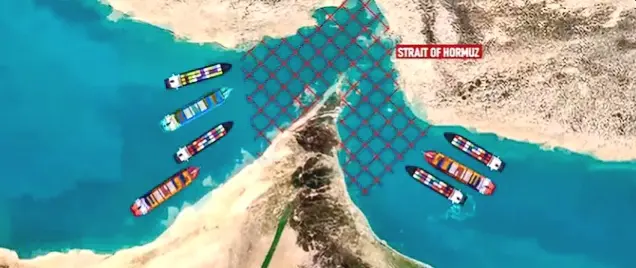
Hong Kong: Iran has quietly kept its oil lifeline flowing, with about 90 ships – including multiple tankers – slipping through the Strait of Hormuz to move millions of barrels of crude even as the Middle East conflict has choked off most traffic through the world’s most important energy chokepoint, according to maritime tracking and trade data.
Many of the vessels that passed through the strait were so‑called “dark” transits evading Western government sanctions and oversight and likely linked to Iran, maritime data firm Lloyd’s List Intelligence said. In recent days, vessels with links to India and Pakistan have also successfully crossed as governments stepped up negotiations with Tehran.
Most shipping traffic through the Strait of Hormuz – a key corridor for global oil and gas shipments that normally handles roughly one‑fifth of the world’s crude – has been denied passage since early March, after the war began, and around 20 vessels have been attacked in the area. At least 89 ships crossed the strait between March 1 and 15, including 16 oil tankers, according to Lloyd’s List Intelligence, as reported by The Economic Times. This is a sharp fall from roughly 100 to 135 vessel passages per day before the conflict. More than one‑fifth of the 89 vessels were believed to be Iran‑affiliated, while Chinese and Greek‑affiliated ships were among the rest, it said.
Despite the disruption, Iran has still managed to export well above 16 million barrels of oil since the beginning of March, trade data and analytics platform Kpler estimated. Owing to Western sanctions and associated risks, China has been the biggest buyer of Irania
n crude, analysts said. There has been “continued resilience” in Iran’s oil export volumes, said Kpler trade risk analyst Ana Subasic. Iran has both profited from oil sales and “preserve[d] its own export artery” by using control over the chokepoint, said Kun Cao, client director at consulting firm Reddal. Kpler’s oil export estimates are largely aligned with maritime traffic data.
Among the vessels getting through, the Pakistan‑flagged crude oil tanker Karachi, operated by Pakistan National Shipping Corp., passed through the strait on Sunday, Lloyd’s List Intelligence said. Shariq Amin, a spokesman for the Pakistan Port Trust, refused to confirm or deny which route the MT Karachi had used but said the ship would soon safely reach Pakistan.
The India‑flagged liquefied petroleum gas (LPG) carriers Shivalik and Nanda Devi, both owned by state‑run Shipping Corporation of India, also travelled through the strait around March 13 or 14, according to Lloyd’s List Intelligence.
External Affairs Minister S. Jaishankar told the Financial Times the two vessels were able to pass after talks with Iran. Iraq, too, was in talks with Tehran to allow Iraqi oil tankers through the Strait of Hormuz, its state‑run news agency reported.
Vessels may be transiting “with at least some level of diplomatic intervention,” said Richard Meade, editor‑in‑chief of Lloyd’s List. Iran may have “effectively created a safe corridor” for select ships, with some passing close to its coast, he added. Some vessels near or in the strait have declared themselves as China‑linked or have sailed with all‑Chinese crews to reduce the risk of being attacked, according to an earlier analysis by ship‑tracking platform MarineTraffic. Analysts believe they were taking advantage of China’s closer ties with Iran.
Oil prices have jumped more than 40 per cent to above USD 100 per barrel since the Iran war began, and Tehran has threatened it will not allow “even a single litre of oil” destined for the US, Israel and their allies to pass through.