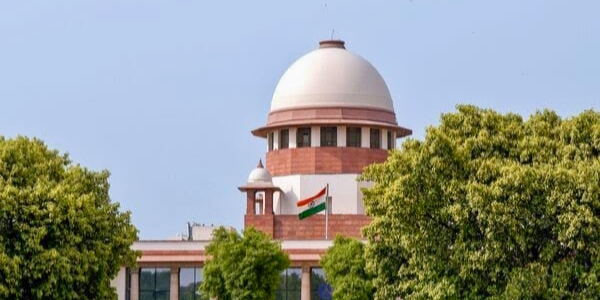
New Delhi: In a decision that will have far reaching consequences, the Supreme Court has upheld a Allahabad High Court order that protects a person accused of domestic violence from being arrested immediately after the complaint is registered. The Allahabad High Court had directed that the accused person should not be arrested for two months after registration of the complaint.
The High Court, in 2022, issued certain guidelines to curb the increasing trend of misuse of Section 498A, where the husband and his entire family are falsely implicated. The High Court had instructed that during a two-month cooling-off period after the FIR or complaint is registered, no arrest or police action will be taken against the accused. During this period, the matter will be referred to the Family Welfare Committee in each district.
During the day, the Supreme Court also came down hard on a woman IPS officer who got her husband and father-in-law arrested on charges of domestic violence. The Court directed the IPS officer to tender an unconditional public apology to her former husband and in-laws for the “physical and mental agony” caused by several false criminal cases she filed against them during their marital dispute.
The bench of Chief Justice of India B R Gavai and Justice A G Masih ordered the quashing of all ongoing cases in the matter and dissolution of the marriage, as the couple had separated in 2018. The Court also ruled that their daughter will stay with her mother, and the husband and family can visit her.
In its verdict, the court noted that the husband spent 109 days and his father 103 days in jail due to criminal cases filed by the wife. The court held that the suffering they had to endure was irreparable and directed the officer to tender a public apology.
“The woman and her parents shall tender an unconditional apology to her husband and his family members, which shall be published in the national edition of a well-known English and a Hindi newspaper,” the Court observed.
The judges also said that the apology must be published and shared on Facebook, Instagram, YouTube, and other similar social media platforms within three days of the order. They, however, clarified that this apology should not be seen as an admission of guilt and will not affect any legal rights, responsibilities, or consequences under the law.