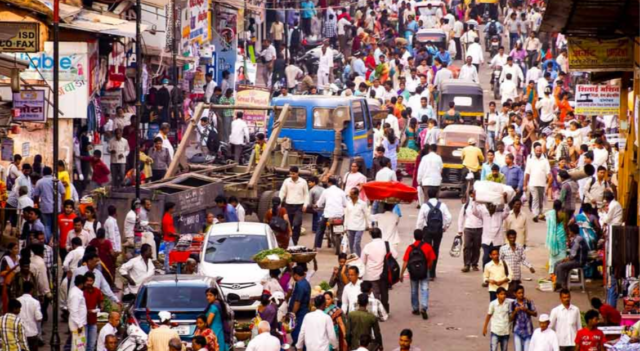
Today, more than half of the world’s population of over 4 billion people lives in cities. This shift is set to continue, with the urban population expected to more than double by 2050, at which point nearly 7 in 10 people will live in cities. It’s an old school views that still governs urban planning as cities are engines of economic growth and development still fuels urbanisation across the globe.
Then Odisha is amongst the slowest movers of urbanisation in India with less than 17% of its population living in less than 2% of land as per 2011 census. But Odisha is presently on a demographic transition, which means like the global population composition a major shift Is happening where states Urban Population growth is more than the Rural population. It means people are migrating to urban areas for better life or rural areas are naturally merging into urbanisation.
Such a transition is not happening overnight rather the reasons are its urban centres where most GDP is generated and most private sector jobs are created. As urban population grow, they help entire regions and even state to become more prosperous and productive. The result bigger cities are pulling more people into their territory much faster than planners’ imagination.
However, the rapid pace and scale of urbanisation is bringing significant challenges in it. Therefore, government must meet the growing local demand for more and better jobs, efficient infrastructure and services, and affordable housing, especially for the over 10 million people living in slums or informal settlements.
The pressure on this demographic transition will be further heightened by rising rates of local conflict, with over half of forcibly displaced people living in cities and urban areas believes cities are paved with gold. The search of gold either bringing more people in to cities or adjoining rural villages merging with cities or large & group of villages becoming towns.
This year’s World Population Day focuses on empowering young people to create the families they want. With insights on fertility intentions & childbearing behaviours, according to the UNFPA report, nearly 20 per cent of reproductive age adults believe they will not be able to have the number of children they desire. Key constraints include the prohibitive cost of parenthood, job insecurity, inadequate housing, concerns over the state of the world, and lack of a suitable partner.
In Odisha most people want to have two or more children, but economic and social constraints limit their ability to have the number of children they want. Which is an alarming finding that raises points like some year’s age everyone debating about population control but circumstances left humans at democratic transition where an ageing population with declining fertility rates.
Therefore, there is immediate need to remove those barriers and expand choices to help people realize their fertility aspirations, and decide freely on the number, spacing and timing of their children.
Empowering young people in a world of declining fertility, is big challenge for state like Odisha, that once use to be dealing with fertility as well as high informal mortality rate in India currently improved it’s informal mortality rate into a respectable status from the worst; while some of it’s industrial & mineral rich district along with state recorded sharp decline in total fertility rate; along with rise in elderly people. Perhaps last two decades family planning awareness amongst reproductive age groups youth, increase in educational level and more important the health infrastructure.
The big challenge that Odisha’s demographic transition is before policymakers are there is going to be huge disparity between rural urban population with aspirations; second dealing with declining fertility rate below natural replacement level and third increasing elderly population. This situation globally seen in Scandinavia countries like Sweden, Norway, Denmark, Finland etc.
One may feel as if Odisha urban population living Copenhagen, Helsinki like cities with happiness index high. But it’s not like that because per capita income of youths as well as elderly people are very low compare to those developed world. Second people in Odisha or say India doesn’t enjoy social security nor infrastructure that can support ageing population lifestyle nor health infrastructure. The situation of Odisha is like statistically living in mature society like Scandinavian cities but economically at level of many African nations
The census that’s likely open up many more surprises when it gets publish In April 2027. The World Population Day is a great reminder that as fertility rates drop to record lows in Odisha and rising elderly population in demographic pyramid; the state must act, what young people and ageing population need the most is an equitable, sustainable and peaceful society to create the families they want and build the futures they desire in growing urbanisation. Even 2029 general election for the first time in India as well as Odisha is likely to be based on urban agenda.