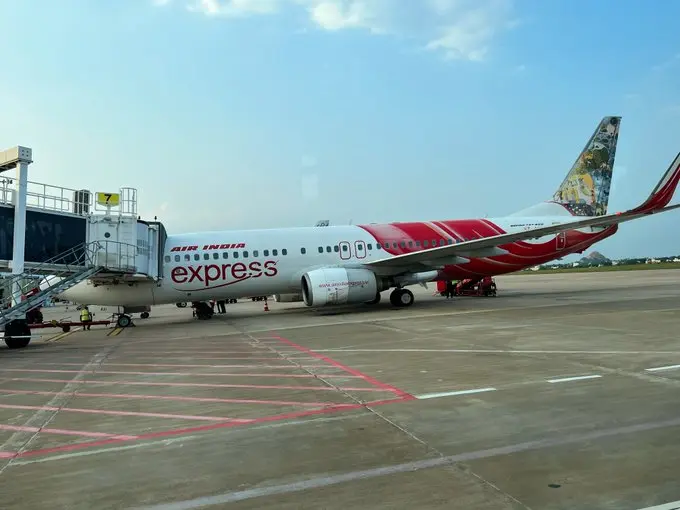
New Delhi: India’s national carrier Air India has announced a reduction in its international flight operations till July, citing soaring jet fuel prices and ongoing disruptions caused by the West Asia conflict involving the United States, Israel, and Iran.
According to the airline’s CEO and Managing Director Campbell Wilson, the decision comes as a combination of sharply rising fuel costs and restricted airspace has rendered several long-haul routes financially unviable.
In a message to staff, Wilson said the airline had already scaled back some services in April and May. However, the situation remains “extremely challenging,” forcing the carrier to further trim its international schedule for June and July.
Rising Costs and Longer Routes
The ongoing geopolitical tensions in West Asia have led to widespread airspace closures, compelling airlines to take longer alternate routes. These diversions significantly increase fuel consumption and operational costs.
The crisis has been exacerbated by a sharp surge in global oil prices, driven by disruptions in key supply routes such as the Strait of Hormuz—a critical artery for global energy shipments.
As a result, aviation turbine fuel (ATF) prices have risen steeply, making international operations particularly expensive. Recent revisions in India also saw jet fuel prices for international airlines increase again, reflecting global market volatility.
Financial Pressure on Air India
Air India, which is already grappling with significant financial losses—estimated at over ₹22,000 crore in FY2026—is under pressure to cut costs and maintain viability.
Wilson acknowledged that many international routes have become unprofitable under current conditions, leaving the airline with little choice but to reduce capacity temporarily.
Broader Aviation Impact
The airline’s move reflects a wider global trend. Airlines worldwide have begun cutting flights, raising fares, or both, as jet fuel prices soar due to the conflict.
Indian carriers, in particular, have been heavily impacted, with over 10,000 international flights cancelled since the conflict began earlier this year due to airspace restrictions and rising costs.
Air India has expressed regret over the disruption to passengers and crew schedules, stating that normal operations depend on stability returning to the region and the reopening of critical air routes.