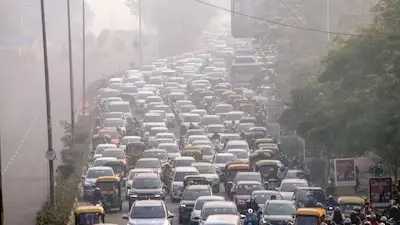
New Delhi: High pollution levels and poor air quality in the national Capital are the talk of not just India but globally as well.
Now, even the United Nations (UN) has voiced serious concern.
According to the UN, thick, toxic smog and air quality levels in New Delhi have soared 35 times above World Health Organization (WHO) safety limits are turning Delhi into a public-health crisis in the winter.
Balakrishna Pisupati, who heads UN Environment Programme’s India (UNE
P) office, warned that air pollution in Delhi is “almost reaching the level of a disaster.”
Speaking to UN News, Pisupati opined that the reason behind scary air pollution is a deadly mix of vehicle emissions, crop-residue burning, industrial output, construction dust and stagnant winter wind patterns.
He highlighted the urgent need for coordinated action on reduction of fossil fuel and forest protection as UNEP and India seek cleaner-air solutions.
Major programmes and investments have been made, yet progress is like “running on a treadmill”, hampered by policy gaps, weak enforcement and slow behavioural change, the UNEP official said.
A day after pollution levels went down, air quality in Delhi deteriorated again on Monday, and was close to ‘very poor’ category.
As per Central Pollution Control Board (CPCB) data, Delhi recorded an AQI of 298 at 7 am.