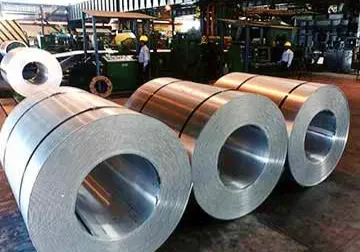
New Delhi: Aluminium manufacturers in the country, including those in Odisha, are facing trouble due to shrinking global markets and dumping of low-quality scrap.
The Aluminium Association of India has now sought the finance ministry’s support, claiming that high US tariffs, rising protectionism in Mexico and Indonesia’s capacity expansion has severely impacted exports.
Dumping by Russia and a surge in low-quality scrap as well as aluminium imports from Gulf and ASEAN countries have added to the trouble, as reported by PTI.
Odisha is the undisputed leader in aluminium in the country, producing nearly 54% of the metal.
The association, in a representation to the Central Board of Indirect Taxes (CBIC), has said that since the world is using and promoting imports of only high-quality scrap, it is the need of the hour for India to establish similar quality standards.
As major economies are protecting their domestic aluminium industries through higher import duties and other trade measures to attract investments, expand capacities and reduce import dependence, India should also strengthen safeguards, it has said.
The association has urged the government to continue the existing duty structure on aluminium products and consider higher basic customs duty and other trade measures to curb the surge in imports of poor quality scrap, citing examples of countries such as Mexico, the US and Canada, where duties range between 15 per cent and 50 per cent.
The final BIS standard titled ‘Aluminium & Aluminium Alloy Scrap – Requirements & Conditions of Delivery’ should be notified without changes it has requested, saying it has already been approved by bodies such as NITI Aayog, and BIS.
This will ensure that India does not become a dumping ground for unchecked quality of hazardous global aluminium scrap, the producers have said.
The notification would classify aluminium scrap into different grades based on aluminium content, ranging from above 95 per cent to below 60 per cent, it said.
The government has also been urged to maintain the existing import duty on aluminium scrap until the pending BIS quality standard is notified and grade-wise HSN (harmonised nomenclature) codes are introduced.
The government will then be be able to distinguish between high-quality scrap used by recyclers and lower-grade scrap with higher impurities, it said.
The import duty on low-grade aluminium scrap (Grades 3 to 7) should be raised to 7.5 per cent thereafter to curb imports of poor-quality scrap into the country, the association has said.
“To restrict imports of poor-quality scrap, import duty on low grade scrap should be enhanced to 7.5 per cent,” it said.
A calibrated customs duty framework, along with immediate notification of BIS scrap standards, will help protect domestic value creation while supporting quality-led recycling, it said.
Ministry of Commerce data reveals that aluminium imports have more than doubled from 1.53 MTPA in FY15 to 3.48 MTPA in FY26, while the import bill has increased from Rs 23,328 crore to Rs 88,434 crore during the same period.
Scrap imports alone have risen from 840 KTPA in FY15 to 2,028 KTPA in FY26, resulting in a forex outgo of Rs 40,203 crore.
“To promote India’s circular economy goals of the secondary aluminium industry, it is important that the government establish a robust domestic scrap collection and recycling system. This will prevent forex loss caused by imports of aluminium scrap (Rs 40,203 crore in FY26),” the association has said.