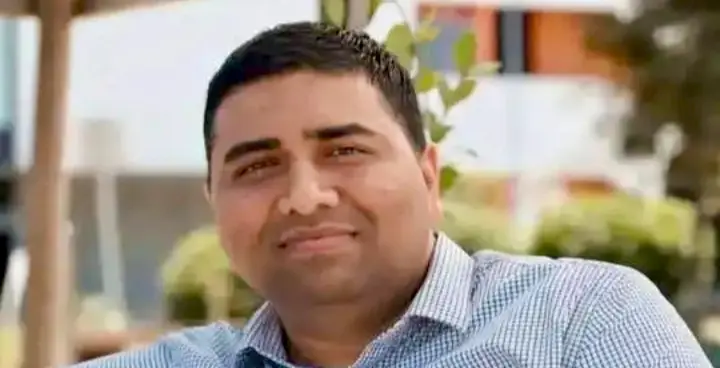
Cupertino (California): Indian-origin
artificial intelligence researcher Amar Subramanya has been appointed by Apple as its new vice president of AI. Subramanya comes with extensive experience at Google and Microsoft.. The move comes as Apple confirmed that its current AI chief, John Giannandrea, will retire in 2026.
Subramanya most recently served as corporate vice president of AI at Microsoft. Before that, he spent 16 years at Google, where he was head of engineering for Google’s Gemini Assistant prior to his departure.
Subramanya’s extensive expertise in AI and ML research, and in applying that research to real-world products and features, will be vital for the company’s continuing innovation and future Apple Intelligence features, Apple has said.
Subramanya has held several senior roles across leading technology companies. His last role was as CVP of AI at Microsoft, a position he took up in July 2025. He spent over 16 years at Google before that, where he held multiple roles, including VP of engineering for Gemini, Gemini App/Bard from Nov
ember 2019 to June 2025, principal engineer from September 2017 to October 2019 and staff research scientist from June 2009 to September 2017.
He earlier worked at Microsoft as a visiting researcher from September 2005 to May 2006 and as an intern between June and September 2005. His professional journey began as a software engineer at IBM, where he worked from October 2001 to July 2002.
Subramanya holds a Bachelor of Engineering in Electrical, Electronics and Communication Engineering from Bangalore University (1997-2001) and completed a PhD at the University of Washington (2005-2009).
Giannandrea’s stepping down marks the most significant change within Apple’s artificial intelligence group since the launch of its Apple Intelligence suite in 2024, CNBC reported. The shift reportedly comes as Apple has lagged behind competitors in artificial intelligence, a sector that has surged since OpenAI released ChatGPT in 2022.
Apple Intelligence, designed to position Apple alongside AI leaders such as OpenAI and Google, has not been well-received by users and critics. Earlier this year, one of its headline features, a substantially improved Siri, was delayed until 2026, signalling development hurdles.
Apple said in August that it was “significantly increasing” its AI spending, and CEO Tim Cook described the technology as “profound.” The company has also secured a deal with OpenAI to bring ChatGPT into several of its products, including Siri.