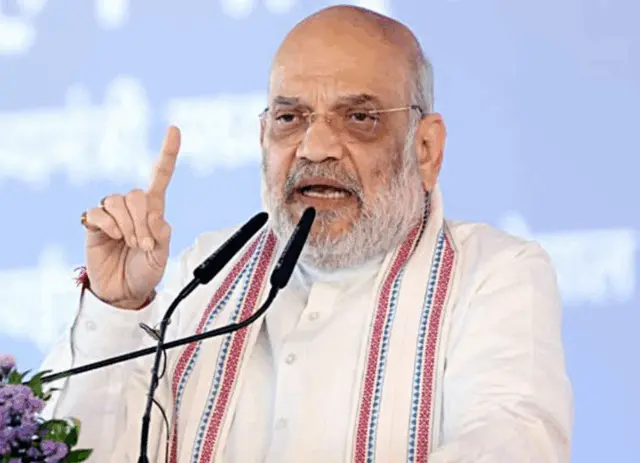
Bhubaneswar: Union Home Minister Amit Shah is slated to chair the 28th meeting of the Eastern Zonal Council in Odisha on November 29, where issues of national and regional importance will be discussed threadbare.
High on the agenda will be the implementation of Fast Track Special Courts for speedy trial and disposal of rape cases against women and children, sources said on Friday.
The meeting is also likely to take up other important issues such as ensuring brick-and-mortar banking facilities within the designated radius of every village, strengthening the Emergency Response Support System (ERSS-112), and matters of common regional interest such as nutrition, education, health, power, urban planning and strengthening of cooperative systems.
The Eastern Zonal Council comprises Odisha, Bihar, Jharkhand and West Bengal. The day-long meeting is expected to be attended by Odisha Chief Minister Mohan Charan Majhi, Jharkhand Chief Minister Hemant Soren, Bihar Chief Minister Samrat Choudhary and West Bengal Chief Minister Suvendu Adhikari. Chief Secretaries and senior officials of the member states and the Central government will be present.
The meeting is being organised by the Inter-State Council Secretariat under the Ministry of Home Affairs in collaboration with the Government of Odisha.
In the 2024 meeting, long-pending complex issues related to Masanjore Dam, Taiyabpur Barrage and Indrapuri Reservoir were discussed in detail, among others.
Five Zonal Councils were established under Sections 15 to 22 of the States Reorganisation Act, 1956. The Union Home Minister is the Chairman of all five Zonal Councils, while the Chief Ministers, Lieutenant Governors and Administrators of the member States and Union Territories are its members.
The Chief Minister of one member state acts as Vice-Chairman by rotation every year. Two ministers from each member state are nominated by the Governor as members of the Council.
The Council has also constituted a Standing Committee at the level of Chief Secretaries. Issues proposed by the states are first placed before the Standing Committee. After consideration there, the remaining issues are placed for consideration in the meeting of the Zonal Council.