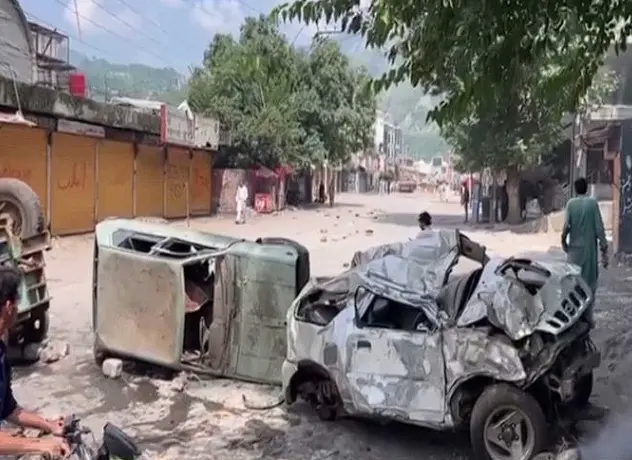
Rawalakot: Amnesty International and the Committee to Protect Journalists (CPJ) have sharply criticised the crackdown in Rawalakot and elsewhere in Pakistan-occupied Jammu and Kashmir, warning of escalating state violence, sweeping press restrictions and growing concern over the reported disappearance of journalists, ANI reported.
The groups said the unfolding situation has been marked by force against protesters, communications blackouts and restrictions on independent reporting, and called on Pakistani authorities to halt the crackdown, restore access and allow transparent scrutiny of events on the ground.
Highlighting alarming reports of violence in Rawalakot, Amnesty said the pattern fits a long record of state abuse against protestors in the region and pressed for an external probe.
Press Freedom Under Strain
“The disturbing reports emerging from Rawalakot are consistent with the Pakistan authorities’ long history of unlawful violence against protesters in Pakistan-administered Jammu and Kashmir. A prompt, independent, and transparent investigation must be ordered into the security forces’ use of force against protesters. So long as an internet and mobile services blackout remains in place, it will severely impede the independent verification of the full extent of the situation on the ground. We urge the Pakistani authorities to restore all communications access and allow media and independent observers into the area,” Amnesty said in a post on X.
CPJ, in a series of posts, said the authorities appeared to be carrying out a wider clampdown on news gathering, citing telecom disruptions, reporting restrictions and the disappearance of journalists.
“CPJ is monitoring the deteriorating press freedom conditions in Pakistan-administered Kashmir amid ongoing protests. Reports of internet blackouts, telecommunications shutdowns, restrictions on reporting, and the detention and disappearance of journalists are deeply concerning. Pakistani authorities must immediately end the crackdown on journalists, restore access to information, and allow independent reporting,” CPJ said in a post on X.
The press freedom organisation said it was particularly worried about the safety of media workers in the region, including the reported disappearance of journalists allegedly picked up by uniformed personnel in Islamabad.
“CPJ is deeply concerned by reports that independent journalist Razi Tahir and his colleague Muhammad Saif have been missing since August 1. They were reportedly taken by men in police uniforms from their office in Islamabad, and their whereabouts remain unknown. Pakistani authorities must acknowledge whether they are in state custody, ensure due process, and immediately release them if they are being arbitrarily detained,” it wrote.
“Journalists Razi Tahir and Muhmmad Saif remain missing after reportedly being taken by men in police uniform on August 1. Pakistani authorities must acknowledge their detention if they are in state custody, ensure due process, and immediately release them. Kashmiri journalist Raja Ikram, who was reportedly detained in Islamabad on August 1, was later released,” it added.
CPJ also suggested the pressure on the media extends beyond the region, pointing to reported action against a major international broadcaster and continuing telecom curbs.
“Separately, unconfirmed reports suggest access to Al Jazeera has been restricted in Pakistan after the outlet reported from Kashmir on August 1. Pakistan’s Ministry of Information and Broadcasting accused the broadcaster of “yellow journalism.” According to media reports, communications across Pakistan-administered Kashmir have been heavily restricted, with internet access still partly disrupted since June 5.
The development comes amid a rising toll from the protest movement. According to data updated by the Human Rights Council of Pakistan-occupied Jammu & Kashmir (HRC-PoJK) as of Sunday, 80 deaths have been recorded in all, including 33 civilian fatalities before July 27, 43 more from July 27 onward in Rawalakot, Mirpur and Muzaffarabad, and four personnel of Pakistan-occupied Jammu & Kashmir police.