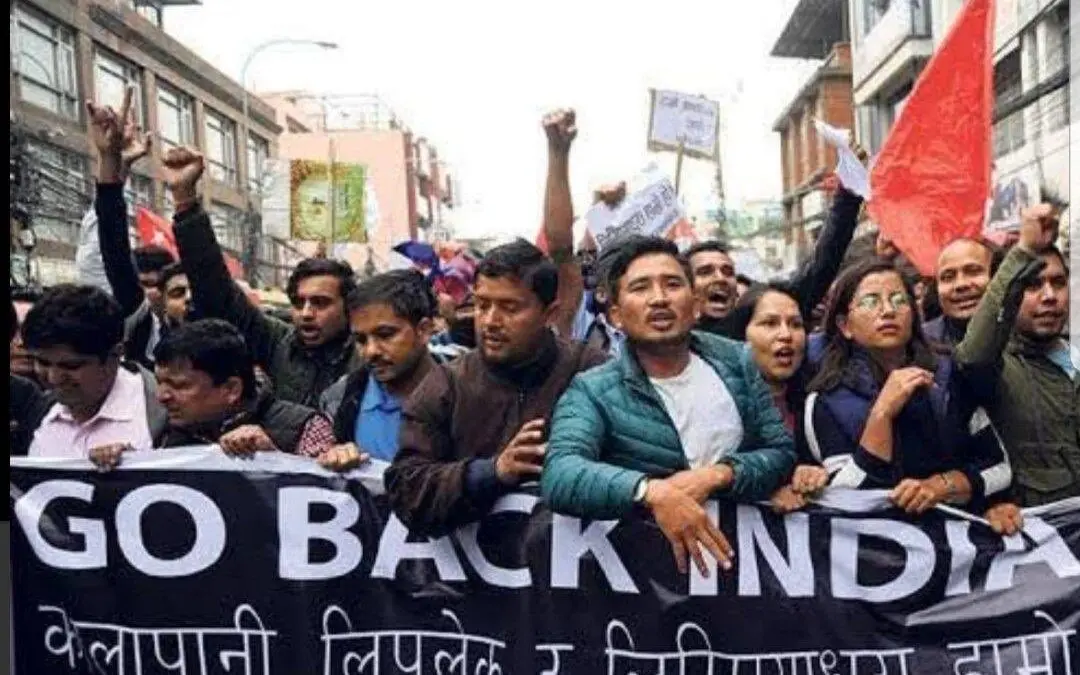
We cannot remain immune to orchestrated chaos if we continue to stay detached, dismissing unrest near our land and maritime borders as mere offshoots of domestic discontent. A closer look at recent developments around India should jolt its diplomacy out of its slumber or should it be called a leisurely approach in addressing our core national interest, which is being consistently challenged on multiple fronts.
“Azadi” campaigns, Gen Z mobilisations, and various youth-led movements, often framed under the banner of “sovereignty”, have surged in recent times. While the sincerity behind some of these movements cannot be entirely dismissed, the timing, coordination, and pattern of escalation are deeply concerning. Events in Bangladesh, Sri Lanka, Nepal, and the Maldives reveal a troubling regional pattern that demands closer scrutiny.
India is facing creeping challenges. In the Maldives, the “India Out” campaign that gained momentum in 2020–21 was a calculated effort, driven by pro-China elements and advanced first by former President Abdulla Yameen Abdul Gayoom and later by President Mohamed Muizzu. It targeted India’s military presence, which holds a strategic edge in the Indian Ocean, under the pretext of anti-corruption and regime-change rhetoric, giving it the appearance of a genuine political movement. As anticipated, one of Muizzu’s first moves after taking office was to demand the withdrawal of Indian military personnel, making clear whose interests were ultimately being served.
This maritime salvo set the stage for Sri Lanka’s Aragalaya protests in 2022, which evolved into renewed “freedom rallies” and “Black Day” observances in 2025–26. Nepal followed a similar trajectory in 2025, with Gen Z-led protests erupting at border points such as Sonauli, accompanied by renewed Madhesi blockade threats. These actions, framed around narratives of “Indian interference” and alleged palace intrigues, further strained bilateral ties.
The sequence reached its peak with the ouster of Sheikh Hasina in Bangladesh, where protesters branded her an “India puppet”. This led to the banning of the Awami League in 2025 and the rise of a BNP-Jamaat coalition in the 2026 elections, marked by a sharp rise in Islamic political fervour.
Viewed chronologically, these “Azadi” waves from the Maldivian atolls to the streets of Dhaka paint a clear picture of an escalating anti-India crescendo and deliberate regional destabilisation. When connected, they point to a Sino-Pak axis employing economic incentives, ethnic proxies, and familiar ISI-style “Kashmir playbook” tactics to encircle and erode India’s influence.
It is now both imperative and urgent for Delhi to counter these “Azadi,” “India Out,” and Gen Z narratives head-on. Years of overly cautious foreign policy have created space that adversaries have skillfully exploited. The recent imposition of an “entry tax” on Indian goods by Nepal, for instance, is a provocative step that signals Kathmandu’s tilt toward Beijing and its intent to dilute Delhi’s trade dominance. By levying duties even on everyday essentials, Nepal has disrupted traditional cross-border commerce, disproportionately affecting ordinary citizens and sparking local protests.
What India needs is not reactive or punitive posturing, but proactive outreach. The diplomatic engagement with Sri Lanka in April 2026 represents a welcome shift from crisis management to structural integration, anchoring New Delhi as Colombo’s primary economic and security partner. However, the “Neighbourhood First” policy must move beyond slogans. India should accelerate efforts to reset ties with Nepal and Bangladesh, especially amid volatility in the Middle East, energy disruptions, and the Iran-US standoff.
In Bangladesh, New Delhi must move past the Hasina-centric era and pragmatically engage with the new administration under Tarique Rahman. In Nepal, strategic pragmatism calls for addressing longstanding border, water-sharing, hydropower, and supply-chain issues through mutually beneficial settlements.
The real prudence lies in converting historical mistrust into shared sustainability. This would help neutralise external meddling. To effectively counter the “Azadi” and Gen Z narratives, which have coalesced into a potent, decentralized playbook of youth driven anti-India sentiment fueled by foreign agencies, India must transition from “Paternalistic diplomacy” to “Structural Interdependence”.
New Delhi should closely monitor social media, where these narratives portray India’s regional role as “hegemonic” and stoke economic anxiety. The most effective response is not mere counter-propaganda, but positioning India as an indispensable partner and lifeline for its neighbours. Through economic integration and smart soft-power initiatives, India can reconnect with the youth of Dhaka, Kathmandu, and beyond, dismantling subversive narratives from within.
India must redefine regional freedom not as isolation from Delhi, but as collective strength rooted in strategic cooperation and mutual respect. True sovereignty, real Azadi, is undermined when neighbours allow their domestic grievances to be weaponized by external powers, turning their territories into arenas for foreign geopolitical games.
(Views expressed by the columnist are personal and do not represent the views of this publication)