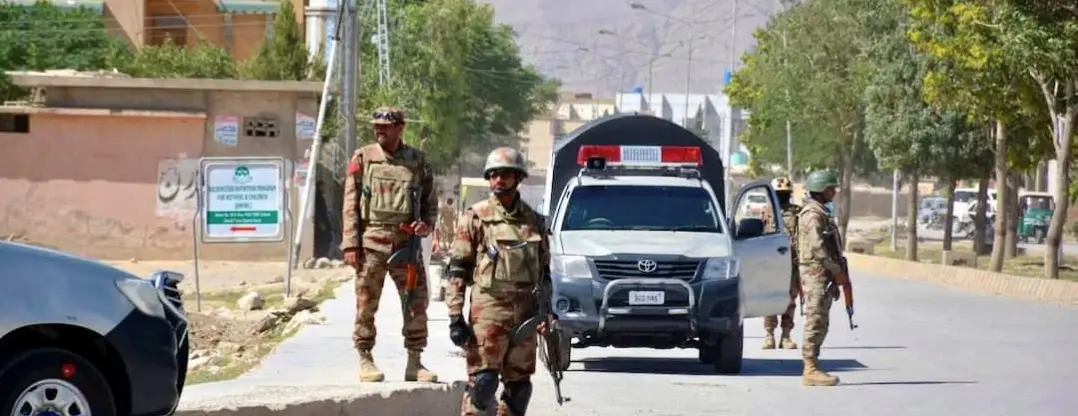
Quetta: At least 45 Pakistani soldiers are suspected to have been killed and several injured in an ambush on a military convoy in the Khadkocha area of the Mastung district of Balochistan on Thursday.
The Fatah Squad of the Baloch Liberation Army (BLA) has claimed responsibility for the attack on the Frontier Corps convoy moving from Quetta to Kalat on the N-25 highway. Reinforcements sent in were also targeted by the militants.
The convoy comprised troop transport buses and their dedicated security detail. An encounter between security forces and the BLA is still continuing.
Balochistan is Pakistan’s largest but most sparsely populated province. The geography of the region presents a logistical nightmare for the military. To move troops across these vast, arid expanses, the armed forces are forced to rely on a highly limited network of primary highways, as reported by News18.
Militants can easily monitor these solitary transit corridors for days, identifying patterns and selecting the perfect geographic choke points to launch premeditated, devastating ambushes. By controlling the high ground along these isolated roads, the BLA is consistently able to dictate the terms of engagement before the first shot is even fired.
Security forces also lack appropriate defensive equipment. According to BLA statements, the Pakistani military frequently transports its personnel across active conflict zones in standard, soft-skinned passenger buses rather than specialised Mine-Resistant Ambush Protected (MRAP) vehicles.
Lacking heavily armoured hulls, these buses offer virtually no protection against command-detonated Improvised Explosive Devices (IEDs) or concentrated, heavy small-arms fire. When an escalation occurs, the lack of immediate physical protection inside these vehicles results in catastrophic initial casualty rates, leaving survivors highly vulnerable during the critical opening minutes of an ambush.
Another major factor that may be the most insurmountable obstacle facing the Pakistani military in the region is a profound human intelligence deficit. Due to decades of heavy-handed military operations and perceived political betrayal, there is deep-seated resentment among the local Baloch population towards the federal government.
Officials admit that the military operates in a near-total information vacuum. While state forces struggle to recruit local informants, the insurgent groups enjoy active or passive intelligence support from local communities. This lopsided flow of information ensures that militants are fully aware of troop movements, patrol schedules, and response protocols, while the military remains blind to imminent threats.
A bitter struggle over Balochistan’s immense natural wealth is at the heart of this conflict. The province is incredibly rich in valuable resources, hosting vast reserves of natural gas, copper, and gold.
The local population, however, widely believes that these resources are being systematically plundered by a federal government dominated by the Punjabi majority, with the profits diverted away from the region.
While the state extracts billions in mineral wealth, the local communities surrounding these mega-projects are left without access to clean drinking water, reliable electricity, or basic healthcare infrastructure. This stark economic disparity continues to fuel the ranks of the insurgency, transforming local grievances into an increasingly violent, battle-hardened resistance.