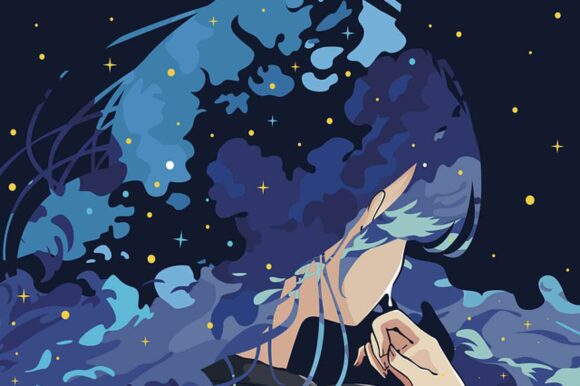
What truly sets us apart from the rest of the animal kingdom?
Some say it is our opposable thumbs, our capacity for complex speech, or our mastery over fire and tools. Yet, none of these alone explain the extraordinary rise of human civilisation from scattered bands of hunter-gatherers to sprawling megacities buzzing with millions of strangers who manage to live, trade and argue side by side. If one looks a little deeper, the real answer lies not in our muscles or bones, but in our minds — in the astonishing ability to believe, together, in things that do not physically exist.
Unlike other animals, we are not bound by the immediate reality in front of our eyes. We can spin tales, chant prayers, sign treaties and pledge allegiance to pieces of cloth dyed in specific colours. These things may not feed us directly or build shelter, but they bind us in ways that brute force never could. Somewhere in the mists of time, long before kingdoms rose and fell, our ancestors stumbled upon this quiet magic — the power of collective imagination. It is this gift that still breathes life into our temples, parliaments, stock markets and courts of law.
Roughly 70,000 years ago, something changed in our brains. Historians call it the Cognitive Revolution — a time when Homo sapiens learned not just to observe the world but to conjure whole worlds in their minds and share them with others. Imagine a few tribes huddled around a flickering fire, telling stories about spirits watching from the dark forest. Over generations, those whispered tales became rituals, then religions, then laws carved in stone. Soon, people who had never met could trust each other simply because they believed in the same invisible powers. This was our species’ great leap — an invisible bridge that connected isolated minds into vast, humming networks of cooperation.
A lion rules through muscle and fang; a chimpanzee builds alliances through grooming and social bonds. But only humans can convince thousands to gather under a banner and march into battle for an idea that no predator can see or touch. Whether that idea is a god promising paradise or a flag symbolising freedom, the effect is the same — strangers become kin. In India, for example, a billion people with different languages and customs call themselves Indian not because they look alike or share the same ancestor, but because they believe in the shared idea of India. It exists nowhere but in our minds, and yet feels as real as any mountain or river.
Consider religion — perhaps the oldest and most powerful story we ever told ourselves. The earliest humans probably sought patterns in thunder, stars and seasons to make sense of a world they could not control. Slowly, these explanations turned into myths, myths into doctrines, and doctrines into entire ways of life. From the priests of ancient Egypt chanting hymns for their sun gods to the wandering monks of Nalanda debating the nature of suffering, faith has bound people tighter than any rope. The Vedas, the Bible, the Quran — ink on pages, yes, but far more potent than stone walls or armies. Millions have lived, loved and died for words that cannot be weighed or measured, yet shape destinies for centuries.
Then came money, a fiction so convincing that we seldom pause to question it. Strip a rupee note of its markings, and it is just a piece of paper, not edible nor sheltering. But because we collectively agree it has value, it can buy rice, pay for an autorickshaw ride or build a skyscraper. Without this mutual trust, modern economies would simply collapse. When that trust breaks — as seen during demonetisation or hyperinflation in distant lands — the paper becomes just that: paper. No tiger or tree could invent something so absurd and yet so essential.
Alongside faith and currency, we forged nations and laws — imagined orders that organise billions. We love to think of ourselves as born into clear identities, but no newborn carries a passport in its tiny fist. To say one is Indian, French or Kenyan is to declare allegiance to an idea carefully taught through flags, anthems, and textbooks. We stand in long queues to vote, cheer when our cricket team wins, and obey rules set by people we may never meet. The power behind this compliance is not fear alone but a belief in fairness, order and justice — even if these are often more promise than reality.
Yet for all their power, our imagined realities are double-edged swords. They bring us together but also tear us apart. History drips with blood spilled over whose god is true, which border is sacred, which people are superior. Partition in our own subcontinent remains one of the starkest reminders of how lines on a map and words in an agreement can uproot millions overnight. Even today, clashes erupt because myths collide — faith versus science, tradition versus progress, freedom versus security. And still, we hold on to these stories because without them, life seems rudderless and chaotic.
It is tempting to mock myths as lies, but that misses the point. Not all fictions are falsehoods; some are frameworks for dreams. Democracy, for instance, rests on the fragile belief that power can come from the people. Human rights are not laws of physics — no apple will stop falling if you deny someone their dignity. But societies that embrace these ideals have changed the fate of millions for the better. India’s own freedom struggle was built on the audacity to believe that a vast, diverse land could govern itself, free from an empire whose power rested on the same imagined consent.
Perhaps this is what it means to be human — to stand in the everyday grind yet dream in grand scales. We read ancient epics under flickering tube lights, argue about new constitutions in crowded trains, and send prayers skyward through cracked temple loudspeakers. One foot in dust, the other stepping towards the infinite. This restless dance between reality and myth is our true inheritance.
Every time we pass coins across a shop counter, bow before a deity, or sing a national anthem, we perform a quiet miracle. We reaffirm faith in ideas that live only in our heads yet shape the roads we build, the wars we fight and the homes we return to. In the end, our greatest temples may not be carved from marble but woven from shared belief. And as long as we can imagine together, there is no telling what new myths we will write, what fresh realities we will dare to build on the fragile scaffolding of our dreams.