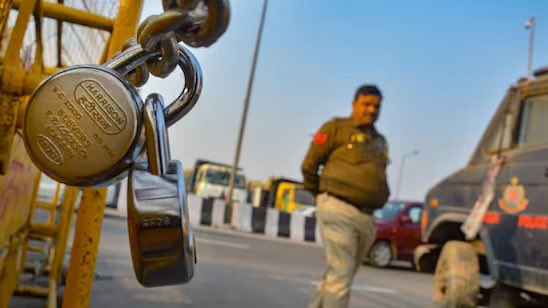
New Delhi: India is witnessing perhaps its 22nd nationwide general strike since the 1991 economic liberalisation, as over 25 crore workers across the country launched a massive Bharat Bandh today (July 9).
Power supply in parts of the country may be disrupted as trade unions and farmers’ groups observe a nationwide strike to protest against the government’s alleged “pro-corporate” and “anti-worker policies.” The strike, called by a coalition of central trade unions, is also expected to impact banking services and public transport in several states.
its 22nd nationwide protest since the 1991 economic liberalisation, as over 25 crore workers across the country launched a massive Bharat Bandh. The strike, led by central trade unions and supported by a wide range of workers’ and farmers’ organisations, disrupted services in several sectors including banking, power, coal, transport, railways, and postal networks.
The protest is aimed at what organisers call the “anti-worker, anti-farmer and anti-people policies” of the government, including recent amendments to labour laws, privatisation of public sector undertakings (PSUs), and dilution of employment rights.
Rail Tracks and Highways Blocked Across States
As part of the coordinated protest, agitators blocked key highways and rail tracks in multiple states. Rail traffic was obstructed in parts of West Bengal, Bihar, and Odisha, including Jadavpur, Diamond Harbour, Shyamnagar (WB), and Jehanabad and Sachiwalay Halt (Bihar). Highways near Bhubaneswar in Odisha also saw major blockades.
Protestors raised slogans, waved flags of various workers’ unions, and halted movement of trains and buses in several regions, causing major disruptions in daily commuting.
Political Support and Separate Bihar Bandh
The INDIA bloc parties simultaneously called for a Bihar Bandh on the same day to protest the Centre’s alleged interference in the special summary revision of voter lists in Bihar. The Opposition claimed this move is unconstitutional and aimed at disturbing the state’s electoral roll ahead of the upcoming elections.
Leaders from the INDIA bloc, including senior Congress figures, participated in the protest in Patna, lending a political dimension to the otherwise trade-union-led nationwide bandh.
Massive Mobilisation Across Labour Sectors
This Bharat Bandh has seen wide participation from workers in multiple sectors:
Coal and steel sector workers, especially from Singareni Collieries and SAIL, joined the strike.
Bank employees under United Forum of Bank Unions (UFBU) also participated.
Insurance, postal, and telecom workers, along with Anganwadi and ASHA workers, supported the call.
Transport workers in multiple states refrained from duties.
Many private-sector workers and rural labour unions also showed solidarity.
Trade union leaders say the strength of the protest is comparable to the 2020 general strike, which also saw the participation of over 25 crore people.
List of Services Affected Today
Sector Status
Banking Many branches shut; limited operations elsewhere
Postal Services Partial shutdown; delays in mail and delivery
Coal & Power Workers joined strike; disruptions expected
Public Transport Buses halted in several cities; severe delays
Railways Track blockades led to delays and rerouting
Education Schools/colleges mostly open, attendance affected
Private Sector Some IT and industrial hubs reported low turnout
Healthcare Emergency services operational; routine hit mildly
Key Demands of the Protestors
- Rollback of four labour codes, which they allege suppress workers’ rights to protest and unionise.
- End to contractual employment and increased job regularisation.
- Guarantee of ₹26,000 minimum monthly wage.
- Withdrawal of the Agnipath scheme in defence recruitment.
- Restoration of old pension scheme and EPF-based universal pension of ₹9,000.
- Opposition to privatisation of PSUs and monetisation of public assets.
Peaceful Yet Disruptive: Situation Monitored Closely
While no major incidents of violence were reported till 11.30am, law enforcement agencies remained on high alert across major metros and industrial zones. Large deployments of police and Rapid Action Force (RAF) units were seen in Kolkata, Patna, Bhubaneswar, and Ranchi.
Officials from the Ministry of Labour and Employment have not issued a fresh statement but have earlier stated that the new labour codes are aimed at improving ease of doing business and attracting investment.