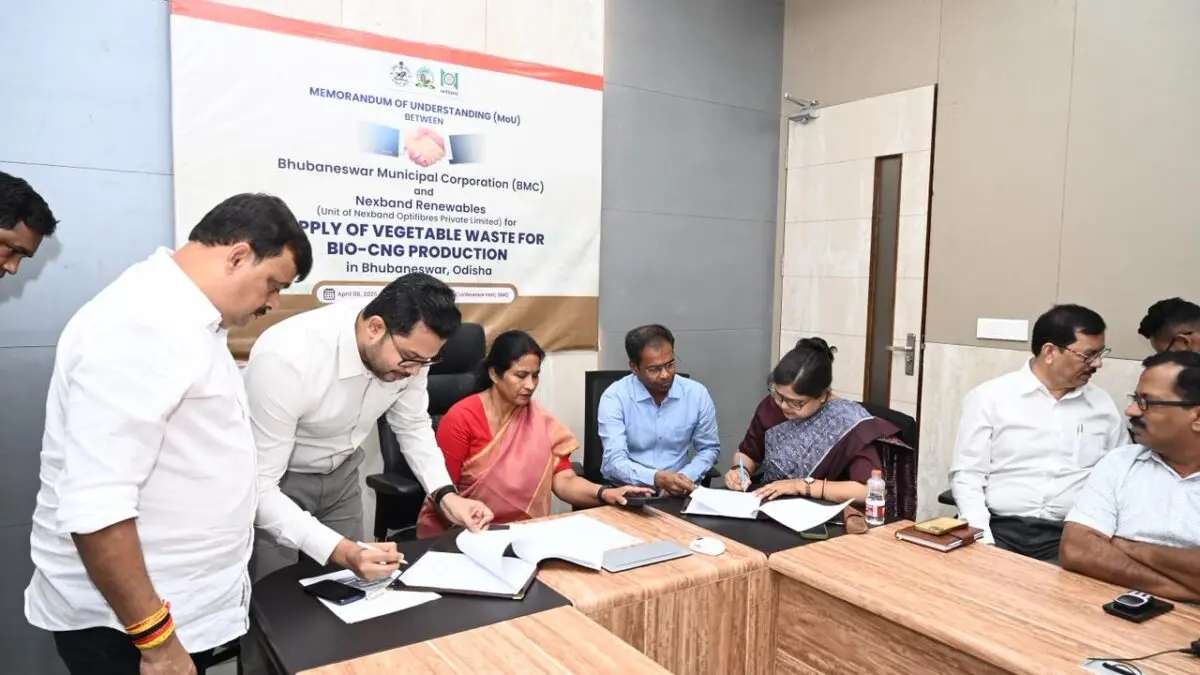
Bhubaneswar: In a significant step towards waste-to-energy initiatives and sustainable urban management, the Bhubaneswar Municipal Corporation (BMC) has signed a Memorandum of Understanding (MoU) with Nexband Renewables to process vegetable and organic waste into Compressed Biogas (CBG or CNG).
The agreement focuses on utilising segregated organic waste, particularly vegetable waste from markets and households, along with Napier grass, to produce renewable energy at Nexband Renewables’ upcoming compressed biogas plant in Begunia, near Bhubaneswar. The BMC is expected to supply an average of around 50 metric tonnes of vegetable waste per day from its jurisdiction.
The MoU was signed by Commissioner Chanchal Rana and Management Director Lori Das of of Nexband Renewables on Monday in the presence of Mayor Sulochana Das, Additional Commissioner Kailash Chandra Das, Chairman of the Sanitation Standing Co
mmittee Biranchi Narayan Mahasupakar, other standing committee chairpersons, corporators, and senior officials from the firm.
The BMC is reportedly the first autonomous urban local body in Odisha to enter into such a pact with the company. It already operates Micro Composting Centres (MCCs) and Material Recovery Facilities (MRFs) for processing segregated waste.
This new initiative aims to take waste management further by adopting advanced scientific methods to generate energy from organic waste. The collected vegetable waste will be stored at designated points across the city. Nexband Renewables will transport it to the Begunia plant at its own cost and convert it into compressed biogas, along with other by-products. The agreement is non-commercial in nature and is initially valid for one year. It is expected to significantly reduce the load on temporary transfer stations (TTS) by diverting organic waste for scientific processing. It will also promote more regular collection of vegetable waste from markets, improve cleanliness in market areas, and enable better utilization of the waste.
Officials described the move as a forward step in transforming “garbage into gold” — turning organic waste into green energy while promoting a circular economy and eco-friendly practices in the capital city.