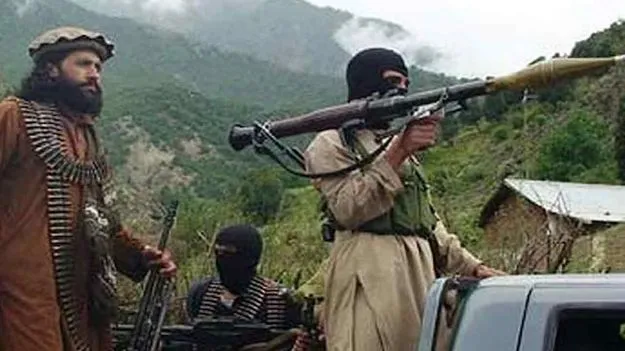
New Delhi: Pakistan-based terrorist groups like Lashkar-e-Taiba (LeT) and Jaish-e-Mohammed (JeM), which have carried out multiple attacks in India over the years, could use the Nepal route to target India in the near future.
The warning was issued by Sunil Bahadur Thapa, advisor to Nepalese President Ramchandra Paudel.
“Pakistan-based groups like Lashkar-e-Taiba and Jaish-e-Mohammed pose serious risks to India and could use Nepal as a transit route,” Thapa said.
He made the observation while speaking at a high-profile seminar themed ‘Terrorism in South Asia: Challenges to Regional Peace and Security’, organised by Nepal Institute for International Cooperation and Engagement (NIICE) in Kathmandu on July 9.
The seminar, which focused on addressing terrorism threats in South Asia, brought together strategic experts, diplomats, and academics who highlighted how terrorism emanating from Pakistan posed a threat to regional peace and stability in the region.
Holding Pakistan responsible for sponsoring terrorism, experts said it has weakened SAARC and stalled meaningful regional integration.
Nepal’s former Defence Minister Minendra Rijal spoke on how terrorist attacks in India have had spillover effects on Nepal’s internal security.
NIICE Director Sumitra Karki underlined Nepal’s own vulnerability to terrorism, recalling the IC-814 hijacking and the April 22 Pahalgam massacre that killed 26 civilians, including a Nepali national.
Dr Pramod Jaiswal, Research Director at NIICE, made his point against Pakistan by citing an admission by Pakistan’s Defence Minister Khawaja Muhammad Asif of harbouring and funding terrorists.
Dr Dinesh Bhattarai, advisor to former Nepal PM and ex-Nepal minister Shishir Khanal praised India’s bold effort by way of Operation Sindoor, calling it a necessary response to cross-border terrorism in response to the Pahalgam terror attack.
Indian Armed forces targeted and destroyed nine terror hubs in Pakistan and Pakistan-occupied Kashmir in the early hours of May 7.
Nepal is considered a major transit risk as the Himalayan kingdom shares a 1,751 km-long open border with India, a major part of which operates with minimal security checks. The porous boundary makes it easy for terrorists to sneak into India.
The seminar urged stronger counter-terrorism cooperation, including stricter action against money-laundering, enhanced intelligence sharing and joint patrolling of borders with India.