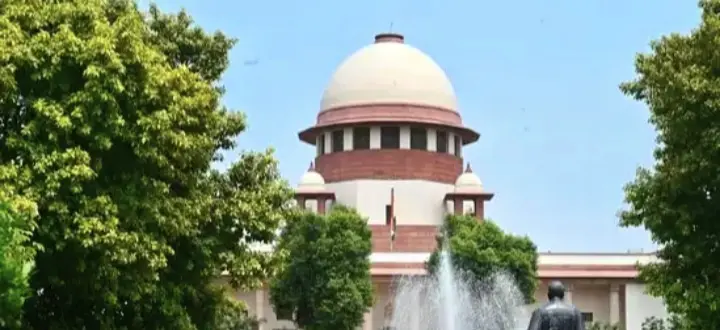
New Delhi: The Supreme Court, on Tuesday, pulled up the Centre and the Drug Controller General of India (DCGI) for failing to act against pharmaceutical companies allegedly manufacturing and selling critical antifungal drug Liposomal Amphotericin B under expired emergency authorisations granted during the Covid-19 pandemic.
The Court asked what regulatory officials had been doing for five years while the drug was being sold without clinical trials and regulatory oversight.
“What were your officers doing for five years when these drugs were being sold without clinical trials and other regulatory requirements? Were they sleeping or were their hands greased?” a bench of justices Vikram Nath, Sandeep Mehta and Aparesh Kumar Singh asked the government, expressing dismay over the delay in initiating regulatory action against companies accused of continuing to rely on temporary pandemic-era permissions, as reported by Hindustan Times.
The government had moved against the companies only earlier this year after the Supreme Court intervened in the matter, the bench pointed out. “You woke up only in February 2026 and started issuing notices after this court gave you a nudge,” it observed.
The Court was hearing a Public Interest Litigation (PIL) filed by Rajendra Prasad, which has raised questions about the continuation of manufacturing and sale of Liposomal Amphotericin B under emergency permissions granted when India was battling a severe shortage of the drug during the devastating second Covid-19 wave in 2021.
The drug was in critical demand at the time to treat mucormycosis, commonly known as black fungus, a potentially life-threatening infection reported among Covid-19 patients.
Appearing for the petitioner, senior advocate S Muralidhar referred to the latest affidavit filed in the case to demonstrate that emergency approvals had been granted to several pharmaceutical companies but there had been no effective follow-up by the regulatory authorities.
Appearing for Sun Pharmaceutical Industries Ltd, senior advocate Amit Anand Tiwari, told the Court that the company had not been granted emergency approvals.
Any directions issued by it would not be confined to individual manufacturers, the bench made it clear.
“Whatever directions we issue will apply across the board for every company that were granted emergency licenses without proper trials during the Covid,” the Court said, while reserving its order.
The PIL has sought production of records relating to the emergency manufacturing permissions granted to pharmaceutical companies under Section 26B of the Drugs and Cosmetics Act, 1940, and the quashing of such licences or approvals. It has also sought directions to stop the manufacture, distribution and sale of the drug by the companies concerned, besides recalling and seizing stocks already in the market and destroying or disposing of them in accordance with appropriate safety protocols.
It further questions whether temporary regulatory relaxations granted to address an extraordinary public-health emergency could continue to serve as the basis for commercial production and sale after the emergency permissions had expired, without manufacturers obtaining the requisite regular clearances.
The government invoked Section 26B during the 2021 crisis to facilitate the availability of Liposomal Amphotericin B amid an acute shortage of the drug. The petitioner has argued that the emergency permissions were intended to be temporary and that companies could not continue manufacturing and marketing the drug on the strength of lapsed authorisations.
In an order passed in April, the Supreme Court noted that show-cause notices had been issued in February 2026 to companies found not to have complied with the conditions of their licences. The notices had elicited replies, which were awaiting decisions by the competent authorities. The latest proceedings have brought the government’s delayed response under scrutiny.
The bench had, in April, directed the authorities to expedite the process and decide the show-cause notices within two months. It also distinguished between companies that had obtained regular manufacturing licences before the pandemic and those whose permissions arose from the emergency arrangements.
Cipla Ltd, Bharat Serums and Vaccines Ltd, BDR Pharmaceuticals International and Lifecare Innovations were among the companies deleted from the array of parties after it was pointed out that they held licences predating the pandemic and faced no show-cause notices.
Sun Pharma’s plea to be removed from the case, however, was rejected because a show-cause notice had been issued to it.
Other companies named in the proceedings include Emcure Pharmaceuticals Ltd, Gufic Biosciences Ltd, Alembic Pharmaceuticals Ltd, Lyka Labs Ltd, Natco Pharma Ltd and Intas Pharmaceuticals Ltd.