By Veena Chhotray
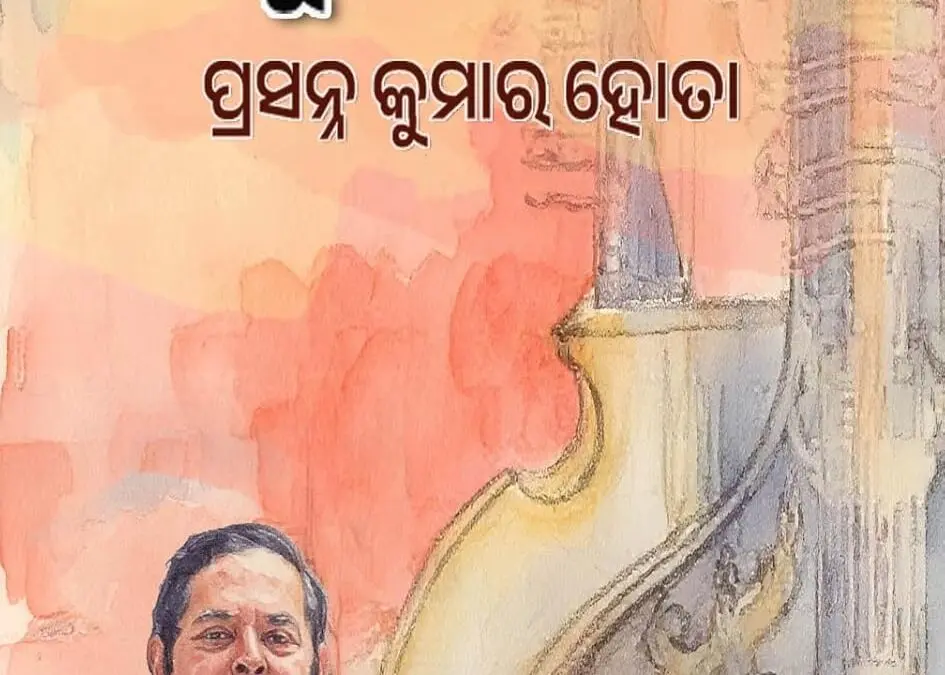
In this rare collection, a translated version of a story from the international arena has been paired with an Odia story. The two stories are like entwined twins born in different geographical areas and climates.
The caption of the book is apt, as the exercise is like a ‘Jugalbandi’ in Indian classical music, where two soloists engage in a spontaneous performance, showcasing their dynamic music.
Twenty-one short stories have been brought together in this book. The translations are sensitive, bordering on transcreation, coupled with the beautiful original Odia stories, mostly written by the author himself and in some cases by other renowned Odia writers.
Both in ‘Girl’ by Antiguan-American writer Jamaica Kincard and the Odia story ‘Jhia’ (meaning girl), a girl is hammered with endless instructions. In both cases, the girl is an adolescent from the lower middle class, yet to be married.
The nature of instructions gels despite the distance of thousands of kilometres between an island in the western hemisphere and Odisha on the east coast of India. Just to illustrate, the instructions range from marketing, cooking, and all household work, emphasising on conduct appropriate to girls as per social norms.
Kincard’s story instructs the girl to walk to the Sunday church, not like an ill-mannered person, but as a girl from a genteel family. The Odia story disapproves of the girl who is reading a book. Instead, in order to ensure that her younger brother goes to school properly, she should devote herself to arranging all his necessary things the previous night and give him breakfast on time in the morning.
Stirrings of romantic love in pre-adolescent children form the theme of the Japanese story ‘The Grasshopper and the Bel cricket’, and its Odia counterpart, ‘Kankee and Prajapati’.
The author also recollects a similar realisation by American poet Robert Frost. Frost is in his nineties when a researcher finds a four-line love poem with some dried rose petals in a tin box amidst the poet’s old papers. The memory fills Frost’s eyes with tears.
In the case of Japanese writer Yasunani Kawabata’s story, the occasion is a festival of insects. ‘Fujio’, a pre-teenage boy, gives a small girl ‘Kiyoko’ what he thinks is a grasshopper, but it turns out to be a cricket. Quite a w
onder for these children! It is also revealed that mystically Fujio’s name decorates Kiyoko’s chest in green letters and the girl’s on the boy’s waist in red letters!
In the striking Odia story of Hota, while giving some guavas plucked from the trees to a small girl, a boy in his tween years, on the prompting of some older boys, asks her the question, ‘will you give me?’, when neither the boy nor the girl understands the implications of the question.
While the circumstances of both these stories and the personal experience of the American poet are vastly different, the feelings of love in tween years that survive all the happenings throughout one’s life are the same, and knit both the stories and those of Robert Frost together.
Gyanpeeth winner Dr S. K. Mahapatra has read this unique juxtaposition and has commended the universality of human situation sought to be portrayed.
From the stirrings of love in pre-adolescent children, the focus shifts to the emotions of the imposing grand old patriarchs with their family members. Both in New Zealand writer Patricia Grace’s story ‘At the River’ and Odia story ‘The River Flows’, the old family heads are spirited and imposing, through their backgrounds are vastly different. Grace’s story relates to the Maori race of the original inhabitants of New Zealand. It is a peripatetic community living in tents and moving from place to place with large family networks. The story deals with fishing and catching of Spiny Eeel, a delicacy from the river. As the younger men go for fishing, the head of the family, the oldest among them, insists on accompanying them. As chance would have it, he gets drowned in the river.
In the immensely readable Odia story by Prasanna Hota, the ethos is totally different. The context is a typical joint Odia family where members of several generations live together. The head of the family is as impressive and distinct as in the Maori background. The pattern of his life is portrayed vividly before he finally slips into eternal sleep after a day’s illness. The families in both cases mourn and are plunged into silent grief.
The emotions and spirit in the two stories are similar, though the circumstances and surroundings are completely different.
These are just a few instances to give an idea of the tenor of this pleasurable book. The diversity of the stories and the vast range of themes are striking. One is not aware whether such an exercise has been attempted previously in any language. However, considering that the book was first published about 25 years ago and the present one is the third edition, it seems that the book and the unique idea behind it deserve to have a wider reach.
(Veena Chhotray is a former bureaucrat and translator)