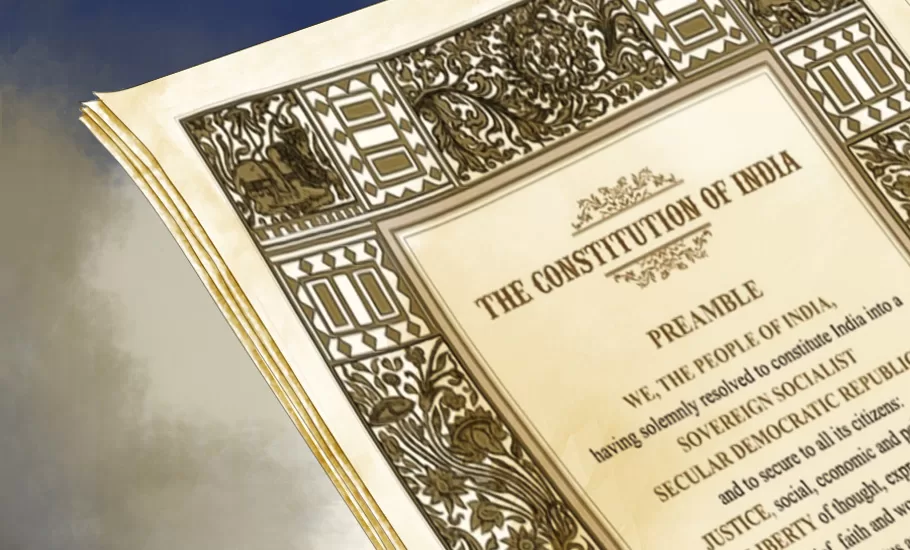
Yesterday evening, a simple conversation about the Indian Constitution turned into a long debate at home. I was helping my Class 7 son with his civics lesson. The topic was preamble. An easy chapter, I thought. Then he asked a question that pushed me into a corner: “Are we all equal, Papa?” Before I could gather a textbook answer, he followed up, “Can we really be equal?” That innocent doubt landed like a direct punch. I realised that I have read this word thousands of times — in exams, in newsrooms, in development reports — yet I had never paused to question its core.
We repeat that humans are equal. The American Declaration of Independence loudly declares that “all men are created equal.” Our own Constitution promises equality of status and opportunity. Leaders hold it like a banner. Corporates put it in mission statements. Activists build movements around it. But what exactly are we claiming when we say “equal”? Equal in what sense? Equal to whom? Equal how long?
Because if we are honest, life begins with inequality. Some are born into wealth. Others open their eyes in poverty that has been transferred through generations. One child gets nutrition and love. Another grows up with hunger and neglect. Even before we learn to speak, inequality has already written several paragraphs of our story.
Biology itself plays a role. We are not templates. We are outcomes of evolution across climates, terrains, disasters, survival strategies. Human height, skin colour, mental abilities, emotional wiring — all differ by nature. Even genetic science suggests that variation is the rule, not an exception. So when a Constitution confidently writes “equal,” it is almost deliberately challenging the very foundation of nature.
Then comes society. Caste in India is not an invisible idea; it is architecture. It decides marriage, occupation, acceptance. Gender, even after legal reforms, still means different freedom for different people. A girl stepping out at dusk negotiates fear that a boy may never face. Language and region create more layers: the English-speaking city kid and the tribal child from a remote school may live in the same country but not the same world.
So my son’s confusion was not childish. It was scientific, historical, and social. Why then do we not simply admit that equality is a myth? Because giving up on equality is giving up on progress. The idea of equality came not from nature, but from human imagination — a rebellion against nature’s unfairness. Equality was never a statement of fact. It was a declaration of intent. When leaders wrote that “all humans are equal,” they were not describing the world. They were cor
recting it.
The most important insight here is this: equality is not about making everyone the same; it is about removing unfair obstacles. True equality means this — whatever differences exist should not decide who gets dignity, rights, or respect.
This understanding changes the entire debate. Nature may allow differences. But society must ensure those differences do not turn into discrimination. History gives proof. When education reached communities that were once denied it, social mobility increased. When women were allowed to vote, democracy became richer.
When persons with disabilities were given inclusion, talent found new pathways. The moment opportunity opens, those who were once seen as “lesser” show ability equal or greater than those born privileged. This is empirical evidence that inequality is not a result of lack of capability, but lack of access.
Absolute equality, the kind that erases all differences, will never exist. And maybe it should not. Diversity keeps societies dynamic and creative. But equality of opportunity, respect, and justice is not only achievable — it is essential.
Yet, we must also confront the discomforting truth: many institutions use the word equality as a nice sticker over their power. Governments promise equality but allow economic gaps to grow. Corporates speak of diversity but are run by those who look and think the same. Even families that preach fairness distribute affection and expectations unequally among children.
So what drives this contradiction? Why do we preach equality even when we secretly protect inequality? Because power likes hierarchy. It likes the comfort of staying above. But power also knows that without the appearance of equality, people revolt. So equality becomes a slogan that maintains stability. It becomes a cushion: enough to calm the masses, not enough to threaten the powerful. That is why every generation must reinterpret equality for itself. We cannot treat it as a ready-made formula. It is the task of each society to reduce the gap between what we promise and what we practise.
I told my son, after a long pause, that we are not equal in birth. But we must be equal in our right to rise. Even that answer felt incomplete, but perhaps that is how honest answers feel — slightly uncomfortable and always under revision. Equality is not a destination we will someday reach. It is movement — a continuous effort to question privilege, adjust systems, and repair injustice. It is a protective wall built against the cruelty of randomness that nature throws at us.
The biggest insight is this: equality survives not because it is true, but because without it, cruelty would become normal. We teach equality not because the world already reflects it, but because children must grow up believing that nobody deserves less dignity or fewer chances just because of their birth. Equality is a promise we make to our children — not that the world is fair, but that we will keep working to make it fairer.
And maybe that is what makes us human. Not that we are equal. But we never stop trying.