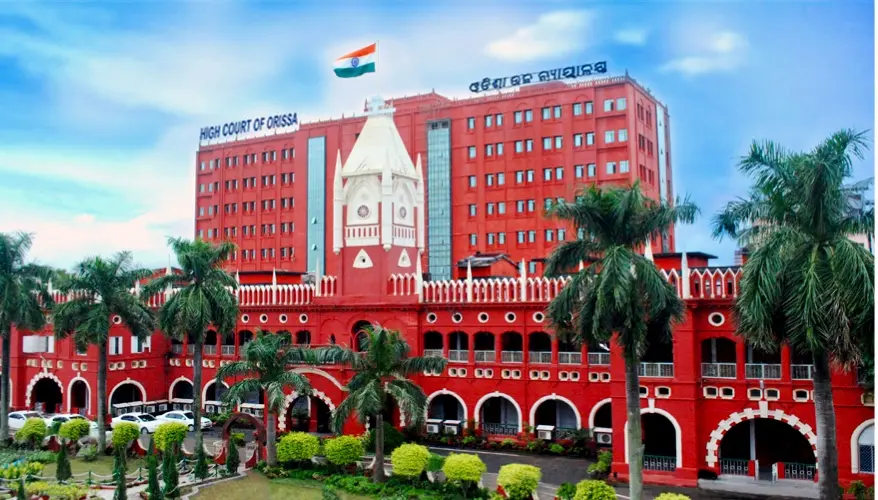
Kataka: A customer cannot be prosecuted under the Immoral Traffic (Prevention) Act, 1956, just for being found in a brothel, even if apprehended in a compromising position, the Orissa High Court has held.
The provisions under the Act penalise activities such as running a brothel, living on earnings from prostitution, procuring or inducing persons for prostitution, and detaining such individuals, but do not prescribe punishment for the customer, the Court noted.
Justice Sibo Sankar Mishra was hearing an application filed by two men, seeking to modify the High Court’s February 2024 judgment, which had quashed some charges against them but required the men to face trial for the remaining offences, including those under the 1956 Act. The court was considering whether those charges could be sustained against the two men, who were customers at a spa centre, as reported by Indian Express.
“A customer in a brothel, even if apprehended in a compromising position, cannot be prosecuted for the offence under the Immoral Trafficking Act,” the court said.
The Kerala High Court, in a contrarian view, had recently ruled that a customer who visits a brothel for sexual activity can be implicated as an accused under the 1956 Act, observing that there was no justification to immunise one of the essential participants in the prohibited activity from criminal liability.
That ruling came in response to conflicting earlier judgments on whether customers could be prosecuted, with the Court holding that a person who voluntarily enters a brothel and pays for sexual services can be treated as an active participant in the prohibited activity.
The latest case before the Orissa High Court dates back to 2018, when the two petitioners were arrested while availing services at the spa. The Court said that even if the spa was treated as a brothel, the question was whether merely being a customer there attracted sections 3, 4, 5, 6 and 7 of the Act.
The error pointed out by the petitioners in the 2024 judgment needed to be corrected, Justice Mishra said.
On February 9, 2024, the High Court had partly allowed the petitioners’ plea and quashed the cognisance order concerning offences under sections 370(3) (trafficking of more than one person) and 370A(2) (engaging a trafficked person for sexual exploitation) of the IPC.
The 2024 judgment, however, directed the petitioners to face trial for the other offences for which the trial court had taken cognisance. The petitioners then sought modification of that part of the order.
The Court noted the Andhra Pradesh High Court’s decision in Padala Venkata Sai Rama Reddy v State of Andhra Pradesh, which held that a brothel customer was not liable for prosecution under Sections 3, 4 and 5 of the Act.
While Section 3 of the Immoral Traffic (Prevention) Act deals with keeping or managing a brothel or allowing premises to be used as a brothel, Section 4 pertains to living on the earnings of prostitution, and Section 5 deals with procuring, inducing or taking a person for prostitution. Detaining a person in premises where prostitution is carried out falls under Section 6, and Section 7 relates to prostitution in or in the vicinity of public places.
The Court also referred to Goenka Sajan Kumar v State of AP, where the Andhra Pradesh High Court explained that sections 3 to 6 did not prescribe punishment for a customer. It further cited the Karnataka High Court’s May 30, 2022 decision in Rahul Muralidhar v State of Karnataka, where proceedings against a customer found in a brothel were quashed.
The state also questioned whether the High Court could modify a judgment already pronounced. The court, considering authorities cited by the counsel, including the Supreme Court’s decision in Daxaben v State of Gujarat, held that its inherent power under Section 482 of the Criminal Procedure Code (CrPC) can be used to prevent abuse of the court process and secure the ends of justice.
The error pointed out by the petitioners in the February 2024 judgment needed to be corrected, the Court observed. Accordingly, it deleted the portion stating that the petitioners had to face trial for the other offences alleged in the chargesheet.