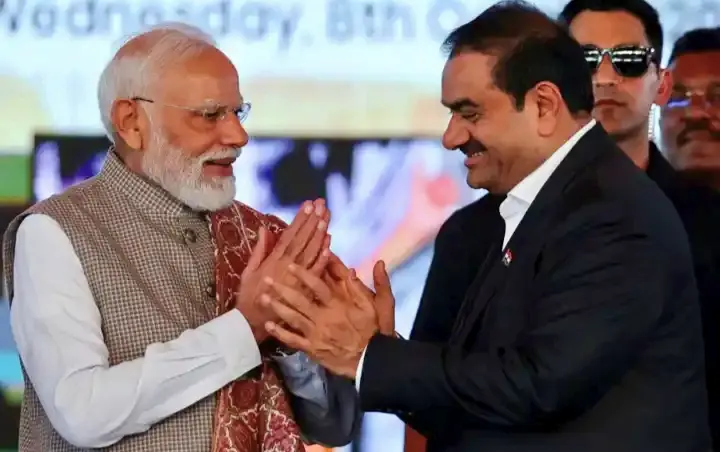
Kolkata: A vacation bench of Calcutta High Court on Monday ordered the immediate takedown from social media of a controversial video alleging links between industrialist Gautam Adani and Prime Minister Narendra Modi.
The respondents and others have also been restrained by Justice Aryak Dutt from sharing the video. The ad-interim injunction will remain in force until January 31, 2027, or until further orders, whichever is earlier, as reported by The Telegraph.
The 36-minute podcast-style video essay, titled How Modi and Adani Stole India – The Friendship Files was produced and uploaded by Hotmail co-founder Sabeer Bhatia on his YouTube channel, Bcubed.
The “title itself expressly imputes that the petitioner’s group, in concert with the holder of public office, ‘stole India'” and that the video contained “various other allegations against the petitioner”, the court order noted.
The Opposition, led by Congress leader Rahul Gandhi, have alleged that the Modi government has extended undue preferential treatment to the Adani Group through regulatory easing and crony capitalism. Both the government and the group have strongly denied the allegations.
A petition was filed by Adani Enterprises Ltd, the Adani Group’s flagship company, seeking damages for defamation and a permanent and mandatory injunction against Bhatia. It also named Google LLC, which owns YouTube; X Corp; and Meta Platforms Inc., which owns Instagram, as intermediaries, along with unidentified persons uploading and circulating the video.
Justice Dutt, in his order, restrained the respondents, their agents and others acting under their authority from “publishing, republishing, uploading, sharing, communicating or otherwise disseminating the impugned video, or any clip, excerpt, shortened version or materially identical reproduction of it, through any medium or platform”.
The Court further directed them to remove the video and any clips or reproductions containing the allegedly defamatory statements from accounts, channels and pages they owned or controlled.
Access to the original YouTube upload had been disabled in India, the petitioner told the Court, apparently following a government complaint under Rule 3(1)(d) of the Information Technology (Intermediary Guidelines and Digital Media Ethics Code) Rules, 2021.
However, the video continued to be re-uploaded and circulated through other YouTube channels, X accounts and Instagram reels, it was submitted.
Pre-trial injunctions in defamation cases involving matters of public interest must be granted with great caution, the bench acknowledged. However, it said it was “of the prima facie view” that the case fell within that “exceptional class”.
“The impugned video is not a news report or an account of proceedings. It is a dramatized narrative, whose title expressly imputes theft, and whose narration and visuals are represented as factual,” the Court said.
It also directed YouTube, X and Instagram to remove the video or disable access to it at every URL identified by the petitioner, and to disable reposts, quote posts, shares and other engagements through which it remained accessible.
The Court has also directed the platforms to preserve subscriber information, registration details, IP logs and access logs relating to the identified accounts and URLs. They must also disclose, by affidavit and in a sealed cover within two weeks, basic subscriber information about unidentified account holders.
Through its order, the Court further barred the platforms from running or serving advertisements on, or sharing revenue from, the specified URLs or the video. They were also directed to preserve records of any advertising revenue generated from the content.
The order reaffirmed that the right to reputation deserved effective protection where content was prima facie malicious or palpably false, an Adani Group spokesperson said. The Court had recognised that continued online republication could cause harm that monetary compensation could not adequately address, the spokesperson added.
By limiting the restraint to the identified video, its reproductions and the allegedly defamatory imputations, while leaving constructive criticism and fair reporting untouched, the order struck a balance between protecting reputation and the public’s right to know, the spokesperson said.