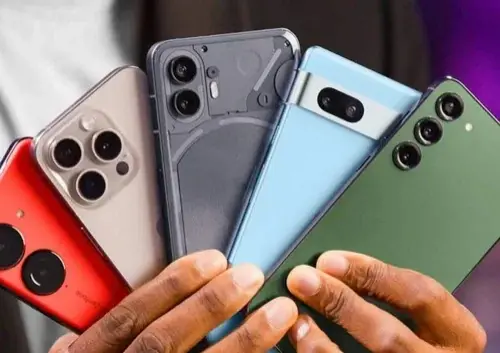
New Delhi: The Reserve Bank of India (RBI) is considering a proposal that will empower banks and non-banking financial institutions to remotely lock mobile phones that were purchased on EMIs if the borrower defaults.
“Such a proposal is currently under discussion, and we are getting views both for and against such a move,” RBI governor Sanjay Malhotra said during a post monetary-policy press conference on Wednesday.
“We are taking those views on record,” he said, adding: “Our effort is to ensure that a consumer’s rights are maintained, in terms of data privacy, etc…The consumer’s interest is paramount, while we consider the issues faced by banks.”
To allow banks and NBFCs to take such action, the RBI will have to revise its Fair Practices Code.
Under the proposed rules, the locking would be allowed only after obtaining explicit prior consent from the borrower at the time of the loan agreement. The lock must not allow the lender to access personal data or tamper with it.
According to an official, this mechanism would act as a sort of enforcement tool or collateral against small-ticket consumer loans, especially in the consumer electronics space.
The number of defaults in small-value consumer loans has allegedly been rising, posing a risk for lenders. More often than not, these are for high-end mobile phones.
In India, a vehicle or house can be seized if their EMIs on them are not paid on time. Lenders now want this practice to extend to smartphones. They say that locking a financed smartphone is an important recovery tool.
Those against this proposal say that locking a phone is a serious step as people rely on them for communication, work, education, financial transactions, health apps, and other emergencies. They claim that such a step could be too punitive, especially if small delays or disputes trigger lockouts.
Data privacy is also a fundamental right. Any remote control over a device – even if only locked – can raise questions about whether it violates autonomy or privacy rights.
There is still no clarity on how many EMIs have to be missed to trigger phone-locking. It is also not known whether there be warnings, grace periods, and dispute resolution mechanisms in place.