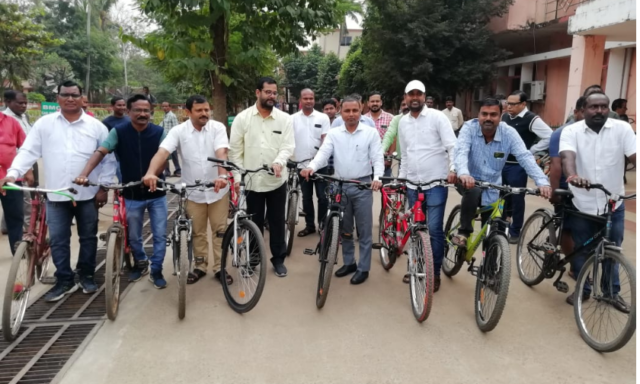
Walking and cycling are foundational modes of transport and physical activity with the power to transform health, mobility, and the liveability of communities. Despite their value, walking and cycling remain under prioritized in policy and planning. Globally,infrastructure is inadequate only 0.2% of reported road length includes cycling lanes, and the majority of roads are unsafe for pedestrians. Vulnerable groups, including women, children, older adults, and those with disabilities, are disproportionately affected by poor infrastructure and unsafe streets.
Although it is well recognized that walking and cycling patterns vary across cities and countries, accurately assessing and comparing between countries remains a challenge. Inconsistent data collection methods, limited survey coverage, and non-comparable metrics hinder the ability to make precise international comparisons.
Furthermore, the use of different definitions and measurement approaches further complicate efforts to establish reliable estimates of walking and cycling prevalence.
Till date, much of the comparative research on cycling behaviour using travel surveys has been concentrated in Western Europe and North America. with international comparisons often limited to prevalence estimates that provide little insight into user demographics or trip characteristics .
Then Some say If there are Seven Cycling Wonders of the World, then Beijing’s elevated bicycle expressway deserves to be near the top of that list: a six-metre wide, 5.4-km long piece of show stopping infrastructure that is quickly become an important form of transportation and recreation for 12,000 users each day.
Similar examples but unpopular results can be learned from Bhubaneswar. Once it was India’s first city to introduce protected cycle path designed for cycling its entire length without stopping once opened in 2005 in an effort to reduce congestion on the road between Airport, a densely populated community in the south east of Bhubaneswar, and Nandankanan Zoo in north, where a large number of high-tech companies are located. But it was created over a drainage system that collapsed with heavy rainfall and water logging.
However, in Beijing a reversible lane in the centre alternates direction depending on the time of day. Six on and off ramps provide convenient access and egress, which include conveyor belts sourced from the Netherlands that help carry bicycle up and down. Electric bikes are prohibited, and speed is limited to 15 km/hr. Six years since opening, it is now used by an average of 11,600 cyclists per day.
Where as in Bhubaneswar It takes around 30 minutes on average to cycle from Old Town temple area to the Master canteen in city centre, whereas the same journey could take a full hour by car or autorickshaw in rush hour because of the congestion. This is the story of Bhubaneswar.
But what about sprawling cities like Bhubaneswar? Many of neighbourhoods lack efficient public transit systems. Still, approximately 60 percent of all vehicle trips in Bhubaneswar are less than 15–20KM, according to the research. That’s a suitable distance for a bicycle, especially one that’s empowered.
Well cities friendlier to cycling and pedestrian are vibrant cities, with ample green space that absorbs heat and boosts emotional wellness. They also have public art, which promotes wonder, boosts civic pride, and creates a sense of belonging for everyone, especially marginalized communities. Bhubaneswar do have such streets but unnoticed due to automobile culture.
Then in another twist Paris crowned Europe’s best city for cycling Step aside Amsterdam, Europe has a new cycling capital. In a remarkable turn of events, Paris once infamous for its maddening traffic. has raced ahead in a European ranking of cycle friendly cities for children. Amsterdam and Antwerp came second and third respectively.
Taking a walk through Paris today is a breath of fresh air compared to 10 years ago. It takes vision, leadership and sustained investment, but most cities can and should make similar progress. It follows a concerted effort to reclaim the realm from motor vehicles in the French capital, where parking spaces and roads have given way to hundreds of miles of bicycle lanes under mayor Anne Higaldo. It is noted that Paris now has a protected cycling network that’s nearly half (48%) as long as its road network.
Implementation success depends on several key enablers including strong governance and intersectoral coordination; community engagement and co-design; capacity building and skills development; effective advocacy and communications; robust legislation and regulatory frameworks; and sustainable funding and financing mechanisms.
Bhubaneswar is not the cycling paradise it is sometimes made out to be, but it’s getting there. And as other Indian cities look to make it easier for people to bicycle, for commuting or just for fun, Bhubaneswar offers lessons in re-thinking transportation infrastructure beyond the hegemony of the car.
Walking and cycling are integral to most people’s daily lives. Nearly every journey begins and ends with walking, and cycling is among the most efficient and sustainable forms of transport. So by investing in walking and cycling, governments can accelerate progress on multiple fronts: healthier populations, more sustainable cities, equitable access, and climate resilience. Both activities are simple, cost effective ways to achieve recommended physical activity levels, reduce the risks of noncommunicable diseases and improve mental health.