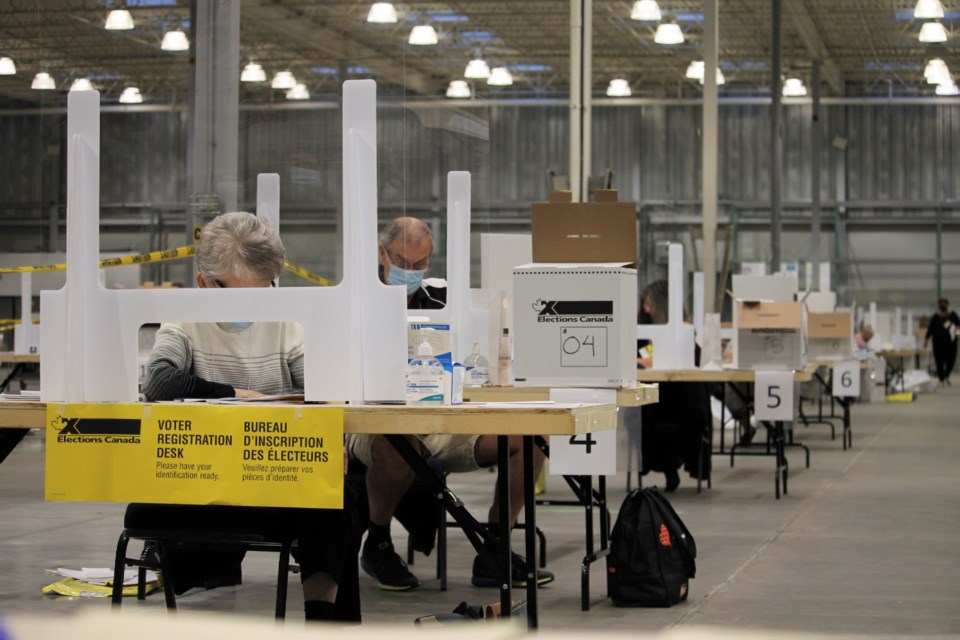
Toronto: Canadians are headed to the polls on Monday (April 28) in a key federal election. Incumbent Liberal Prime Minister Mark Carney will face Conservative leader Pierre Poilievre in the polls. The first results will come in between 7 pm and 7:30 pm EST. The vast majority of results will be released at 9:30 pm. (EST)
This election comes after a long period of political turbulence marked by rising discontent against former Prime Minister Justin Trudeau. Following such discontent, Trudeau had resigned.
Here are some key points:
- Canadian Prime Minister Mark Carney concluded his election campaign on Sunday. If he fails to gain the mandate, he will be the shortest-serving PM in the history of Canada
- Pierre Poilievre has a Canada-first approach. The last pitch of both the leaders was centered largely on US President Donald Trump’s tariffs.
- Liberal Party leader Mark Carney has promised to reduce the federal deficit.
- Conservative leader Poilievre has promised to cut the lowest tax bracket by 15 per cent, repeal the industrial carbon tax and eliminate the federal sales tax for first-time home buyers up to $1.3 million (Canadian dollars).
- A Nanos poll on Sunday claimed the gap between the two front-running parties was approximately 4 percentage points.
- Poilievre’s party led the Liberals by more than 20 points in most polls on the day Trudeau announced his plans to resign.
- Polls will be open from 9 am to 9 pm. (EST).
- There are 28 million registered voters eligible to vote in Canada. They will elect members of parliament in 343 individual constituencies, also known as ridings.
- Canada’s voting system is staggered as there are six time zones within the country. In the easternmost province of Newfoundland and Labrador, which has seven seats, the polls will close at 7 pm Eastern Time (2300 GMT), according to Reuters. Polls close across all provinces by 10 pm.
- British Columbia’s 43 electoral districts are the most closely contested battlegrounds.
- Paper Based: Every ballot is paper-based and counted by hand. Each ballot is secured by a signature from the local poll officer, so ballot stuffing is impossible.
- Open Counting: Every candidate can send observers (scrutineers) to watch the count, ensuring that it is accurate. Ballot boxes are opened and the ballots placed on a table, and counted in front of everyone.
- Voter-ID: Every eligible voter gets a voting card in the mail telling them where to vote. This is based on a central voters list which is automatically compiled and updated based on tax returns and other info. This card serves as their ID.
- Accessible and Neutral: No election materials are allowed in or near polling stations. Polling stations are everywhere, well-advertised, and often walking distance in towns and cities.
- Limited Corporate Money – No corporate or union donations are allowed for any candidate. They can only accept personal donations, which are capped at $1750 a year, and parties get a subsidy from the government based on how many votes they got in the last election.
- No Gerrymandering: Electoral districts are set by a non-partisan committee every 10 years, and are fairly simple geometric shapes, nothing like what we see in the US.