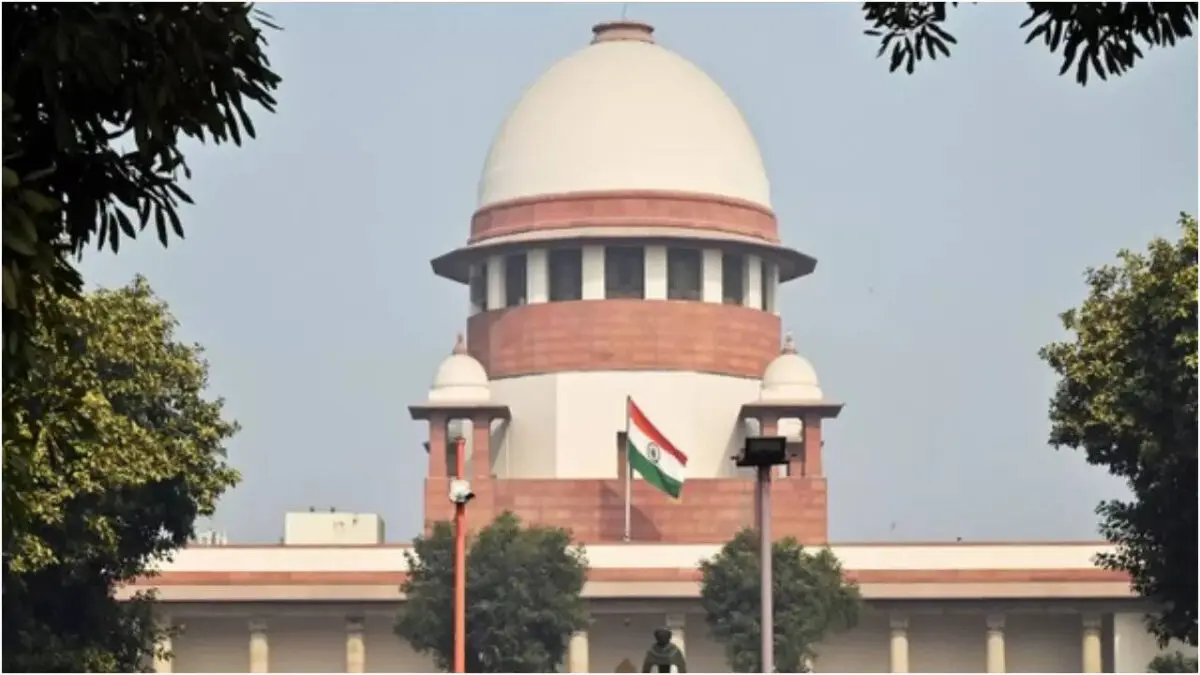
New Delhi: The Supreme Court on Monday raised concerns over the Special Intensive Revision (SIR) of electoral rolls in West Bengal, observing that electors have a continuing right to remain on voter lists and the process should not be distorted by the pressure of conducting elections.
“Voters have a continuing right to remain on election rolls. The right to remain a voter in the country in which you were born is not only a constitutional right, but also an emotional one. We need to protect it. We cannot get blinded by the dust and fury of impending elections,” a bench comprising Chief Justice of India (CJI) Surya Kant and Justice Joymalya Bagchi noted.
The top court was hearing a writ petition filed by voters whose appeals against exclusion from the electoral rolls are pending before appellate tribunals.
The West Bengal Assembly elections will be held in two phases, on April 23 and 29, but the electoral rolls have been frozen on April 9, as per the Election Commission of India (ECI).
The petitioners are seeking an extension of the cut-off date for freezing of electoral rolls, arguing that they should be allowed to vote in the upcoming polls if their appeals are successful.
The CJI indicated the court’s reluctance to interfere in the process, saying that the tribunal
should be allowed to decide the pending appeals. However, the counsel for the petitioners alleged that the ECI was not cooperating with the appellate process by failing to produce relevant records, India Today reported.
During the hearing, the bench pointed out procedural deviations only in the West Bengal SIR exercise, noting that the Election Commission had introduced a new category termed ‘Logical discrepancy’, unlike other states.
Justice Bagchi further pointed out the poll body had also deviated from its earlier stand taken during the SIR exercise in Bihar that persons in the 2002 roll need not submit any documents.
“See in your final list you did not delete the 2002 list members. When the Bihar SIR was argued, the submissions of ECI were unequivocal that 2002 list members need not give any documents. Please see your written submissions in the Bihar case. You had said the 2002 electorate need not give documents,” the top court said.
Justice Bagchi went on to say that even judicial officers, given the scale and pace of adjudication, may have committed some errors during the process.
“If you go through 1,000 documents a day, if accuracy is 70 per cent then the activity should be rated as excellent. So margin of error will be there, and we need a robust appellate forum,” he said.
“Try your best to ensure due process is followed,” said Justice Bagchi, calling for a robust appellate mechanism to effectively examine grievances raised by those voters who have been removed from the electoral rolls.
The Supreme Court had earlier ordered that judicial officers should be appointed to assist in the exercise due to trust deficit between the ECI and the state.