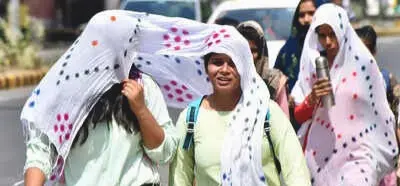
New Delhi: With the Indian Meteorological Department (IMD) projecting above-normal heatwave days between April and June across large parts of the country, the Centre has issued advisories to all states and union territories.
The Union labour and health ministries have urged the states and UTs to ensure adequate rest and cooling measures for outdoor and factory workers. Adequate measures will also have to be taken to prevent and manage heat stroke cases among others.
Sources have said that outdoor work may get restricted in the period between 1 pm and 4 pm. In case, work cannot be stopped completely, workers will have to be given adequate rests and facilities like clean and cool drinking water and other rehydrants.
The labour and employment ministry, in its advisory told state and UT chief secretaries to enable establishments to reschedule working hours, enhance the manpower to divide the workload and provide adequate rest and cooling measures, particularly for factory, mine and construction workers.
Special attention needs to be paid to construction workers, brick kiln workers, daily wagers and casual workers, it said and urged states to put in place an effective implementation and monitoring mechanism to ensure effectiveness of these measures, as reported by The Economic Times.
“India has been experiencing above-normal temperatures during the summer months across most parts of the country each year with workers and labourers being the worst sufferers of extreme heat wave conditions,” labour secretary Vandana Gurnani said in the advisory.
The IMD has in its update forecast scorching heat conditions to continue over parts of Northwest and Central India over the next few days.
Meanwhile, the health ministry, in a communication to state health authorities, has directed them to take four urgent steps: set up dedicated heat stroke management units at every health facility, ensure ambulance services are fully operational and adequately staffed, disseminate early warnings to communities in time for preventive action, and report heat stroke cases in real time through the ministry’s Integrated Health Information Platform (IHIP).
“Your personal intervention in reviewing heat season preparedness while ensuring implementation of the aforementioned actions will be key to safeguarding public health and preventing avoidable heat-related mortality,” health secretary Punya Salila Srivastava said in the advisory.
Timely reporting is critical to tracking the scale of the crisis and mobilising resources where they are needed most, she said.