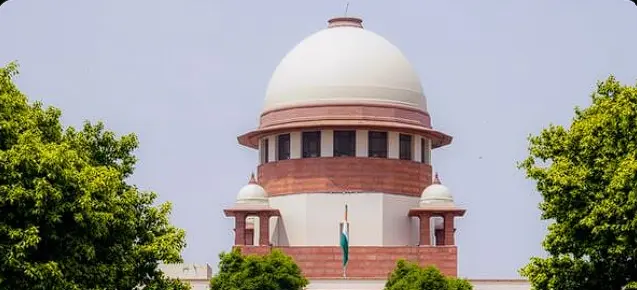
New Delhi: The Centre is expected to bring a sweeping Bill in the ongoing session of Parliament to deal with digital arrest scams and classify deepfakes as separate offences, following the Supreme Court’s strong remarks on the issue.
The move comes after the apex court on Tuesday pressed the Union government to recognise “digital arrest” as an independent criminal offence with strict punishment, while also underlining the need for a legal framework to address deepfakes and other emerging online crimes.
A Bench of Chief Justice of India Surya Kant, Justice Joymalya Bagchi and Justice V Mohana observed that if a court reaches a prima facie view against an accused on the basis of credible material, the authorities should have the power to freeze the person’s assets during investigation.
Justice Bagchi flagged the rising threat from deepfakes and said lawmakers must urgently step in to define and regulate such new-age online offences, as reported by Moneycontrol.
Solicitor General Tushar Mehta told the court that the Centre is already preparing a draft law that would comprehensively cover digital arrests, deepfakes and similar cyber-enabled crimes.
“There is a draft bill which is coming up… It will take care of digital arrests, deepfakes, etc,” Mehta submitted.
Attorney General R Venkataramani, appearing for the Union government, informed the Bench that an Inter-Departmental Committee (IDC) is in the final stages of preparing a detailed report on the legal and procedural gaps that exist in dealing with such cybercrimes.
Venkataramani also said that the CBI is currently investigating about 20 large digital fraud cases involving losses of Rs 10 crore or more, while other matters are being handled by the respective State police forces.
The bench said it will pass a direction in the case on Wednesday.
Last year, the apex court had taken suo motu cognisance of digital arrest scams, in which fraudsters pose as police officers or judicial authorities to extort money from victims, especially senior citizens.
In an earlier hearing, the court had observed that forged judicial orders bearing fake judges’ signatures strike at the very foundation of public trust in the justice system and the rule of law.
It had said such acts amounted to a “direct assault” on the dignity of the institution.