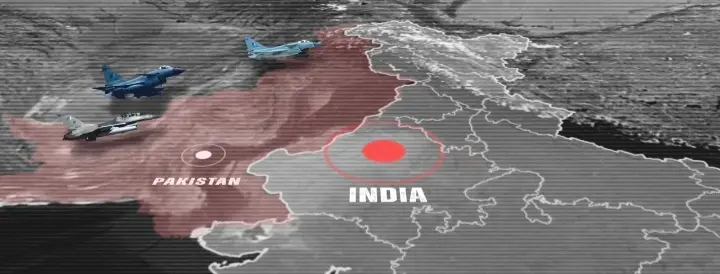
New Delhi/Beijing: China, for the first time, has confirmed that it provided on-site technical support to Pakistan during Operation Sindoor.
The operation was launched by India on May 7, 2025 after Lashkar-e-Taiba terrorists from Pakistan killed 26 terrorists in Pahalgam, Jammu and Kashmir, on April 22 that year.
While India carried out precise, non-escalatory strikes against terror facilities in Pakistan and Pakistan-occupied Jammu and Kashmir, Islamabad retaliated by attacking Indian military and civilian infrastructure.
India finally brought Pakistan to its knees by carrying out major strikes on air bases and air defence systems. On May 10, Pakistan’s DGMO called up his Indian counterpart and sought a ceasefire.
Indian defence forces confirmed that Pakistan used Chinese-origin PL-15 missiles and Turkish YIHA and Songar drones to target military bases. These were successfully shot down by India’s air defence systems.
Lt Gen Rahul Singh, deputy chief of Army Staff (Capability Development & Sustenance) said after the war that China was sharing “live updates” about India’s important installations with Pakistan.
It has now become clear that China’s assistance went beyond providing information to Pakistan.
Zhang Heng, an engineer from the Aviation Industry Corporation of China’s (AVIC) Chengdu Aircraft Design and Research Institute, in an interview aired by Chinese media on Thursday, described their direct involvement in supporting Pakistani operations. This was reported by South China Morning Post.
Heng was one of those who provided technical support to Pakistan during the conflict. “At the support base, we frequently heard the roar of fighter jets taking off and the constant wail of air-raid sirens. By late morning, in May, the temperature was already approaching 50 degrees Celsius.. It was a real ordeal for us, both mentally and physically,” he was quoted as saying, News18 reported.
Pakistan operates Chinese-made J-10CE jets. Zhang said his team wanted to do “an even better job with on-site support” and to ensure their equipment could “truly perform at its full combat potential”. His remarks were the first official confirmation of Chinese involvement in Pakistan’s operations against India.
Another employee from the same institute, Xu Da, compared the J-10 fighter jet to a “child.”
“We nurtured it, cared for it, and finally handed it over to the user. And now, it was facing a major test. As for the outstanding results the J-10CE achieved, we weren’t very surprised, and it didn’t feel sudden at all,” he said.
The J-10CE, an export variant of the J-10C 4.5-generation fighter, is considered the most advanced model in the J-10 series. Pakistan is the only known operator of J-10Cs outside China, ordering 36 jets in 2020.
Lt Gen Singh had said in July, 2025 that Pakistan was playing the role of a “live lab” for the Chinese military.
“We had one border and two adversaries, actually three. Pakistan was in the front. China was providing all possible support. 81% of the military hardware with Pakistan is Chinese… China is able to test its weapons against other weapons, so it’s like a live lab available to them,” he had said.
The US Defence Department, in a recent report, said that China backed Pakistan’s operation through information warfare, cyber activity, intelligence support, and diplomatic manoeuvring.
Chinese satellite coverage and electronic surveillance inputs are believed to have enhanced Pakistan’s real-time situational awareness, improving targeting and operational coordination without direct PLA involvement.