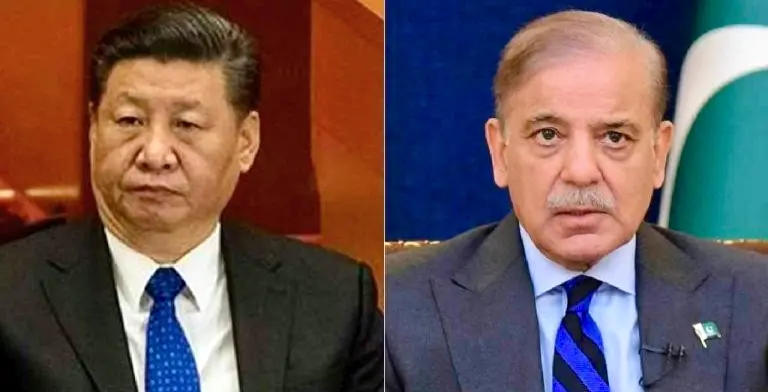
Islamabad: Pakistan has come up against a major roadblock with China refusing to fund projects along its Belt and Road Initiative (BRI).
Beijing has made it clear that it will not finance the Karachi-Rohri railway segment worth $2 billion. The move signals a major blow to Pakistan’s infrastructure plans, forcing Islamabad to urgently seek funding from the Asian Development Bank (ADB) to salvage the second phase of the China-Pakistan Economic Corridor (CPEC).
China cited financial and security concerns as reasons for withdrawing support.
The corridor includes highways, railways, energy projects and special economic zones linking China’s western region of Xinjiang to Pakistan’s Gwadar Port. It aims at enhancing trade, connectivity and strategic influence.
Under the BRI, China has invested over $50 billion in Pakistan. Gwadar Port has been constructed, and plans for a naval base are underway. The first phase of the CPEC brought significant infrastructure investment and strategic collaboration. The second phase, which would expand the corridor further, now faces a critical funding gap due to China’s retreat.
The ADB loan request involves upgrading 480 kilometres of the Karachi-Rohri railway segment. The total cost of the project is estimated at $6.7 billion, covering the entire 1,726-kilometre stretch from Karachi to Peshawar. If approved, this would mark the first time that a major project in Pakistan is financed by a multilateral lender rather than Beijing.
China’s financial withdrawal reflects growing frustration over Pakistan’s unpaid debts, particularly the $1.5 billion owed to Chinese power companies. Security concerns exacerbate the situation. Since 2021, twenty one Chinese citizens have been killed in Pakistan. Highlighting China’s unease, President Xi Jinping recently emphasised the need for stronger security measures to the Pakistani military chief.
China has also sought permission to deploy its military for the protection of its personnel in Pakistan. Due to Islamabad’s reluctance, Chinese security personnel will now operate under the cover of private companies.
Pakistani officials, including economist Haroon Sharif, confirmed that China had conducted a financial review of the CPEC project but decided to step back due to repayment risks. The ADB’s involvement opens the possibility for non-Chinese companies to take over project contracts.
Combined with growing geopolitical tension, the funding shift marks a major blow to Pakistan’s infrastructure and strategic ambitions.