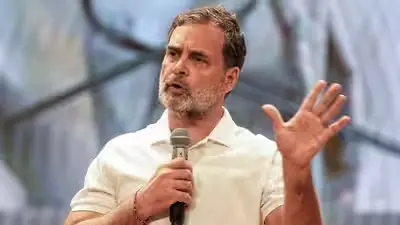
New Delhi: The Congress has sued Meta and the Centre, alleging that an automated content-removal system is blocking political posts and images of Leader of the Opposition Rahul Gandhi ahead of key state elections.
The lawsuit escalates a week-long Congress campaign against Meta from street protests to the courtroom. It targets Prime Minister Narendra Modi’s automated takedown mandate, under which the Facebook and Instagram parent restricted more than 5.4 million posts in India during the first half of 2026—a sharp surge from roughly 70,000 in all of 2025.
In a November 25 petition filed before the Delhi High Court and seen by Reuters, Indian Youth Congress social media head Manu Jain argued that the rules have become “an instrument for the suppression of lawful political expression.”
The legal challenge puts Meta’s operations in India—its largest global market—in a bind between a government whose rules strip platforms of legal immunity if they fail to comply, and an opposition demanding the tech giant push back.
While Meta maintains it moderates content in accordance with local laws, the Congress alleges the automated system is flagging posts that are not “exactly identical” to previously barred material, including routine birthday greetings, tributes, and a wedding invitation featuring Gandhi.
Meta declined to comment. The Union ministries of Electronics and Information Technology (MeitY) and Home Affairs—named as co-respondents in the suit—did not immediately respond to Reuters requests for comment. New Delhi has previously defended the rules as essential to curbing illegal and harmful content across a market of over 1.1 billion internet users.
The Congress has urged the court to strike down the automated takedown mandate, direct Meta to restore the blocked posts, and disclose its blocking criteria. Hearings are expected to begin in the coming days.
‘Automated Tools’ Mandate
In February, India amended its IT rules to mandate that major platforms deploy technical measures—”including automated tools”—to detect and block any post “exactly identical” to content already removed via a court order or written government directive. Previously, platforms were only required to “endeavour” to use such tools.
According to Meta’s transparency report, the company restricts “100% identical copies of content, at scale and in country” to comply with the amended rules, noting it is still refining the system given the “unprecedented nature of this effort.” Meta added that it is required to automatically restrict content at scale in only a “limited” number of countries, accounting for the high volume of takedowns.
However, the Congress petition contends the filter is sweeping up far more than exact duplicates—blocking birthday wishes, tributes, and a wedding invite merely because they feature Gandhi’s name or photograph, while disclosing “no order, notice, reason or even a ‘legal request.'”
In one instance cited in the filing, a November 8 birthday post from a youth wing leader featuring a colleague standing beside Gandhi was restricted the same day with an automated notice stating access was blocked “pursuant to legal requirements.”
Meta’s transparency report also notes that India is one of seven markets—alongside Brazil and Hong Kong—where the company does not disclose which government authority requested a restriction, citing “legal obligations and regulatory considerations.”
Wider Congress Offensive
The petition argues that the automated system “distorts the level playing field” required for free and fair elections, particularly as party workers rely heavily on Facebook (400 million users in India) and Instagram (515 million users, per DataReportal) to reach voters ahead of state polls due early next year.
Outside the courtroom, the Congress has erected hoardings across several cities depicting Meta CEO Mark Zuckerberg in the uniform of the Rashtriya Swayamsevak Sangh (RSS), the ideological parent of the ruling BJP. Youth wing workers have also staged protests near Meta offices, clashing with police in multiple cities—prompting the BJP to accuse demonstrators of vandalising private company premises.
At a closed-door meeting earlier this week, Congress representatives urged Meta to challenge first-instance takedown orders, much like Elon Musk’s X, which is currently locked in a separate legal battle with the government over its content-removal framework, a source told Reuters. Meta maintained at the meeting that it remains politically neutral and bound by local laws.