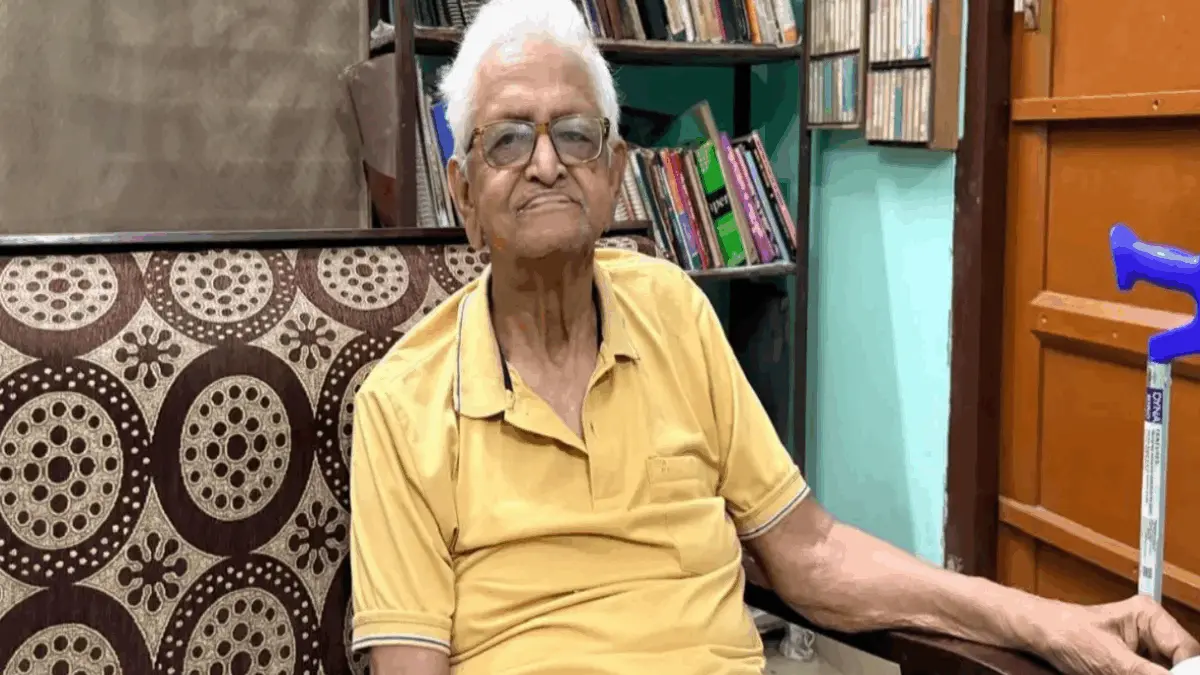
Kataka: Noted historian, researcher and heritage lover Anil Dey passed away at a private hospital in Kataka on Monday following a brief illness. He was 96.
Dey, who was Chairman of the Kalinga Heritage Preservation Trust (KHPT), had been undergoing treatment at the hospital for some time due to illness. However, he suffered breathed his last following a heart attack in the morning, family sources said.
A multi-faceted personality, Dey had carved a special identify as a distinguished engineer, researcher and author. He devoted more than six decades to the study, documentation and structural analysis of Odisha’s ancient temples and monuments.
His work presented a combination of engineering principles with archaeological research. He examined historical monuments from a scientific and technical perspective.
Dey focused on understanding the engineering techniques, mathematical proportions and construction methods used by ancient temple builders. His research sought to explain the structural ingenuity behind Odisha’s architectural heritage.
Widely known for his extensive research on the Konark Sun Temple, Dey critically examined existing theories on the temple’s construction, different phases of development and eventual decline. He also proposed alternative structural interpretations supported by scientific analysis.
Playing an active role in heritage conservation as Chairman of the Kalinga Heritage Preservation Trust, he worked to promote the preservation of Odisha’s architectural legacy and advocated for the continuation of traditional Kalinga temple architecture and spiritual craftsmanship.
Before dedicating himself to heritage research, Dey had a distinguished career in government service. He was reportedly the first Motor Vehicle Inspector (MVI) of Odisha and later retired as Joint Commissioner, Transport.
His research produced a highly respected book titled ‘Arka Kshetra Konark’. Readers responded well, leading to several new editions over the years. Translators also brought his work into English and Bengali. Recognising its academic value, the Indian Institute of Technology (IIT) Madras included the text in its official curriculum.