Bhubaneswar: With cyclone Murasu set to unleash heavy rain, the Odisha government has stepped up reservoir management measures across the state to ensure effective regulation of water flows and safety.
Officials said the primary objective is to create adequate flood cushion in reservoirs to accommodate additional inflows during the extreme weather event and minimise the risk of flooding.
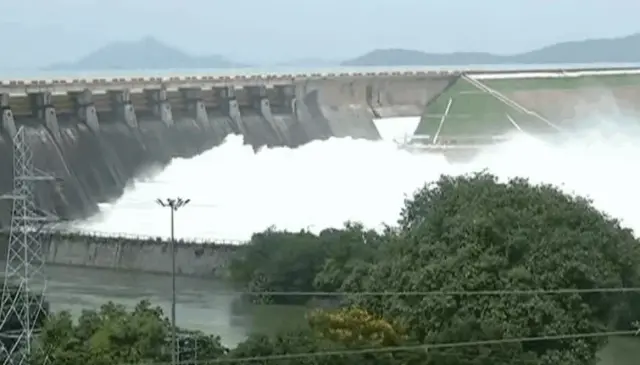
Considering the rising inflow from the upstream catchment and the possibility of a further rise in water levels, five gates of Hirakud dam have been opened and controlled water release has commenced.
This is a precautionary measure to regulate the anticipated increase in inflow into the Mahanadi system due to possible cyclone-induced rainfall and to create additional storage space in the reservoir for managing future inflows., said officials.
Similarly, controlled water discharge from Baghalati and Ghodahada reservoirs commenced on Sunday evening. While 85 cubic metres per second (cumecs) of water is being released from Baghalati, the discharge from Ghodahada has been fixed at 115 cumecs.
The releases are aimed at reducing the storage levels of both reservoirs to around 60 per cent of their capacities.
The discharge operations are being carried out in the presence of the Additional Chief Engineer of the Rushikulya-Bahuda Basin, following prescribed Standard Operating Procedures (SOPs) and necessary precautionary measures. The Collector and District Magistrate of Srikakulam has also been informed about the releases.
The department has also drawn up a phased water release plan for Badanala and Harabhangi reservoirs.
Badanala Reservoir is currently at 78.46 per cent of its storage capacity, with a spillway discharge of 102.13 cumecs. The discharge is scheduled to be increased to 175 cumecs and maintained until the afternoon of November 2, with the objective of bringing down the reservoir’s storage level to around 60 per cent.
Harabhangi Reservoir is currently at 85.55 per cent of its storage capacity, with a spillway discharge of 257 cumecs. The existing discharge will continue until the morning of November 2, following which it is planned to be increased to 360 cumecs and maintained until the evening.
The objective is to bring down the reservoir’s storage level to approximately 60 per cent to create adequate space for accommodating anticipated rainfall runoff.
The department is continuously monitoring reservoir levels, discharge quantities and downstream water flow to ensure the safe and regulated release of water.
All operations are being carried out in accordance with prescribed SOPs, with necessary precautionary and preventive measures in place.
The Water Resources Department continues to be vigilant and is taking all necessary steps to ensure effective reservoir regulation, flood management and public safety in view of the possible cyclone, officials added.