Paris: For over four decades, the United States and the Islamic Republic of Iran have maintained a state of profound enmity, originating with the 1979 Islamic Revolution and the subsequent seizure of the US embassy in Tehran.
This longstanding antagonism now confronts a critical juncture, as senior representatives from both nations convene in Islamabad on Saturday for talks aimed at concluding more than one month of hostilities in the Middle East. A precarious ceasefire persists, though entrenched mutual distrust endures, AFP reported.
1979: The Hostage Crisis Unfolds
On 4 November 1979, Iranian student activists occupied the US embassy in Tehran, taking 52 American personnel hostage in a bid to secure the extradition of the deposed shah, Mohammad Reza Pahlavi, who was receiving medical treatment in the United States.
The incident occurred seven months after the establishment of the Islamic Republic. In April 1980, Washington terminated diplomatic relations and enacted restrictions on trade and travel. The hostages remained in captivity for 444 days, securing their release nine months later.
This rupture set the stage for escalating economic and rhetorical confrontations in the years ahead.
1995-2002: Sanctions And ‘Axis of Evil’ Designation
On 30 April 1995, President Bill Clinton imposed a comprehensive ban on US trade and investment with Iran, citing its support for terrorism through groups including Hezbollah, Hamas, and Palestinian Islamic Jihad. Penalties extended to foreign entities investing in Iran’s petroleum sector.
The rhetoric intensified on 29 January 2002, when President George W. Bush characterised Iran, alongside Iraq and North Korea, as part of a terror-sponsoring “axis of evil.” This culminated in April 2019 with the US designation of Iran’s Revolutionary Guard Corps—the ideological pillar of its armed forces—as a “terrorist organisation.”
Such measures deepened the economic isolation, intertwining with mounting concerns over Iran’s nuclear ambitions.
Early 2000s-2018: Nuclear Revelations And Accord’s Demise
Disclosures in the early 2000s of undeclared nuclear facilities in Iran precipitated international alarm over potential weapons development, a charge Tehran consistently denies. A 2011 report by the International Atomic Energy Agency (IAEA), based on “broadly credible” intelligence, concluded that Iran had “carried out activities relevant to the development of a nuclear explosive device” at least until 2
003.
In 2005, President Mahmoud Ahmadinejad terminated a suspension of uranium enrichment, maintaining that the programme served exclusively civilian purposes. A landmark agreement emerged in Vienna in 2015 between Iran and six world powers—China, France, Germany, Russia, the United Kingdom, and the United States—offering sanctions relief in return for assurances against atomic bomb pursuit. The United Nations endorsed the pact.
However, President Donald Trump withdrew from the accord in 2018, reinstating sanctions on Iran and associated entities. Iran subsequently relaxed certain commitments. Revived diplomatic initiatives faltered, leading to the reimposition of UN sanctions on 28 September 2025 and the deal’s expiration in October.
2020: Assassination Of General Soleimani
Tensions erupted anew on 3 January 2020, when the United States eliminated senior Iranian commander Qasem Soleimani in a strike in Baghdad. President Trump asserted that Soleimani was orchestrating an “imminent” assault on US diplomats and forces in Iraq.
Iran responded with missile strikes on bases in Iraq hosting American troops, further inflaming direct military frictions.
2025: Strikes On Nuclear Facilities
During a 12-day conflict between Israel and Iran, the United States targeted three principal Iranian nuclear sites on 21 June 2025. President Trump stated the facilities had been “obliterated,” although the precise extent of destruction remains unverified.
These actions amplified pressures that would soon culminate in leadership upheaval.
February 2026: Death Of Supreme Leader Khamenei
President Trump issued threats of military action against Iran following its lethal suppression of widespread protests that commenced in late December 2025, with focus shifting to Tehran’s nuclear programme. He dispatched a US naval “armada” to the region, prompting the resumption of indirect negotiations mediated by Oman in early February.
On 28 February, coordinated US-Israeli operations killed Supreme Leader Ayatollah Ali Khamenei and struck Iran’s military and nuclear infrastructure. The Islamic Republic pledged retribution, launching missile salvos at Gulf states hosting US forces and effectively sealing the Strait of Hormuz, conduit for one-fifth of global crude oil shipments.
April 2026: High-Level Negotiations Under Ceasefire
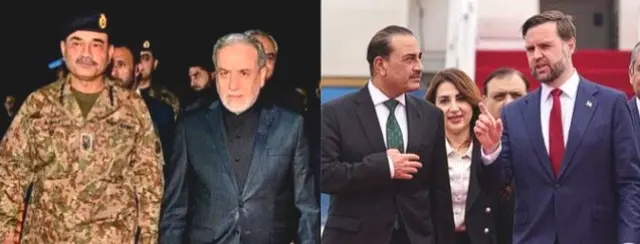
A fragile two-week ceasefire materialised at the outset of April, following over a month of warfare that claimed thousands of lives, displaced multitudes, and severely disrupted the global economy. Delegations from Islamabad, Pakistan—the truce’s broker—commence discussions on Saturday, headed by US Vice President JD Vance and Iranian parliamentary speaker Mohammad Bagher Ghalibaf.
Expressions of mutual distrust prevail, with irreconcilable positions on fundamental demands. Absent an accord, the ceasefire expires on 22 April.