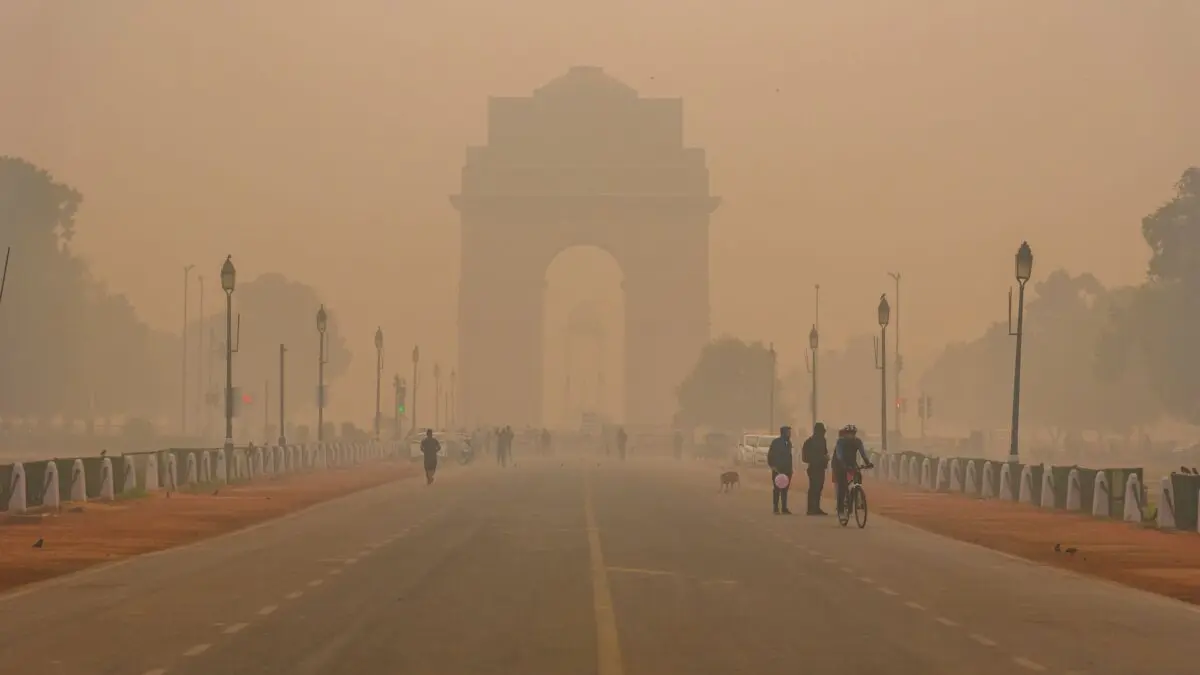
New Delhi: The capital is facing a public-health crisis as its air quality plunges to “life-threatening” levels. Every morning, Delhiites wake up to ashen skies and an Air Quality Index (AQI) brushing the “severe” category. Doctors, scientists, parents, and activists are now sounding the alarm: what was once a seasonal nuisance has become a systemic, year-round disaster.
Here are the 10 major drivers behind this worsening pollution emergency:
1. Open fires are a massive culprit
Far more than stubble-burning, open fires—such as garbage incineration, biomass burning, and heating/cooking fires—now make up more than half of Delhi’s PM2.5 and PM10 pollution.
2. Rampant waste burning
Thousands of tonnes of municipal waste go unprocessed daily. Due to poor waste segregation and saturated landfill capacity, many communities resort to burning trash in drains, open plots, and unauthorized colonies. This releases toxic compounds including dioxins, heavy metals, and unburnt carbon.
3. GRAP system failing to act preventively
The Graded Response Action Plan (GRAP), meant to be a proactive tool, mostly reacts once pollution has already spiked. Rather than triggering measures in advance, agencies often wait until AQI reaches dangerous levels.
4. AQI repeatedly spiking into “severe”
Several monitoring stations have recorded AQI values above 400, especially in critical zones like Wazirpur, Anand Vihar, Bawana, Mundka, Rohini, and Jahangirpuri. Calm winds and low night temperatures are helping trap pollutants close to the ground.
5. Dust and transport emi
ssions add to the load
The worst pollution episodes often occur during early morning (before 9 am) in November and late evening in December—times when temperature inversions are strongest. Even in “cleaner” afternoon hours, PM2.5 is reportedly 8–10 times above the WHO safe limit.
6. Vehicles remain a persistent source
Emissions from traffic, especially diesel trucks, are contributing heavily. Lax enforcement of emissions norms and inadequate public transport expansion have allowed this to remain a stubborn problem. According to a Decision Support System backed by IIT-M, vehicles accounted for ~17% of pollution on certain days.
7. Hospitals overwhelmed by respiratory and cardiac crises
Doctors, particularly from AIIMS, describe the air as “life-threatening,” warning of long-term damage: strokes, chronic lung disease, organ damage, and even cancer. Vulnerable populations—children, elderly, people with pre-existing conditions—are especially at risk.
8. Schools disrupted and policies unclear
High pollution has forced many schools to postpone outdoor sports or shift to indoor drills. Some younger students remain confined indoors, relying on air purifiers provided by parents. There are growing calls for a mandatory “pollution break” each winter.
9. Citizen protests gain momentum
Activist groups (Scientists for Society, Warrior Moms, Disha Student Organisation) are increasingly vocal, gathering at places like India Gate and Jantar Mantar. Many protestors wear biohazard masks or carry symbolic oxygen cylinders, calling out the government for relying on optics over structural reforms.
10. Experts warn: the crisis is deep and worsening
Experts from medical and research institutions say that Delhi’s pollution cannot just be blamed on seasonal factors. Dr. Anant Mohan (AIIMS) warns that this has been going on for a decade, and the health impacts are severe: “Many are facing life-threatening situations … It should be treated like a public health emergency.”