Bhubaneswar: The Union Budget for 2026-27, presented by Finance Minister Nirmala Sitharaman, has drawn sharp criticism from opposition leaders in Odisha, who accused the central government of failing to deliver equitable development for the state.
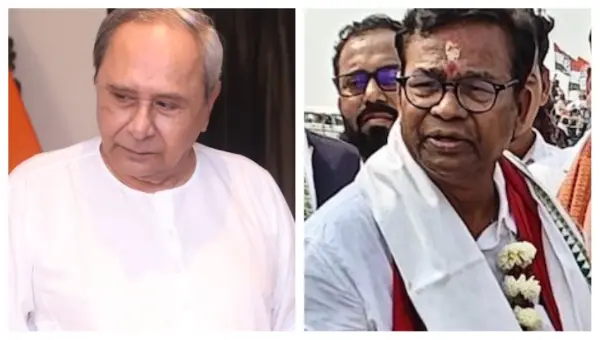
In a pointed reaction, BJD president and Leader of Opposition in the Odisha Assembly Naveen Patnaik expressed deep disappointment, stating that the budget offered “no noteworthy benefits” to Odisha and its people. He noted that expectations from the “double engine government”, the BJP-led administration at both the Centre and state, had centered on accelerated growth through infrastructure development, job creation, and additional allocations long due to the state.
“The state has received very little,” he said in a post on X.
Naveen welcomed the proposal to establish Rare Earth Corridors in mineral-rich coastal states including Odisha, acknowledging the state’s role as a leading producer of key minerals and its continued contribution to national development. However, he criticised operationalisation of National Waterway-5, calling it a “decade-old proposal” with no significant progress on the ground. “It has again been announced to have National Waterways to connect mineral rich areas and industrial centres to the Ports. But this is a decade old proposal without any progress on the ground,” he noted.
The BJD supremo highlighted major exclusions as evidence of ongoing neglect. It is a huge disappointment for the people of Odisha that the announcement to develop seven High-Speed Rail corridors between cities as ‘growth connectors’ does not feature Odisha,” he said.
He also mentioned the shelving of the Bhubaneswar Metro project. “Odisha BJP nipped the Bhubaneswar Metro project earlier and the neglect of people’s needs continues as usual,” he added,
Naveen further expressed bafflement over the Scheme for Development of Buddhist Circuits, which overlooked Odisha despite its prominent Buddhist heritage sites, including the Diamond Triangle (Ratnagiri, Lalitgiri, and Udayagiri).
“As seen from the entirety of the Union Budget, Odisha is getting allocations only for taking its natural resources away and completely ignored when it comes to resource allocation for benefit of people of the state. It’s time the State BJP Govt takes responsibility for the people of Odisha and ensures they get their rightful dues from the centre. Odisha and its people deserve more and better from the Union Budget,” he concluded.
‘Directionless & Anti-People’
Odisha Pradesh Congress Committee (OPCC) President Bhakta Charan Das echoed criticisms previously voiced by Congress leader Rahul Gandhi, who had called the budget “blind to India’s real crises” and pointed to issues such as unemployment among the youth, declining manufacturing, capital flight by investors, falling household savings, and widespread distress among farmers.
“Naturally, some people will express happiness,” Das said, in an apparent reference to supporters of the ruling government. He further described the budget as “directionless, visionless, and devoid of any policy.” He highlighted the country’s rising debt burden, stating, “From this budget, our debt has already reached Rs 190 lakh crore… They are mortgaging the country.”
The state Congress president accused the government of prioritising benefits for industrialists while neglecting ordinary citizens.
‘Odisha Remains A Story Of Utter Neglect’
Rajya Sabha member from BJD Sasmit Patra described the Budget as a clear indication of ongoing disregard for Odisha.
In a strongly worded post on X, Patra highlighted that Odisha’s voters had delivered a near-clean sweep by electing 20 BJP Lok Sabha MPs and a BJP government in the state, hoping for accelerated development under the “Double Engine” government. However, he asserted that this arrangement has delivered zero benefits to the people of Odisha. “The Union Budget is a stark reminder th
at Odisha remains a story of utter neglect,” he stated.
Patra accused the central government of failing to deliver on long-standing promises, pointing to Odisha’s significant contributions to national revenues through railways and mining, yet receiving no corresponding fiscal justice. “The 2014 pledge of Special Category Status has officially been relegated to a ‘Jumla,’ while our demands for a Coal Royalty revision and support for our distressed farmers have been met with a deafening silence from the 20 BJP MPs.”
Patra contrasted the BJP’s approach with that of the BJD, declaring that only the regional party, led by former Chief Minister Naveen Patnaik, remains a steadfast defender of Odisha’s interests. “While others sacrifice our state’s welfare at the altar of national politics, we will continue to fight for the justice our 4.5 crore citizens deserve,” he concluded.
Missed Opportunities For Odisha’s Tribal Heartland
Echoing similar concerns, Congress MP Saptagiri Sankar Ulaka described the budget as an “exercise in fiscal arithmetic rather than a commitment to regional equity”.
With total expenditure set at Rs 53.5 lakh crore, capital expenditure at Rs 12.2 lakh crore, and fiscal deficit at 4.3% of GDP, Ulaka argued that these macro figures signal fiscal consolidation but fail to address social urgency or regional balance. “Big numbers alone do not guarantee inclusive growth; budgets must ultimately be judged by whom they reach and whom they leave behind.”
Ulaka pointed out that though Odisha finds selective mention in the Budget speech, there is no comprehensive or integrated vision for its tribal and KBK districts, which continue to remain on the margins of national development planning. He raised concerns over the lack of clarity on local employment generation, displacement safeguards or benefit-sharing mechanisms for tribal communities along the proposed corridors. “Odisha continues to supply minerals to the nation while bearing the social and ecological costs,” he said.
In the tourism sector, Ulaka criticised the selective approach, noting the budget’s emphasis on mountain trekking trails in Araku Valley (Andhra Pradesh) under national eco-tourism initiatives while completely ignoring Deomali, Odisha’s highest peak in the tribal-dominated Koraput district.
Ulaka also lamented the budget’s limited visibility for interior districts like Koraput, Rayagada, Malkangiri, and Kandhamal, as well as the KBK region, despite Odisha’s inclusion in broader visions like Purvodaya and the East Coast Industrial Corridor. “Development cannot stop at ports and corridors; it must climb hills, cross forests and reach the last tribal village.”
He highlighted the absence of any meaningful expansion in MGNREGA allocations or wage rate corrections, crucial for tribal regions heavily dependent on public employment. “A Rs 53.5 lakh crore Budget that sidelines the Right to Work highlights the growing disconnect between fiscal aggregates and ground-level necessity,” he added.
‘Odisha Left to Bear the Burden of Extraction Without Gains’
Senior Congress leader and former Union Minister Srikant Jena also criticised the Union Budget, describing it as reflecting a “corporate-driven approach” rather than a genuine people-centric vision for inclusive growth. “For a state like Odisha, the neglect is evident. There is not a single major development project dedicated to the state—only proposals that appear to facilitate the extraction of its natural resources to benefit other regions. The proposed National Waterway linking Talcher and Angul to major ports point towards faster mineral evacuation rather than balanced development, leaving Odisha to bear pollution and environmental degradation without receiving its rightful mineral dues or downstream industries to generate employment for its youth,” he said.
Jena also expressed disappointment over the absence of targeted initiatives for Odisha in the national push for textile and manufacturing growth. “Establishing at least two major textile parks in Odisha could have significantly boosted jobs,” he noted.
Despite Odisha being one of the highest contributors to national railway freight revenue, he pointed out that none of the seven proposed high-speed rail corridors includes critical routes such as Bhubaneswar–Kolkata or Bhubaneswar–Visakhapatnam.