Kabul: Taking a leaf out of India’s rulebook, Afghanistan has now announced plans to construct dams and limit the flow of water into Pakistan. This was announced by the country’s Information Ministry.
Afghanistan’s supreme leader Mawlawi Hibatullah Akhundzada has issued a directive to expedite dam construction on the River Kunar. This declaration of the country’s “right to water” comes weeks after violent clashes along the Afghan-Pakistan border that resulted in several deaths.
After the April 22 Pahalgam terror strike, India put the Indus Waters Treaty (IWT) with Pakistan on hold. Suspension of this treaty threatens to severely impact Pakistan’s agricultural production.
The Afghan Ministry of Water and Energy has said that Akhundzada instructed it to begin dam construction on the Kunar River immediately and finalize contracts with domestic firms. This announcement was made by Muhajer Farahi, deputy minister of information, in a post on X.
“After India, it may now be Afghanistan’s turn to restrict Pakistan’s water supply…the Supreme Leader ordered the [water and energy] ministry to sign contracts with domestic Afghan companies rather than wait for foreign firms,” London-based journalist Sami Yousafzai said.
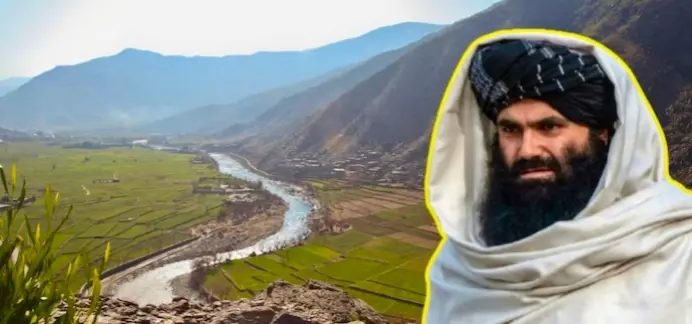
The Kunar River is 480-kilometre-long and originates in the Hindu Kush mountains near the Broghil Pass close to Pakistan. After flowing through Afghanistan’s Kunar and Nangarhar provinces, it eventually enters Khyber Pakhtunkhwa, where it merges with the Kabul River near Jalalabad. In Pakistan, this river is known as the Chitral River.
Experts believe that any reduction in the Kunar’s flow could disrupt the Indus basin and impact Punjab’s water supply as well.
The Kabul River, into which Kunar merges, forms the most significant transboundary water system between the two countries. It feeds into the Indus River near Attock, serving as a crucial water source for irrigation and agriculture in Pakistan’s northwestern provinces.
The Afghan government has also been irked by Pakistan’s decision to drive out thousands of Afghan nationals living across the Durand Line. This is the de-facto border between Afghanistan and Pakistan created by the British. Afghanistan refuses to accept this as the border and claims rights over parts of Khyber Pakhtunkhwa.
Ever since the Taliban took control in 2021, Afghanistan has stressed on water sovereignty, accelerating dam and hydropower projects to reduce dependence on neighbouring countries. No formal water-sharing agreement exists between Islamabad and Kabul. Pakistan has previously warned that unilateral water control measures by Afghanistan could escalate into a regional water crisis, given Pakistan’s existing energy and food security woes.
“Appreciating India’s assistance in the construction and maintenance of the India-Afghanistan Friendship Dam (Salma Dam) in Herat, both sides also underscored the importance of sustainable water management and agreed to cooperate on hydroelectric projects with a view to addressing Afghanistan’s energy needs and supporting its agricultural development,” a joint statement from both nations said during Afghan foreign minister Mawlawi Amir Khan Muttaqi’s recent visit to India.
India and Afghanistan have long collaborated on hydropower and irrigation projects, strengthening their infrastructure partnership. The Salma Dam, also known as the Afghan-India Friendship Dam, was completed in 2016 with Indian funding of around $300 million. The dam generates 42 MW of electricity and irrigates 75,000 hectares of farmland, significantly reducing Afghanistan’s reliance on imported power.
Building on this cooperation, the Shahtoot Dam project, agreed upon in 2021 under a $250 million Indian commitment, will store 147 million cubic meters of water. Once completed, it is expected to provide clean drinking water to over two million Kabul residents and irrigate 4,000 hectares of farmland.