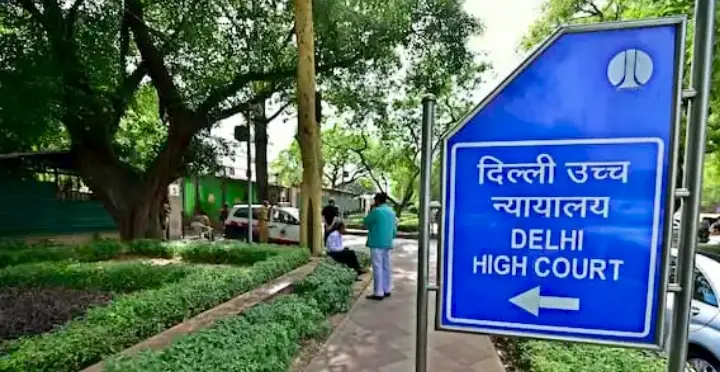
New Delhi: The Enforcement Directorate (ED) has moved the Delhi High Court, challenging a trial court order refusing to take cognisance of its chargesheet against Congress leaders Sonia Gandhi, Rahul Gandhi and others in the alleged National Herald money laundering case.
In its appeal, the agency claimed that the trial court order amounts to “judicial legislation”. The matter is likely to be heard next week.
According to news agency PTI, the ED challenged trial court Judge Vishal Gogne’s order which held that cognisance of the agency’s complaint in the case was “impermissible in law” as it was not founded on an FIR.
The agency has called this “erroneous”, and sought an ex-parte stay on the judgement that was hailed by the Congress. The party has called the agency’s action “political vendetta undertaken against the Gandhis at the behest of the BJP government”.
The stay was essential to “prevent irreparable loss” to the ongoing money laundering investigation and to secure the attached proceeds of crime worth Rs 752 crore, the ED told the High Court in its petition.
“The impugned judgement creates two impermissible classes of scheduled offences leading to complete manifest arbitrariness wherein a person who commits a scheduled offence will not be prosecuted for generation and laundering of proceeds of crime only because it is based on a private complaint to a magistrate of which cognisance is taken by applying judicial mind,” the ED has state
d.
The effect of the said judgement is “to amend or rewrite the statute, especially Section 2(1)(u) and Section 2(1)(y) of the PMLA, and to add words to the expression ‘scheduled offence’ to mean ‘scheduled offence only registered by a law enforcement agency’, which is impermissible and amounts to judicial legislation”, the agency added.
The Rouse Avenue court had said an investigation and the consequent prosecution complaint (equivalent to chargesheet) pertaining to the offence of money laundering was “not maintainable” in the absence of an FIR for the offence mentioned in the schedule to the Prevention of Money Laundering Act (PMLA).
It said the agency’s probe stemmed from a private complaint and not an FIR.
The trial court had also said that cognisance upon the complaint being liable to be declined on a question of law, other arguments relating to the merits of the allegations were not required to be adjudicated upon.
Despite receiving the complaint made by BJP leader Subramanian Swamy and the consequent summoning order in 2014, the CBI refrained from registering an FIR in relation to the alleged scheduled offence, the special PMLA Court had pointed out.
“However, the ED went ahead with recording an ECIR relating to money laundering on June 30, 2021, when no FIR (with the CBI or any other law enforcement agency) existed in relation to the scheduled offence,” it said.
The ED has accused Sonia and Rahul Gandhi along with Suman Dubey, Sam Pitroda, and a private company, Young Indian, of conspiracy and money laundering in its chargesheet.
The ED complaint alleged that the Gandhis “abused” their position for personal gains and Young Indian, a private company “beneficially owned” by the mother-son duo, “acquired” Associated Journals Ltd. (AJL) properties worth Rs 2,000 crore for a mere Rs 50 lakh, significantly undervaluing its worth.