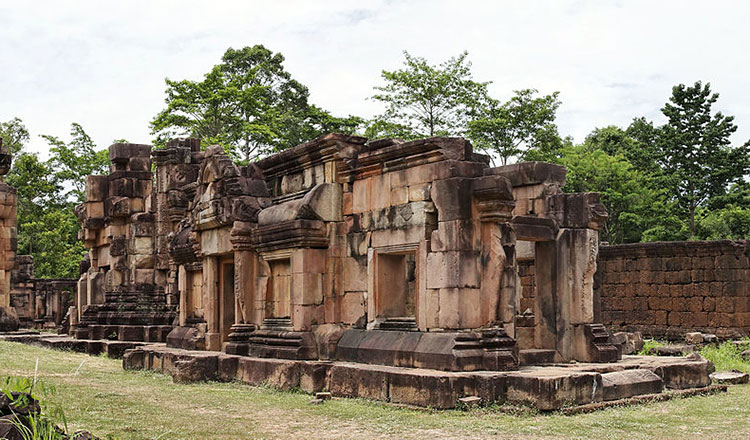
Cambodia: An 11th-century Hindu temple, Prasat Ta Muen Thom, dedicated to Lord Shiva, has emerged as the epicentre of rising military tensions between Thailand and Cambodia, with both nations claiming sovereignty over the ancient site that sits along their shared border in the Dangrek Mountains.
At least 12 people have been killed in the latest cross-border hostilities between the Southeast Asian neighbours. Both countries have exchanged rocket fire and airstrikes using F-16 jets, reports claimed.
Home to a natural Shiva lingam
The temple, located atop a remote mountain pass, is home to a natural Shiva lingam and bears significant cultural and religious importance for Hindus. Though currently under Thailand’s control, Cambodia has laid claim to the site, stating it falls within its Oddar Meanchey province. Thailand, however, maintains that the temple is located in Surin province and has been officially registered as a Thai national monument since 1935.
A sacred site caught in crossfire
The centuries-old structure has become the latest flashpoint between the two Southeast Asian neighbours. Tensions, simmering since May, escalated on July 24 when Thai fighter jets reportedly carried out retaliatory airstrikes after Cambodian troops allegedly launched rockets into Thai territory, killing at least nine civilians and injuring several others.
The rocket strikes triggered an emergency evacuation of over 40,000 residents across 86 villages near the border, Thai officials confirmed. A Thai soldier was also reported killed in the exchange of fire. Cambodia, meanwhile, accused Thailand of violating its sovereignty, prompting a tit-for-tat expulsion of ambassadors by both nations earlier this week.
While both armies had agreed to scale down troop deployment around the temple in May following diplomatic talks, recent provocations—including landmine blasts and nationalist demonstrations—have reignited the dispute.
Historical rivalry rooted in colonial cartography
Prasat Ta Muen Thom, believed to have been constructed during the reign of Khmer King Udayadityavarman II, was part of the royal highway linking Angkor in Cambodia to Phimai in Thailand. The temple houses a prominent lingam carved directly into natural bedrock and features a ritual water channel, or somasutra, further enhancing its religious sanctity.
The exact demarcation of the border near the temple has long been contentious, owing to discrepancies between French colonial-era maps and modern claims. Cambodia argues that the monument lies within its pre-colonial frontier, while Thailand points to decades of administrative control and national heritage registration.
The current standoff recalls earlier clashes over the nearby Preah Vihear temple, which saw deadly exchanges between 2008 and 2011 before the International Court of Justice awarded that temple to Cambodia in 2013. Cambodia is now expected to approach the ICJ once again to seek adjudication on the Ta Muen Thom dispute.
Regional concerns and calls for de-escalation
The latest bout of violence has raised concerns across ASEAN, with regional powers urging restraint and dialogue. The Thai Fine Arts Department has reiterated that the temple lies within Thai territory, and Thai officials have expressed willingness to cooperate on controlled tourism and military disengagement.
In mid-July, both countries had agreed to a joint plan to allow screened civilian tourists to visit the shrine without armed escorts. However, those plans now hang in the balance as border skirmishes intensify and national sentiments on both sides run high.