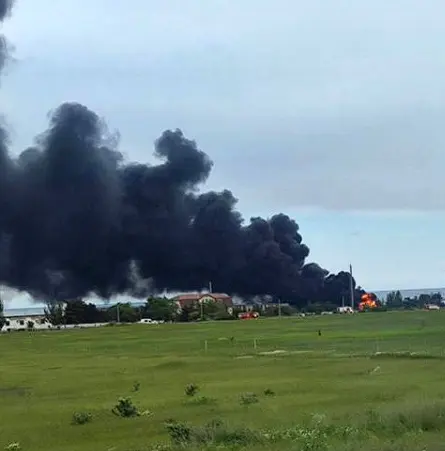
Moscow: Ukrainian drone strikes overnight into Saturday ignited fires at Russian oil facilities, Russian officials said, in what appears to be the latest blow to Moscow’s crucial energy infrastructure, AP reported.
Authorities in Russia’s Rostov region reported falling drone debris set ablaze an oil depot and a tanker at the port city of Taganrog. Officials in neighbouring Krasnodar region said a fire broke out at an oil depot in Armavir for the same reason.
In a post on X, President Volodymyr Zelenskyy said Armavir, about “500 kilometers from our state border”, had been struck, and declared, “We are rightfully bringing the war back to where it came from.”
Ukraine Widens Strike Reach
Kyiv has broadened its reach, fielding domestically produced drones and missiles that can strike deeper into Russia more than four years into the invasion. Those systems have put oil facilities — a major source of revenue for Moscow’s war machine — under near-daily pressure.
M
oscow has answered with long-range ballistic strikes that have battered Ukraine’s power grid and pummelled cities. Kyiv is preparing for heavier attacks after the Russian Foreign Ministry this week warned of forthcoming “systemic strikes” on the capital.
Zelenskyy said Thursday that he’s being “very persistent” in urging the United States to supply more Patriot air-defence missiles to counter costly Russian ballistic missile attacks.
Cross-Border Risks Rise
The latest assaults on Russian energy sites came a day after a Russian drone involved in an attack on Ukraine hit an apartment block in eastern Romania, wounding two people and stoking fears the conflict could spill into NATO territory. European leaders sharply condemned the incident.
Meanwhile, Russia’s state nuclear firm Rosatom reported on Saturday that a Ukrainian drone struck the Russian-held Zaporizhzhia nuclear power plant. Rosatom chief Alexei Likhachev, quoted by Russian state media, said the strike caused no damage to key equipment but “left a hole in the wall of a turbine hall.” He said the drone’s control via fiber optics “completely rules out the possibility of an accidental impact.”
Ukraine did not immediately comment on the plant incident. The Zaporizhzhia facility — Europe’s largest nuclear plant — has been under Russian control since early in Moscow’s full-scale invasion and remains offline, though it still needs steady power to cool six shut-down reactors and stored fuel to avert any catastrophic nuclear accident. The International Atomic Energy Agency has repeatedly voiced alarm about the plant’s condition.