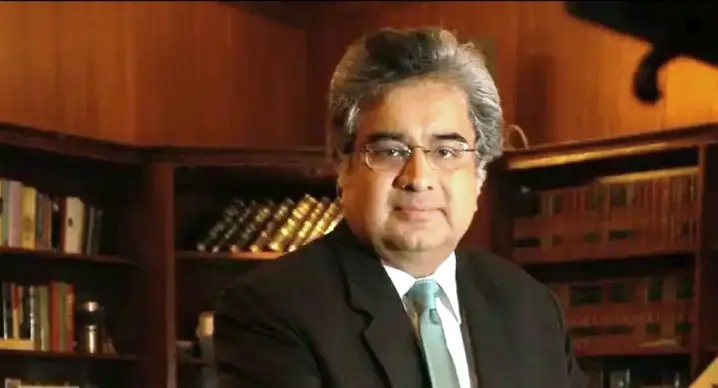
New Delhi: The Opposition’s decision to march to the Supreme Court and seek a meeting with Chief Justice of India (CJI) Surya Kant has been slammed by former Solicitor General Harish Salve.
He has described the move as “sheer stupidity” and alleged that the judiciary was being used as a political tool.
In an interview with IANS, Salve questioned the INDI bloc’s approach to the judiciary amid its protests against Chief Election Commissioner (CEC) Gyanesh Kumar and allegations of irregularities in the electoral process.
Political parties must follow established legal procedures rather than seek to exert pressure on constitutional institutions, he said.
“This is sheer stupidity. It appears as though they are proceeding on the assumption that they have no faith in the Constitution or any system and that they will do whatever they want,” Salve said.
The remarks came after Congress leader Rahul Gandhi announced a march to the Supreme Court on Monday over allegations of “vote chori”, or electoral fraud, and demanded the resignation of the CEC. Rahul also called on opposition parties, civil society groups and citizens to join the march and submit a memorandum to the CJI.
The CJI, however, declined the request and indicated that instead of submitting a memorandum, Rahul and the delegation should approach the Court by filing a petition.
Salve said the judiciary was being drawn into political disputes, while questioning the Opposition’s attempts to approach the CJI,
“Absolutely. In my opinion, they are trying to use the Supreme Court as a political tool every day,” he said.
The Courts were examining questions relating to human rights, the right to protest and freedom of expression under Article 19 of the Constitution, and political parties should allow the judicial process to take its course, he maintained.
“The judges are doing their job,” Salve said, adding that the Supreme Court had passed what he described as a balanced order.
The former SG also criticised the tendency of political leaders and lawyers to question the judiciary when its decisions do not go in their favour. He said disagreement with a particular judgment should not be confused with a loss of faith in the judicial system.
“Faith in the judiciary and the correctness of a particular judgment are two different things,” he said.
He added that those who disagree with a verdict can express their views and present arguments, but should not suggest that an unfavourable decision necessarily undermines the judiciary’s credibility.
Salve said the allegations against Kumar should be examined through the established judicial process and not on the streets.
The Supreme Court had sought a response from the CEC and the Election Commission would have an opportunity to present its position and records before the court, he maintained.
“Is it necessary to create a commotion every day? Is it necessary to inconvenience the people of Delhi?” Salve asked, raising concerns about the potential impact of protests on businesses and ordinary citizens during the festive season.
The Court would examine whether any irregularities had taken place and how they had been addressed, he said.
“The Supreme Court has sought a response from the Chief Election Commissioner, and the court will deliver its decisions in due course,” he said.
Any action against the CEC would have to follow the appropriate constitutional procedure, depending on the findings and circumstances, Salve argued. He stressed that the Supreme Court could not directly remove the CEC from office.
“There is no need to draw conclusions in haste. This is politics,” he said.
While defending the need to regulate protests in accordance with the law, the senior lawyer argued that the constitutional right to demonstrate did not permit people to disregard police restrictions.
“The main point is that the right to protest is subject to the applicable police laws. It does not exist outside the law,” he said.
If permission to hold a protest was denied, organisers could challenge the decision through the appropriate legal process rather than defy restrictions and subsequently claim that their rights had been violated, he added.
“The Supreme Court has made it clear that the right to protest does not place anyone above the law,” Salve said.
He also questioned the strategy adopted by the Congress despite the presence of several senior lawyers in the party.
“From a legal perspective, I am surprised that a party with such extensive legal expertise is choosing this course of action,” he said, adding that Congress leaders would have to explain whether the strategy was being pursued on the advice of their lawyers.
In the interview, Salve alleged that foreign forces were instigating protests in India and claimed that foreign funding was being provided for such activities. He cited developments in Nepal, Sri Lanka and Bangladesh as examples of what he believes is a broader pattern of external interference.
“I believe that foreign funding is being provided for these efforts and that they are being instigated from abroad. This is my allegation,” he said.
He also referred to individuals he alleged were helping mobilise protests and questioned the sources of funding for such activities. He argued that the government had a responsibility to investigate allegations of foreign involvement.