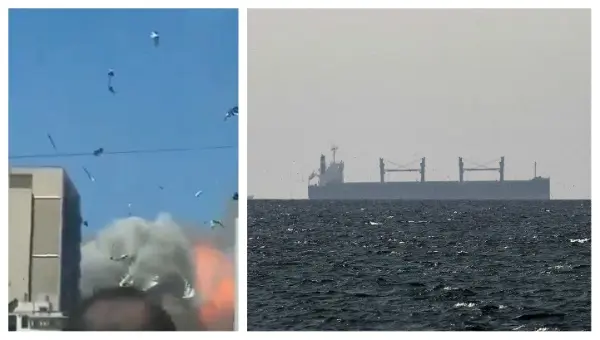
Islamabad: A fragile two-week truce between the US and Iran, designed to curb rising tensions and unlock diplomacy, has instead laid bare profound uncertainties about its reach, policing, and purpose. Divergent assertions regarding Lebanon, questions about the Strait of Hormuz, and continued military actions have broken faith in the pact. With teams set to convene in Islamabad on Friday, the chasm between the signed terms and battlefield realities is expanding, leading to a ceasefire that endures only in writing while fiercely debated in action, as reported by The Economic Times.
Core Disputes Fuel Ceasefire Confusion
The turmoil stems from a basic clash on Lebanon’s inclusion in the truce’s purview. CNN reports that Iran has charged Is+rael with flouting the agreement through massive assaults on Lebanon, resulting in hundreds of deaths, and casting them as a blatant violation. Israel and the US counter that Lebanon was never covered, underscoring a pivotal rift among the sides.
This split is echoed in clashing declarations. White House Press Secretary Karolina Leavitt told reporters that the iteration of Iran’s 10-point proposal embraced by the US excluded Lebanon, as various versions had been in play. Still, according to CNN, Pakistan’s prime minister invoked Lebanon in an X post heralding the ceasefire. Pakistan’s ambassador to the US also affirmed to CNN that Lebanon was part of the structure. Such inconsistencies point to either accepted multiple readings to clinch the accord or inherent vagueness in the text itself.
En route to Pakistan for talks, Vice President JD Vance tackled the confusion and urged restraint. He labeled it “dumb” for Iran to threaten the process over Israel’s Lebanon operations. This echoes the US effort to decouple the ceasefire from Israel’s distinct military efforts — a view Iran strongly disputes.
Ongoing Operations Test Diplomatic Goals
Even as the truce activated, Israel conducted its sharpest Lebanon attacks in recent months. Such steps imperil the already slim confidence at the negotiating table. Iran interprets them as clear signs of biased enforcement, if not total dismissal.
Tehran leaders have voiced doubts on talks’ merit. Iran’s Parliament Speaker Mohammad Bagher Ghalibaf labeled negotiations “unreasonable” given purported breaches. His stance highlights internal strains, with public sentiment in Iran leery of dialogues absent firm adherence pledges.
Conversely, the US prepares for heightened response if talks falter. President Donald Trump declared US forces would linger near Iran pending a comprehensive pact. In a late-Wednesday Truth Social post, he
wrote: “all US ships, aircraft, weapons and military personnel will remain ‘in place, in and around, Iran’ until a full agreement is reached. ‘If for any reason it is not, which is highly unlikely, then the “Shootin’ Starts,” bigger, and better, and stronger than anyone has ever seen before,’ Trump wrote. Iran must have ‘NO NUCLEAR WEAPONS and, the Strait of Hormuz WILL BE OPEN & SAFE,’ Trump added.”
Such rhetoric from Trump emphasizes the enforced, high-tension setting that defines the ongoing diplomatic process.
Strait of Hormuz Reveals Strategic Gaps
While Lebanon lays bare the ceasefire’s fuzzy boundaries, the Strait of Hormuz reveals gaps in its economic and military provisions. Crucial for global oil flows, this bottleneck was key to the agreement. Still, its operations are unclear — Iran seems to have blockaded it after Israel’s claimed Lebanon breach, using it to keep leverage.
The Wall Street Journal, citing mediators, reports Iran plans to restrict strait passage to about a dozen ships daily and levy fees, preserving bargaining power under truce terms. This frames strait dominance not as a yield but a tool.
CNN, quoting Iran’s Islamic Revolutionary Guard Corps, noted shipping first tapered then stopped post-Lebanon strikes. Tracking data showed no vessels moving through at peak closure, despite prior flickers of activity.
Analysts urge caution on fallout. Tom Kloza, chief energy adviser at a major US oil firm, described current flows to CNN as “baby steps” lacking proof of ramped crude exports. “There’s no indication that the strait is going to reopen, and it seems like a flimsy ceasefire, to say what’s obvious,” he said. “There is just ‘a trickle’ leaving the region and that, because of the fragility of the deal, the people who send oil through the Strait of Hormuz ‘would be very reluctant to do so’ right now. ‘It looks as though we’re weeks away from any restoration of even 50% or 70% of the Strait of Hormuz traffic that we depend on,’ Kloza said.”
Islamabad Diplomacy Faces Headwinds
Tensions notwithstanding, envoys press on. Iran’s team is due in Islamabad for US discussions, hosted by Pakistan to advance Iran’s 10-point plan toward a sturdier ceasefire.
The mood is tense. Iranian figures doubt value amid Israeli operations; US urges persistence despite clashes. AP says facilitators wrestle with clashing truce readings, especially on geographic bounds and verification.
Islamabad was picked for its neutrality, though it leaves underlying tensions unaddressed. Questions swirl around Pakistan’s involvement in the Lebanon terms. Lately, the truce looks more like a formality than substance, lacking unity on key issues. From Lebanon’s scope to Hormuz flows and combat restrictions, disputes persist. The deliberate ambiguity—for initial gains—now risks derailing the ceasefire’s goal. No precision means no real policing; violations become matters of opinion, not fact. Talks here need to build a sturdy framework from this shaky stopgap.