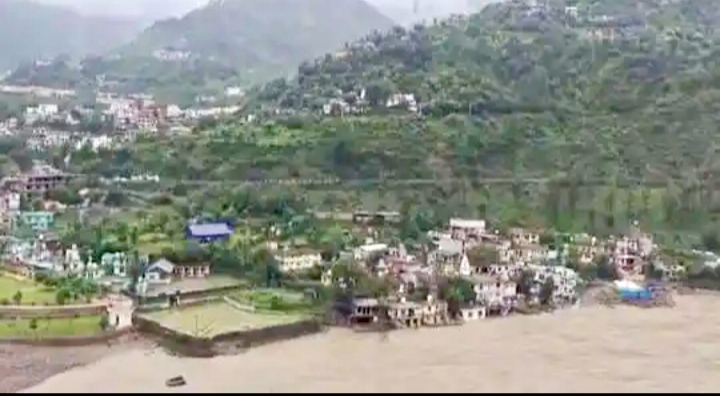
Srinagar: At least seven people have been killed in a cloudburst in the Ramban district of Jammu and Kashmir on Saturday morning. Two people are missing, officials said.
Ramban is situated on the banks of the Chenab river and is connected by National Highway 44 that connects Jammu to Srinagar. The district, known for its mountainous terrain, is divided into eight tehsils. The cloudburst occurred in Ragrah Tehsil of the district.
Heavy rainfall in the district has resulted in the Chenab River breaching the danger-level mark and river water entering low-lying areas.
This is the second cloudburst incident reported in Jammu and Kashmir within 24 hours, and the third within a week.
On Friday, a cloudburst hit the Gurez Sector of Bandipora district. No casualties were reported. The cloudburst hit the Tulail area of the frontier Gurez Sector in the north Kashmir district.
Heavy rainfall and a sudden cloudburst caused flash floods in Doda district earlier this week, disrupting normal life and forcing the closure of the Jammu-Srinagar highway. Landslides at several locations along the route added to the disruption, halting traffic and isolating parts of the region.
Meanwhile, officials have said that the Jhelum river has dropped below the flood alert level at Sangam in south Kashmir’s Anantnag district as the weather improved earlier this week. They have, however, predicted a brief spell of rain or thundershowers there from September 2 to 6.
Anshul Garg, divisional commissioner, Kashmir, said while the situation is under control and there is no need to panic, the coming fortnight will be crucial.
“Water levels are receding. The levels at Sangam and Ram Munshibagh are receding and the weather forecast is similar for the next couple of days,” he said.
He appealed to people to stay alert and follow the advisories issued by the administration and the meteorological department.
“People living near streams and tributaries need to stay alert as the next 10-15 days are important. Our district disaster management teams will be on the ground to monitor the situation round the clock,” he said.