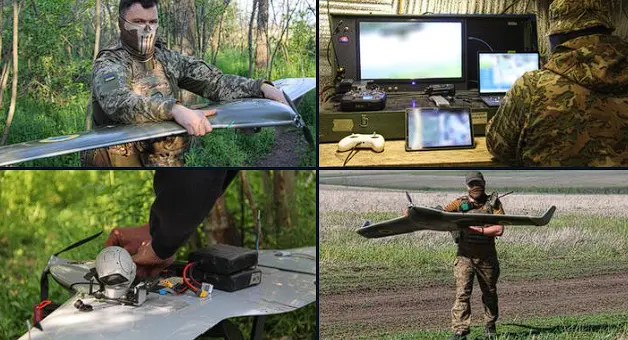
Kyiv/London: Ukrainian mid-range drone strikes are putting fresh pressure on Russia’s war machine, damaging air defences and logistics dozens to hundreds of kilometres behind the front and opening routes for longer-range attacks on energy and military targets, Ukrainian commanders and independent analysts say.
Kyiv has rapidly expanded what it calls “middle strikes” — attacks usually carried out 30–180 km from the contact line — to hit radars, short- and medium-range air-defence systems, communications centres and supply lines, sources told Reuters. By forcing Moscow to pull air defences away from the front, the campaign creates gaps that make it easier for long-range drones to reach refineries, ports and other strategic infrastructure deep inside Russia.
“The role of middle strikes is currently decisive,” Robert Brovdi, commander of Ukraine’s Unmanned Systems Forces, told Reuters in a voice message, referring to strikes of up to 2,000 km.
Brovdi said manual control, rather than coordinate-based guidance, allowed for better precision, and that no more than three drones were typically spent for each confirmed destruction of a target. He added his forces have targeted and destroyed at least 129 air-defence systems this year in Russian-occupied areas, a figure Reuters could not independently verify.
Scaling Up & diversifying
President Volodymyr Zelenskiy said this month the number of Ukrainian “middle strikes” had doubled since March and quadrupled since February, a sign of rapidly increasing operational tempo.
“We have scaled up, increased the number of crews, and expanded the number of systems in use. There is also greater diversity in the available platforms,” Kusto, a field commander in the 7th battalion of the 414th Separate Unmanned Systems Brigade, informed Reuters in written remarks. His unit concentrates on targets up to 100 km from the line and most often uses the domestically produced Chaklun V and the B-2.
Faster Innovation From Feedback
Commanders say frequent combat use has tightened the loop between producers and users, accelerating upgrades. A technical engineer with the call sign “Symbol” said some manufacturers now deliver platforms that are almost fully combat-ready, requiring no further programming. “Previously, middle strike was more of a one-off capability,” he said in written comments. “Now it’s a systematic part of operations.”
Adding Pressure, Not Decisive Edge
Analysts at the Royal United Services Institute (RUSI) and the US-based Institute for the Study of War (ISW) caution that mid-range strikes alone will not decide the conflict, but they have materially affected battlefield dynamics.
The operations have slowed Russian advances, stretched logistics and inflicted some of the heaviest damage to Russian oil infrastructure since 2022, Reuters reported last month, including strikes that forced cuts in oil output and halted crude pipeline supplies to Europe.
Emil Kastehelmi of Black Bird conflict analysis warned the campaign could still intensify: “And I don’t think we’ve seen the pinnacle of it yet.”