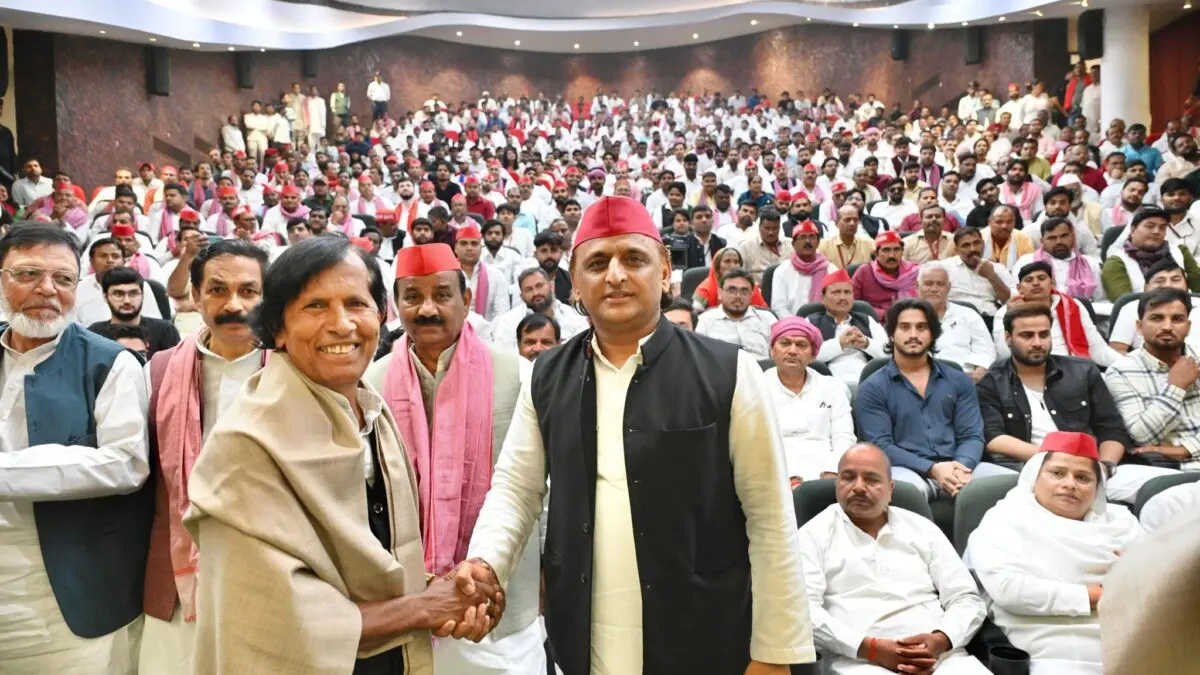
New Delhi: A sharp exchange of political and cultural rhetoric erupted today after Akhilesh Yadav, chief of the Samajwadi Party (SP), struck a critical note on Diwali celebrations in Uttar Pradesh—and found himself on the receiving end of a heated rebuke from Vinod Bansal of the Vishwa Hindu Parishad (VHP).
The controversy began when Yadav, addressing a Diwali gathering, asserted: “In the entire world, all the cities get illuminated during Christmas. And that goes on for months. Why do we have to spend money on lamps and candles and put so much thought into it?” He described the Uttar Pradesh government under Yogi Adityanath as “a futility government” and criticised Lucknow’s traffic, garbage, and smart-city tag.
Bansal responded in full force, calling Yadav’s comments evidence of an “anti-Sanatana mindset.” He went further: “Go celebrate Christmas in Vatican City, you may get 2–4 voters there,” he said, pointing to the SP leader’s remark and accusing him of ignorance of Hindu festivals.
Bansal emphasised that the Kumhar community—the potters who make diyas used in Diwali celebrations—felt wounded by Yadav’s suggestion. “Even when Christianity didn’t exist, Diwali was celebrated… Today, on Diwali, he is lecturing about Christmas… Christmas will come two months later,” he added.
Why the spark?
Yadav’s comments struck a nerve because they challenged the traditional importance of Diwali in Hindu culture, while drawing a comparison to Christmas—arguably invoking themes of cultural identity, festival politics, and communal sensibilities. Bansal’s retort, invoking the Vatican and suggesting Yadav celebrate there, escalated the exchange into the domain of cultural confrontation.
Wider implications
The row exposes how festival celebrations, their nature and scale, remain deeply political in India—used as symbolic battlegrounds for identity.
Yadav’s critique of the government’s Diwali expenditure opens a broader debate about public spending, festival priorities and administrative performance.
Bansal’s reaction squares into a larger narrative about majoritarian identity and the assertion of Hindu traditions in the face of perceived dilution.