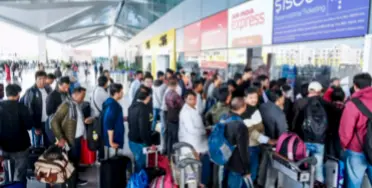
New Delhi: The Ministry of Civil Aviation (MoCA), on Saturday, said that it has invoked its regulatory powers to ensure “fair” and “reasonable” fares across all affected routes to protect passengers from any form of opportunistic pricing.
Air fares have spiralled across all sectors after the country’s largest airline – IndiGo – cancelled at least 1,600 flights over the week due to mismanagement in planning the crew roster .
“The Ministry of Civil Aviation has taken serious note of concerns regarding unusually high airfares being charged by certain airlines during the ongoing disruption. In order to protect passengers from any form of opportunistic pricing, the Ministry has invoked its regulatory powers to ensure fair and reasonable fares across all affected routes,” the ministry said in a statement.
“These caps will remain in force until the situation fully stabilises. The objective of this directive is to maintain pricing discipline in the market, prevent any exploitation of passengers in distress, and ensure that citizens who urgently need to travel – including senior citizens, students, and patients – are not subjected to financial hardship during this period,” the statement added.
An official directive has been issued to all airlines mandating strict adherence to the fare caps that have now been prescribed, the ministry said. It, however, did not share details on the fare limit that they have set f
or the airlines.
The statement further said that the government would continue to closely monitor fare levels through real-time data and active coordination with airlines and online travel platforms.
“Any deviation from the prescribed norms will attract immediate corrective action in the larger public interest,” it said.
The root cause of the trouble is IndiGo’s failure to plan its crew roster as per the new Flight Duty Time Limitations (FDTL) implemented on November 1. By December 4, the airline realised that it didn’t have adequate pilots available to operate flights under the new rules.
Cancellations followed across the country. On Friday, IndiGo was forced to cancel nearly 1,000 flights. Some airlines took advantage of the situation immediately and hiked fares, in many cases by five to ten times the usual rates on major sectors.
Round-trip prices on the busiest routes crossed Rs 80,000-90,000. A Delhi–Mumbai return ticket was listed as high as Rs 93,000, while Bengaluru was showing Rs 92,000, Kolkata Rs 94,000, and Chennai Rs 80,000. In normal circumstances, economy round-trip fares on these routes rarely exceed Rs 20,000–25,000, and even last-minute bookings seldom go beyond Rs 30,000.
“In order to protect passengers from any form of opportunistic pricing, the Ministry has invoked its regulatory powers to ensure fair and reasonable fares across all affected routes,” civil aviation minister Ram Mohan Naidu Kinjarapu posted on X.
“The Ministry will continue to closely monitor fare levels through real-time data and active coordination with airlines and online travel platforms. Any deviation from the prescribed norms will attract immediate corrective action in the larger public interest,” he added.
However, some believe that this is a step too little, too late, as thousands have already bled.