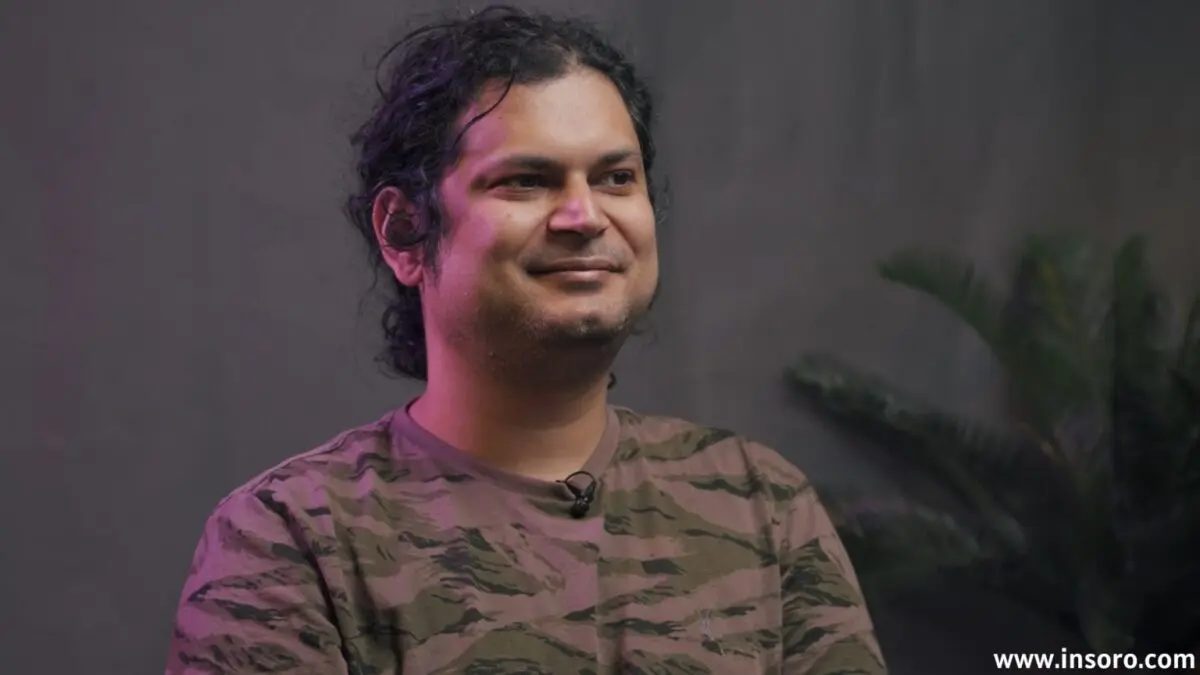
Bhubaneswar: His parents wanted him to become a doctor or an IAS officer. Instead, Amrit Acharya helped build Zetwerk into one of India’s largest technology-enabled and cost-effective manufacturing platforms that works on sourcing model.
Born in Cuttack and raised in Bhubaneswar, Amrit grew up in a middle-class Odia family. His father worked in insurance. His mother worked with an NGO. Both were arts graduates. Engineering or business was never the family plan. In the Bhubaneswar of those years, coaching centres for competitive exams were limited, and talk of IIT was rare in most homes.
Yet Amrit made it to IIT Madras. In his previous interviews with various digital platforms, he often credits his grandmother, who was strong in mathematics and became his first tutor.
Early lessons on the factory floor
After graduating from IIT Madras with a degree in electrical engineering, Amrit joined ITC in 2016, according to a moneycontrol.com report. At 21 or 22, his first major assignment was helping set up a new factory. He dealt with hundreds of suppliers and workers, managed large budgets, and learned how manufacturing works on the ground. Spreadsheets and phone calls were the main tools. That experience stayed with him.
He later completed an MBA from the University of California, Berkeley, and joined McKinsey in San Francisco. The job was good. “McKinsey was great,” he had recalled in an interview with Forbes India. But an uncertain US visa situation changed the course of his life. After spending months working from Australia, the prospect of moving countries again felt unsettling. His then-girlfriend, now wife, told him that uncertainty was not necessarily a bad thing. In January 2018, he returned to India.
Entrepreneurship, however, was not part of his original career plan.
The birth of Zetwerk
Back home, Amrit reconnected with his IIT Madras classmate Srinath Ramakkrushnan. Srinath’s father ran a steel fabrication business in Coimbatore and regularly faced difficulties finding reliable suppliers, controlling costs, and ensuring timely delivery. Amrit had lived similar frustrations at ITC. Together with other co-founders, they started Zetwerk in Bengaluru in 2018.
The first idea was software to help large companies manage their suppliers. It did not take off as expected. Customers needed more than a tool. They needed a partner who could actually get the manufacturing done — reliably, on time, and within budget. Zetwerk pivoted early into a technology-led manufacturing platform that connects large businesses with a wide network of manufacturers and suppliers, and actively coordinates production, quality, and delivery.
What’s Zetwerk does?
Serving both industrial and commercial customers, Zetwerk Manufacturing taps small and medium enterprises (SMEs) that have skill, technology and speed to build a range of capital goods, consumer goods and precision parts. According to a Fortune India report, the company had first launched in 2018 with metal fabrication category. But later it shifted to serving oil and gas refineries, cement plants, steel rolling mills and infrastructure projects. At present, as per the report, Zetwerk transacts with 3,000-4,000 SMEs and offers them a range of services, including logistics, but does not manufacture itself. It works with SMEs to ensure they are able to meet the promise of quality and timely delivery.
Navigating the tough years
The early years were challenging. Then the COVID-19 pandemic hit and operations nearly stopped. Instead of waiting it out, the team explored new areas such as electronics and printed circuit boards. That decision helped the company expand into renewables, aerospace, defence, precision parts, and more. Over time, Zetwerk moved from pure marketplace work toward deeper contract manufacturing relationships, some lasting several years.
Scale that stands out
The numbers today reflect the growth. In FY26, Zetwerk reported ₹15,913 crore in revenue from operations, up 40.4 per cent from the previous year. The company has filed updated IPO papers that include a proposed Rs 2,600-crore fresh issue of shares along with an offer for sale by existing shareholders. Market reports suggest the company is preparing for a public listing, with discussions around raising up to around $525 million and valuations in the range of $2.8 billion in some recent reports.
Amrit has been clear about what matters to him. “To me, being profitable is a bigger achievement than being a unicorn,” he had said. He had also spoken about longer-term ambitions: “We don’t know if India will be the next China in terms of manufacturing superpower but we will be the next China as a company.”
Zetwerk works across energy, electronics, aerospace, defence, and capital goods. It has built a network of thousands of suppliers and serves large customers in India and abroad. International markets now contribute a significant share of its manufacturing revenue. The company has also expanded its own manufacturing footprint and taken on large projects, including work in solar modules and heavy fabrication.
An Odia story with wider resonance
Amrit’s journey is not one of overnight success or a perfect plan from day one. It is the story of a middle-class boy from Bhubaneswar who followed an unexpected path — from a factory floor at ITC, through consulting in the United States, back to India because of a visa uncertainty, and into building a company that helps others manufacture better. Along the way came early pivots, a pandemic, hard operational lessons, and steady growth.
For many young people in Odisha and across India who still hear the familiar advice about stable government jobs or traditional professions, Amrit Acharya’s story offers a different example. Sometimes the path that looks uncertain turns out to be the one that creates the biggest impact.